

Fireworks light up Tokyo skyline as Olympics finally begin
Moment of silence held 'for all those family and friends we have lost', especially to the coronavirus
Tokyo
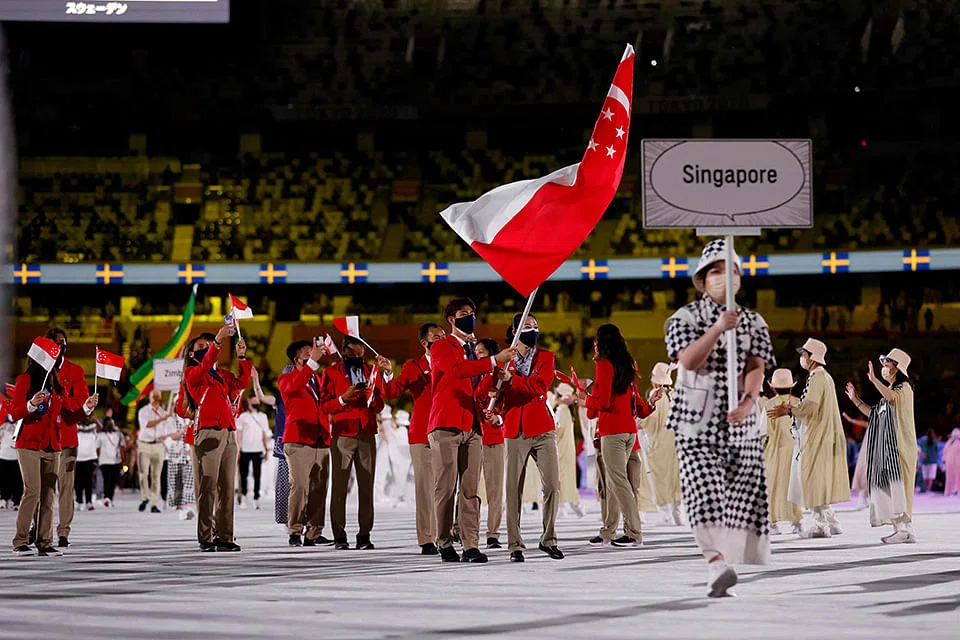
IN an opening ceremony marked by simplicity, one tradition held on Friday night as athletes paraded into the Olympic stadium by national groups, waving, but with smiles hidden behind face masks, and most having both male and female flagbearers for the first time.
The Tokyo Games opened with fireworks illuminating an almost-empty National Stadium and a moment of silence to honour those lost to Covid-19, with a nod to Japanese tradition represented by wooden Olympic rings linked to the 1964 Games.
Postponed for a year for the first time in history, organisers were forced to take the unprecedented and difficult step of holding the Olympics without spectators as the coronavirus is on the rise again.
Even the opening ceremony, normally a star-studded display teeming with celebrities was eerily silent, with fewer than 1,000 people in attendance, strict social distancing rules and signs calling on the spectators to "be quiet around the venue".
Regardless, it marked a coming together of the world, with an audience of hundreds of millions around the globe, and at various stages of the pandemic, tuning in to watch the start of the greatest show in sport.
Most nations were represented by a man and a woman after the organisers changed their rules to allow two flagbearers. Singapore's flagbearers were badminton player Loh Kean Yew and table tennis player Yu Mengyu.
A vastly smaller number of athletes, about 20 per nation, marched in the teams' parade, with many flying in just before their competitions and due to leave shortly after to avoid infections.
A video recapped Japan's path to the Games and the challenges the world has faced since the selection of the Japanese capital as host in 2013.
It showed how in 2020 the coronavirus struck, with lockdowns forcing the unprecedented postponement only four months before the Games were supposed to open, setting off a roller-coaster period of uncertainty and preparations in isolation for the athletes.
A moment of silence was held "for all those family and friends we have lost", especially to the coronavirus, and mention was made of the Israeli athletes slain at the 1972 Munich Games.
Japan had billed the Olympics as an echo of the 1964 Tokyo Games, which marked the country's return to the world stage after its World War II defeat, but this time showcasing its recovery from the 2011 earthquake, tsunami and nuclear crisis.
In the segment highlighting the impact of the pandemic on the athletes and people around the world unable to see the Olympics in person, the organisers showed a lone female athlete, Japanese boxer nurse Arisa Tsubata, training in the darkness, running silently on a treadmill.
Japanese Emperor Naruhito and International Olympic Committee president Thomas Bach, both masked, entered the stadium and bowed to each other before sitting down socially distanced.
The giant wooden rings were carried onto the field on a platform, guided by the light of many paper lanterns. With the pull of a rope, the rings were transformed into the Olympic symbol.
The rings make use of lumber from thinned trees that grew from the seeds borne by athletes from each of the participating nations to the previous Olympics hosted by Tokyo.
The opening took place without the usual mass choreography, huge props and cornucopia of dancers, actors and lights associated with past celebrations.
Only 15 global leaders were in attendance, along with Emperor Naruhito, who formally opened the Games as his grandfather Hirohito did in 1964, and US First Lady Jill Biden. The ceremony was marked by high-profile absences, including former Prime Minister Shinzo Abe, who wooed the Games to Tokyo.
A number of top sponsors and economic leaders also stayed away, highlighting strong opposition to the sporting extravaganza in Covid-fatigued Japan.
Hundreds of protesters carrying placards that read "Lives over Olympics" protested around the venue. The protesters, a mix of people in white surgical masks, yelled "Stop the Olympics" as they marched.
Only a third of the nation have had even one dose of vaccines, prompting worries the Games could become a super-spreader event. Over 100 people involved with the Olympics have already tested positive.
The Olympics have been hit by a string of scandals, including the exit of senior officials over derogatory comments about women, jokes about the Holocaust and bullying.
The Games run until Aug 8. About 11,000 athletes from 204 national Olympic committees are expected, along with a team of refugee athletes competing under the Olympic flag.
Separately, Indonesia's National Olympic Committee said on Friday that it plans to launch a bid to host the Summer Olympics in 2036 after losing out this week to a bid by Brisbane to hold the 2032 Games. Indonesia was a contender to host the 2032 edition, alongside Hungary's capital Budapest, China, Qatar's Doha and Germany's Ruhr valley region, among others.
"We will not back down and will continue to fight for the 2036 Olympics," Raja Sapta Oktohari, the chief of Indonesia's committee, said in a statement. "We will work harder and do everything we can with patience to achieve our dream of hosting the Olympics."
Indonesia, the world's fourth most populous country with more than 270 million people, is trying to become only the fourth Asian country to host the Games after Japan, China and South Korea.
Indonesia launched its 2032 bid after successfully hosting the 2018 Asian Games, which involved some 13,000 athletes from 45 national Olympic committees.Paris will stage the 2024 Olympics, while Los Angeles has been awarded the 2028 Games. REUTERS
READ MORE: I'm tired of being cynical. I'm watching the Olympics
Decoding Asia newsletter: your guide to navigating Asia in a new global order. Sign up here to get Decoding Asia newsletter. Delivered to your inbox. Free.
Share with us your feedback on BT's products and services
TRENDING NOW

World’s largest offshore wind platform by Seatrium consortium on track to be completed by 2028

Is stamp collecting enjoying an analogue revival or are its best days over?

GovTech retrenches another 38 staff in second round of layoffs

MBS adjusted property Ebitda falls 20.6% in Q3 with fewer high-roller visits, weaker hold

