

Fiscal policy remains key as disinflationary pressures rise: MAS

Singapore
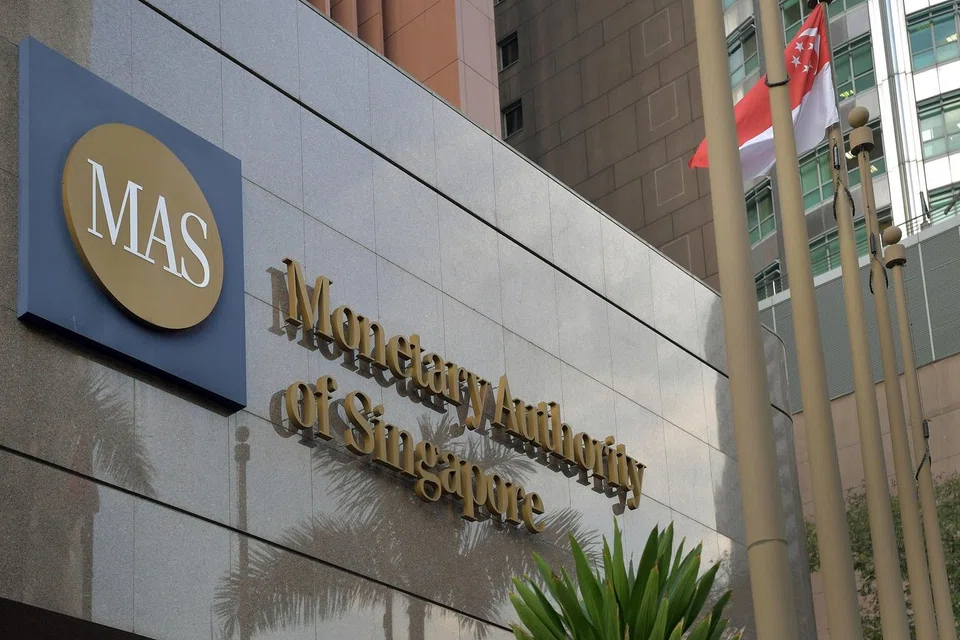
DISINFLATIONARY pressures will broaden as the demand shock from the Covid-19 pandemic reverberates, but fiscal policy will play the main role in mitigating the crisis, the Monetary Authority of Singapore (MAS) said in its half-yearly Macroeconomic Review on Tuesday.
For now, economists do not see an off-cycle move happening, and expect MAS to keep exchange rate policy unchanged at the next decision in October. Maybank Kim Eng economists Chua Hak Bin and Lee Ju Ye see monetary policy as "a blunt instrument" and less effective in tackling the Covid-19 crisis than fiscal policy.
Both core and headline inflation are expected to turn negative in 2020, for the first time since 2002. The official forecast has both core and headline inflation coming in at between -1 and 0 per cent this year.
Apart from food prices, all other major components of MAS core inflation - which excludes private road transport and accommodation - are expected to decline this year.
In the coming months, prices are expected to fall for holiday expenses and airfares; discretionary services such as restaurant dining and recreation, with social-distancing measures and a weak labour market; healthcare and education, due to government support; and electricity and gas, with the oil price collapse. Increases in domestic and international spare capacity will put downward pressure on inflation in the near term.
While maintaining its forecasts for growth and inflation, MAS noted the risk of growth falling below the forecast range of -4 to -1 per cent.
Although wages, rather than employment, will bear the brunt of the crisis in the near term, there will still be a rise in retrenchments and resident unemployment.
Fiscal rather than monetary policy is seen as providing the main response to all this, said MAS.
In its latest monetary policy statement on March 30, MAS flattened the slope of the Singapore dollar nominal effective exchange rate (S$NEER) policy band and lowered it, for a zero per cent per annum rate of appreciation starting at the prevailing level of the S$NEER then.
This is "an appropriate level to prevent a broadening of disinflationary pressures" and is complemented by steps to increase liquidity to the financial system, relax regulatory requirements for banks, and work with the financial industry to ease credit conditions for businesses and households.
"The zero per cent appreciation of the band going forward would also impart a degree of stability to the trade-weighted exchange rate," it added.
Monetary policy thus complements other government moves, said MAS. Together, monetary, financial, fiscal, and regulatory policies will ease the economic cost of the pandemic and "help prevent a severe, temporary shock from imparting a deeper and longer-lasting imprint on the economy", it added.
The Maybank economists noted that, after all, a weaker Singapore dollar would not aid worst-hit sectors such aviation, hospitality, retail, and recreation. "Domestic services are the hardest hit because of the lockdown and the exchange rate is impotent in dealing with such a shutdown," they said. They expect MAS to maintain the current neutral stance at the next policy meeting in October.
UOB economist Barnabas Gan similarly expects policy to stay unchanged in October, even as growth falls further in the second half of the year, with a pick-up likely in 2021.
"We think it is too early to forecast an off-cycle easing by MAS at this point as any further easing will be dependent on how Singapore's inflation and growth pan out in the year ahead," he added.
Said OCBC Bank chief economist Selena Ling: "Very frankly, with the S$NEER currently hovering around its parity band, there is little need or urgency for another monetary policy easing at this juncture, much less an off-cycle easing."
If deflationary pressures worsen, an October move cannot be ruled out, but there is still a long way till then and the situation is fluid, she added.
READ MORE:
TRENDING NOW

Fed hike throws Singapore banks a margin lifeline; UOB most likely to feel impact

He built the Vingroup empire. Now South-east Asia’s richest man is handing some key roles to his sons

Real-estate veteran Desmond Sim quits from CEO roles at Realion, ETC
Chagee, Mixue and Luckin won the market. Sustaining their edge is the harder part

