Frozen food manufacturers grapple with soaring electricity costs amid global energy crisis

Tessa Oh
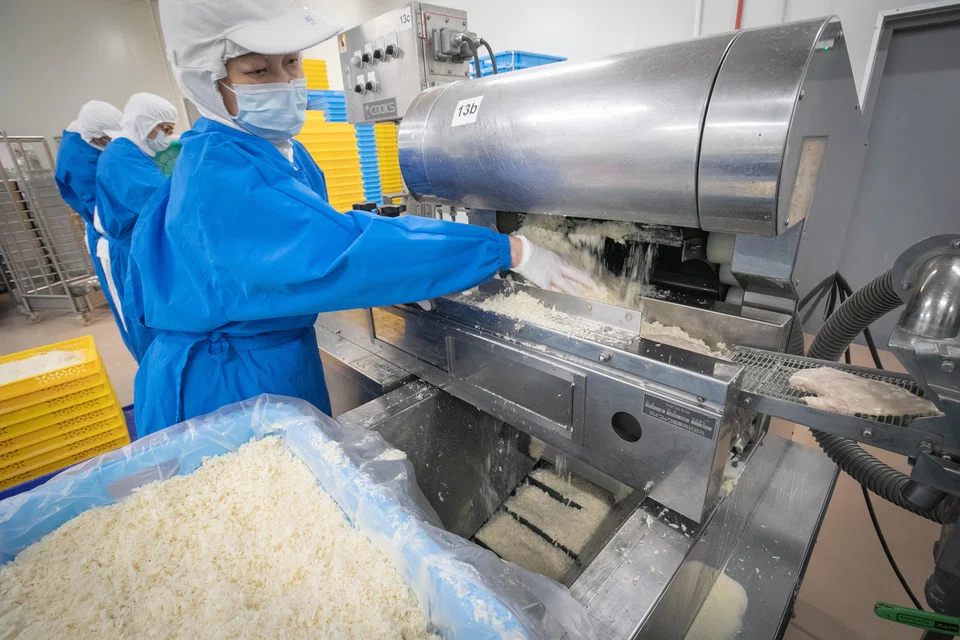
SINGAPORE’S frozen food manufacturers are feeling the squeeze from soaring electricity costs, as some report that their bills have doubled, or even tripled, in the past year alone.
Some members of the Singapore Manufacturing Federation have reported current utility bills that are up to 100 per cent higher than in 2021 and 2022, and are concerned that costs could keep climbing in the months ahead, said president Lennon Tan in response to queries from The Business Times.
Nevertheless, the degree of strain faced by each firm “varies significantly”, he added. “Some members are feeling a significant strain due to the increased costs impacting their operating and logistics costs, making it hard to remain competitive.”
Frozen food companies approached by BT similarly said that their utility bills have doubled, or even tripled, from their 2021 and 2022 averages.
Frozen food distributor Eastern Harvest saw its electricity bill double immediately after the firm’s contract with a power generation company (genco) expired in September 2022 and it switched back to state-owned provider SP Group.
The latest electricity bill in May was almost triple the amount that Eastern Harvest paid while on contract, said group operations manager Knight Lim, who declined to reveal exact figures.
Frozen halal food manufacturer Pondok Abang has seen its utility bills at least double since the start of the Russia-Ukraine war in early 2022, senior business executive Habib Mansoor told BT. “We’re trying to manage (the costs), but even after managing, the utilities are still high.”
The high yet fluctuating electricity costs have made it challenging for businesses to anticipate how their monthly expenditure will eat into earnings, said the manufacturers.
“It can be in the low S$100,000 (one month), and it can actually go all the way up to S$300,000 to S$400,000 (in another),” said Seo Eng Joo Frozen Food’s director of operations Vincent Seo.
“The SP rate always comes as a surprise at the end of the month,” said Eastern Harvest’s Lim, referring to the regulated tariff charged by SP Group.
“(When we get the bill), we realise that it has wiped out whatever projected profit that we have... So some months we make, some months we don’t, some months we break even,” he added. Electricity bills now make up almost half of the company’s total costs.
“Rising costs contribute to the overall cost of goods sold and that affects prices to consumers,” said Mansoor. “We try our best to maintain our selling prices so that consumers continue to purchase our products.”
To alleviate cost pressures from soaring electricity prices, Pondok Abang has replaced some of its equipment and lights with energy-saving alternatives, and makes an effort to unplug machines that are not in use. But these moves have not made much of a dent.
“Utility costs probably may not go back down to what they used to be, but we are hoping to see some stabilisation in the rates,” said Mansoor.
Other manufacturers have sought out long-term contracts from electricity retailers — but to varying degrees of success. While some have managed to secure new contracts, others said they struggled to find gencos that could take them on.
Asked why some businesses have had trouble finding retail contracts, the Energy Market Authority (EMA) did not give reasons, but observed that new contracts are still being offered.
Between February and April this year, more than 280 businesses successfully transitioned from wholesale electricity price plans to retail contracts, said EMA in response to BT’s queries. Over the past three months, business consumers have signed more than 3,000 contracts with electricity retailers each month.
“The electricity market is dynamic, and availability of contracts can vary. We encourage businesses to approach gencos and electricity retailers to explore the available options that best suit their needs,” said the regulator.
James Chong, Senoko Energy’s head of commercial, said the firm has been able to offer a “significant number of retail contracts over the last few months and will continue to do so”. The genco declined to give the exact number of contracts issued.
“Even though there is a possibility of limited volumes, we are prepared for it and encourage businesses to approach Senoko Energy to explore options that can best suit their needs,” he added.
SMF’s Tan said the association is actively engaging its members to better understand each individual company’s situation and provide assistance where it can. For example, the SME Centre@SMF helps members to tap government support such as the Energy Efficiency Grant, which can be used to offset the cost of energy-efficient equipment.