

Helping Singapore overcome its limitation: Chan Chun Sing
Singapore
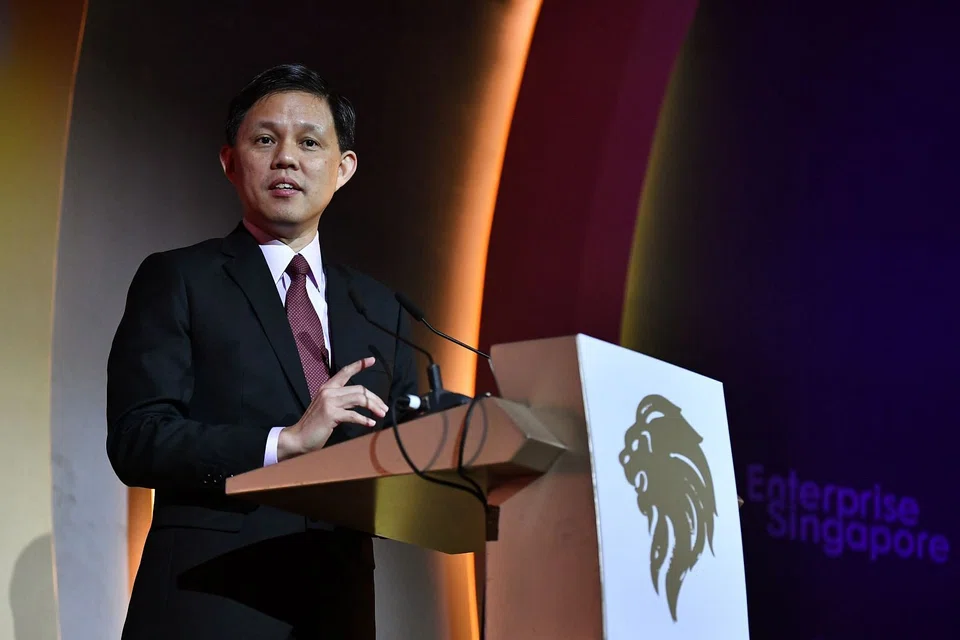
INDUSTRY 4.0 can help Singapore to transcend its conventional limitations of size and manpower to vie on the world stage, said Minister for Trade and Industry Chan Chun Sing on Tuesday morning.
"Industry 4.0 is about computing power, data, and connectivity. These are three dimensions that we can compete to overcome our previous constraints," he said.
He was part of a panel discussing how countries and businesses can capture Industry 4.0 opportunities in Asia at the inaugural Industrial Transformation Asia-Pacific (ITAP) - a Hannover Messe event, slated to be the biggest advanced manufacturing trade show in the region.
He predicted that if Singapore manages to tap Industry 4.0 technologies, the entire manufacturing landscape in Singapore will change in the next five to 10 years.
But one challenge that panellists say stands in the way is linked to human resources.
Drawing from his previous experience as labour union chief, Mr Chan said: "Until and unless top and middle management change their mindsets of how such technologies can be used to transform processes, we will always be stuck at the application level ... but never (reach) the transformative level."
Fellow panellist Gunther Kegel, CEO, Pepperl+Fuchs concurred that changing the mindsets of people and taking them out of their comfort zone is the "largest obstacle".
He shared how in Pepperl+Fuchs, the entire middle management is going through hundreds of hours of Industry 4.0 learning courses to support the transformation of the company. Advances in e-learning have helped to accelerate training and development of its people, he noted.
On a country level, panellist Airlangga Hartarto, Minister for Industry, Indonesia said that the country has been ramping up on learning and development over the past two years to enable Industry 4.0.
The country has reintroduced vocational training and schools, as well as polytechnic education to develop talent, especially in engineering.
On top of that, Indonesia is also zooming in on digital education, with an "Apple Developer Academy" that specialises in creating apps for the iOS operating system. There are also plans to have a Jack Ma Institute to train Indonesians in e-commerce and the Internet, he added.
It is in the area of talent development that the fourth and final panellist Vincent Chong, president and CEO, ST Engineering, said he hopes the Singapore government can do more in.
"As a corporation, what we hope to see more of is the development of industry 4.0-related talents from institutes of higher learning, for example in areas of autonomous systems, robotics, data analytics and cyber security," he said.
These need not be crystallised in the formal education system, but through micro modules or learning courses, suggested Mr Chong.
On this front, Mr Chan noted: "The conventional model of using the school system to churn out workers is too slow for tomorrow's needs," he noted.
While the education system will still be needed for foundational skills, the "new frontiers of learning" will be in companies where constant experimentation takes place, he said.
The new model of learning will be focused on solution-seeking, rather than looking back at what was done before, said Mr Chan.
If done in conjunction with using regulations to spur innovation, and leveraging on partnerships with trade associations, Singapore will have a "much higher chance" to help companies overcome many of the challenges to seize opportunities in industry 4.0, he added.
TRENDING NOW

He built the Vingroup empire. Now South-east Asia’s richest man is handing some key roles to his sons

Seatrium allocates S$200 million for new share buyback programme
32 companies, 6 individuals bag accolades at Singapore Corporate Awards 2026

Stocks to watch: Mapletree Logistics Trust, Seatrium, Keppel DC Reit, Food Empire

