

Job switching in growth sectors not merely driven by salaries: industry players
Bryan Kow
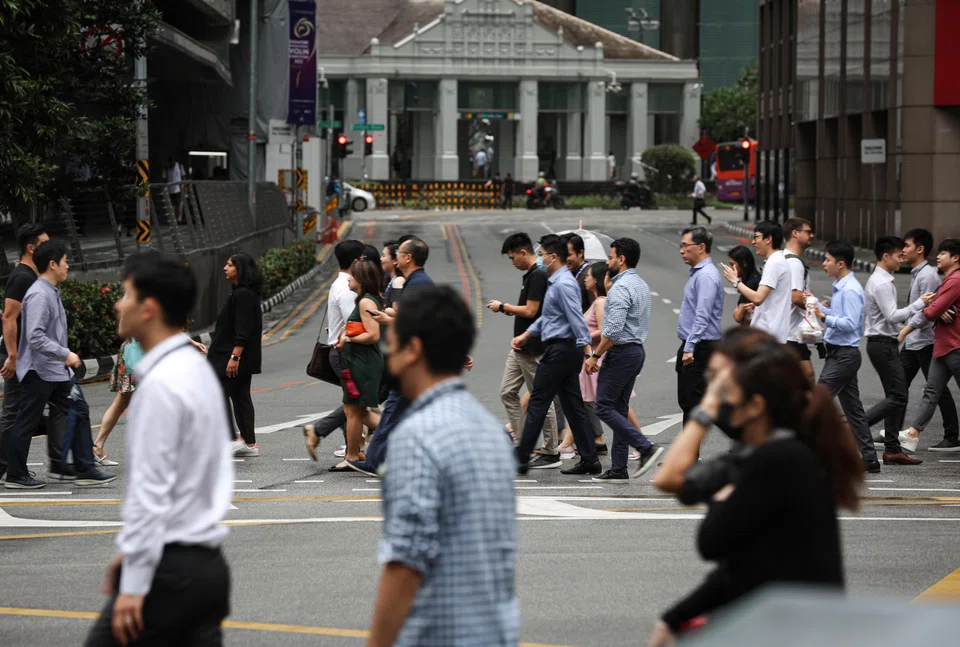
A RECOVERING economy nudged more people into switching jobs last year – but pay was not the only factor, said manpower agencies and employers. Work-life balance was another common reason.
Job switching hit a six-year high in 2022, noted the annual Labour Force in Singapore report from the Ministry of Manpower (MOM). A survey that it conducted from April to July showed that 16.8 per cent of employed residents had changed jobs in the last two years.
More workers in some “growth sectors” changed jobs within the last one year, compared with other sectors. At the top was the information and communications sector – 18.1 per cent of workers there switched jobs in the last year, up from 14 per cent in the 2021 survey.
The job switching rate in financial and insurance services rose to 12.2 per cent of employees from 9.3 per cent before, while that in professional services rose to 12.6 per cent from 10.4 per cent.
These figures reflected job changes from mid-2021 onwards – coinciding with what some have termed the “great resignation” or “great re-evaluation”.
As economies recovered from the pandemic, “many gained confidence in making their next career move”, said Adecco country manager for Singapore Betul Genc.
Demand for tech services surged during the pandemic – with the rise of working from home – but there was a shortage of talent, “especially those with niche IT skills”, noted ManpowerGroup Singapore country manager Linda Teo. Many companies thus offered higher salaries, making tech workers “more likely to switch to better-paying jobs”.
When the economy recovered, hiring picked up in other sectors. Said Jaya Dass, managing director of permanent recruitment in Asia-Pacific at Randstad: “Organisations were rapidly hiring in 2021 to back-fill positions as well as to funnel more headcount towards growth activities as they recover from the pandemic.”
Last year, the job market was competitive as employers were “willing to pay a good raise to attract talent to join their 2022 growth plan, which (was) interrupted by the pandemic”, said Genc.
But employer demand was not the only reason for more job switching. Not only did the recovery fuel hiring, it prompted employees across industries – including insurance – to resign for career breaks or to change roles, said Vivien Wong, head of the HR Centre of Excellence at Prudential Singapore.
Individuals may not change jobs “just for a salary increment”, she noted, adding: “They may want to experience a different culture, hone their skills in a different industry, or simply look for a fresh challenge.”
Yuen Law had a 50 per cent rise in new joiners during the July 2021 to July 2022 period, compared with the preceding 13 months, said managing director Samuel Yuen.
Since last July, job switching in the legal industry has increased further, due to more opportunities as economies reopened and Covid-19 curbs were removed, he added.
The firm had increased its recruitment since 2020, with hires for non-legal administrative positions coming from industries such as education, supply chain, hospitality and non-profit organisations.
Many of those who left the firm also left the industry entirely, said Yuen, noting that the legal industry is “notorious for its high burnout rate”. “Some of the lawyers who exited the industry took on in-house counsel positions in multinational corporations, while others opted to take a break from work.”
Legal and management consulting firms experienced a tremendous outflow of talent after mid-2021, said Anurag Garg, regional director of Michael Page Singapore. To tackle this, some large firms tried to accelerate partner promotions or multiple off-cycle pay increases.
But the escalation in salaries made it harder for mid-tier firms to compete, as they have thinner margins, he added.
Switching to less hectic in-house roles is common in professional services such as law and accounting, said ManpowerGroup Singapore’s Teo: “Professionals working in these areas may switch to working for in-house roles as they view the work to be more manageable, and they can have better work-life balance.”
Local company 3E Accounting has been “actively promoting” work-life balance, which it said has resulted in low staff turnover. This includes allowing most employees to work from home; offering flexible time off; and having “honour-based” medical leave.
While some sectors grew despite Covid-19, others declined – which also contributed to job switching. Retrenchments rose early in the pandemic, while the government made a “strong push” for career conversion programmes, noted ManpowerGroup’s Teo.
Lacking opportunities in their former industries, affected workers may have chosen to reskill for high-growth industries such as tech and financial services. By mid-2021, such workers may have completed these programmes and found jobs, she added.
Jonathan Cai, 40, left the hospitality industry in 2021 when Covid-19 hit and decided to switch industries. “I was interested in technology-related roles, and searched for roles that were open to individuals undergoing a mid-career change,” he said.
Through the pandemic-era SGUnited Mid-Career Pathways programme, he joined Prudential as a data testing trainee, and is now a quality assurance specialist there.
In tech, industry-switchers have shown interest in artificial intelligence, cybersecurity and the Internet of Things, said industry body SGTech. Also popular are tech-lite roles such as digital marketers and product managers, and higher-value roles that require no tech background such as customer-facing technical advisers, analysts and administrators.
SGTech manages career conversion programmes in these areas “due to strong demand from the industry and career switchers”, said Ivan Chang, co-chair of SGTech’s Talent Steering Committee.
In insurance, changes such as the rise of “insurtech” have also created new opportunities for workers both within and outside the industry, said Wong from Prudential.
As employers continue to backfill roles, Michael Page’s Garg expects the hiring rate to “normalise at 15 per cent in the near term”.
But as growth momentum cools, job switching may ease this year. While Dass expects job switching trends to continue in 2023, she added: “Candidates have higher expectations and are being more deliberate when making career choices, given the slowing economic growth.”
For their part, employers may take a “more precautionary yet prudent approach”, focusing on niche areas to close skills gaps, she added.
Adecco’s Genc expects hiring and salaries to stabilise in 2023 in light of volatile global economic conditions, though there “will still be increased hiring for select roles”.
TRENDING NOW

Two Singapore-listed palm oil firms named in Greenpeace report on Indonesian plantation fires

Singapore Airlines flight returns to San Francisco after ‘unruly’ passenger incident

Singapore looking into which companies responsible for haze-causing fires: PM Wong

Deluge IPO 3.86 times subscribed ahead of SGX debut

