

NDR 2026: Singapore wisely says no to tech for tech’s sake
Responsible adoption will be key to making the most of new capabilities
 Add BT as a preferred source
Annabeth Leow
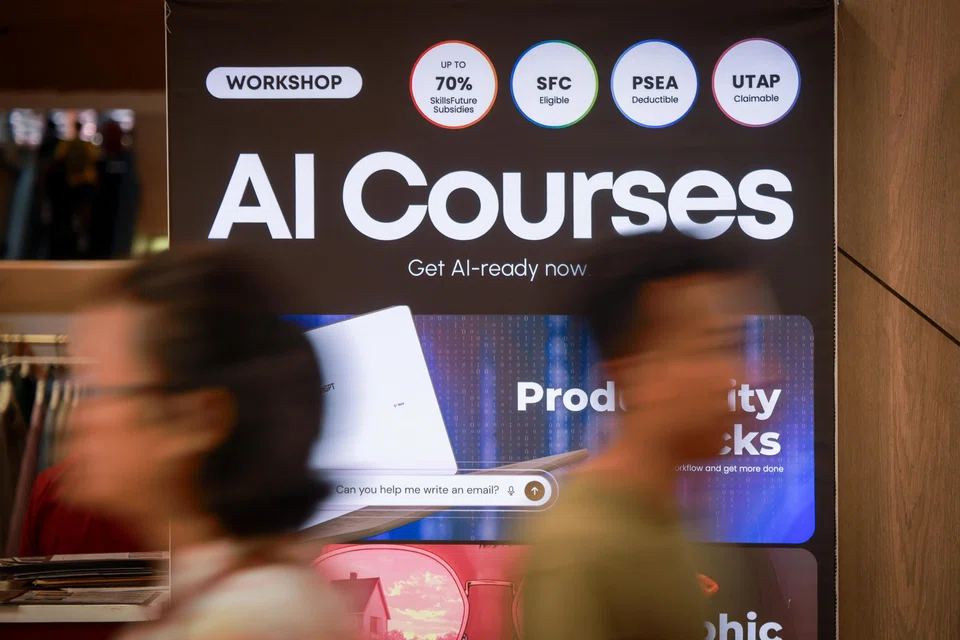
[SINGAPORE] At a time when tech adoption seems to be barrelling forward unchecked, Singapore’s commitment not to deploy new technologies at all costs offers welcome reassurance.
That’s as Prime Minister Lawrence Wong said at the National Day Rally on Sunday (Aug 23) that Singapore will pre-empt the risks posed by technology and enact sufficient guardrails.
“We will not embrace new technologies blindly,” he said. “We will anticipate the risks, and put appropriate safeguards in place. And we will always ensure that people remain in control.”
Indeed, policymakers must ensure businesses and individuals are being empowered to make informed decisions about how – and how not – to use new technology such as artificial intelligence.
Setting safety standards
Such dangers are already increasingly apparent – as in the recent incident, cited by PM Wong in his speech, of an OpenAI AI agent hacking its way onto the Internet.
The prime minister noted that the ideal solution involves common safety standards. Indeed, Singapore is well-placed to collaborate with other governments and the private sector.
The Republic launched its Model AI Governance Framework in 2019, with periodic updates since, and unveiled a Model AI Governance Framework for Agentic AI in January.
This year also saw a S$300 million partnership with OpenAI – best known as the developer of ChatGPT – to grow Singapore’s AI ecosystem and set up an Applied AI Lab here.
Moreover, sovereign wealth fund GIC and Singapore investment company Temasek are backers of Claude developer Anthropic – which has also experienced an AI agent jailbreak of its own.
In sum, Singapore has cultivated both the expertise and the standing to offer meaningful proposals and enforce necessary rules on how emerging technologies should be deployed.
Prioritising prudent use
One question is whether the public can be convinced to practise the same level of prudence.
In his speech, PM Wong justified the need for safeguards on technology by appealing to Singapore’s experience with social media in recent years – in particular, the lessons about its disturbing impact on the mental health of vulnerable young people.
“When social media first emerged, we saw its promise. It created new opportunities… But some of the downsides only became clear over time,” he remarked.
The same could well be said of the societal discourse around the use of AI today.
Many employees report a corporate push to use AI at all costs, even when it may not be relevant or appropriate for the task at hand – the so-called “tokenmaxxing” phenomenon.
While not as immediately dire as the threat of automated agents gone rogue, indiscriminate use of inappropriate technology can add inefficiency to work processes – to say nothing of the business expense, as well as the market and macro risks of an AI investment bubble.
Still, PM Wong also presented a case study of a small business that successfully tapped agentic AI to access operational capabilities previously available only to larger firms.
Many business owners need to be supported in discerning the distinction between superficial and meaningful deployment of new technologies, with the public sector leading by example.
Putting workers first
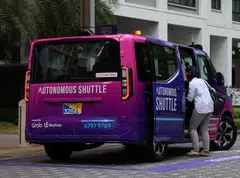
In his speech, PM Wong also spoke about Singapore’s experience managing the impact of technology on taxi drivers’ jobs – first from ride-hailing apps, and now, autonomous vehicles.
The tripartite movement here has consistently emphasised leveraging tech for business productivity while retraining workers for higher-value roles in the face of industry disruption.
Such an approach is undergirded by the assumption that workers offer more value to employers when they gain the skills to understand and operate new technologies.
The challenge lies in how today’s tech tools can easily confer the illusion of competence.
For instance, AI-assisted “vibecoding” can carry employees only so far, if they lack the technical know-how to fix fundamental flaws in a program when the computer makes errors.
And, just as policymakers now recognise the deleterious effects of social media on youth mental health, they should also give due consideration to the risks of unqualified AI use.
Even as AI is integrated more heavily into the education system, Singapore cannot afford to develop a future workforce accustomed to outsourcing the critical thinking and capacity for creativity that make up the nation’s competitive edge in a global knowledge economy.
Securing Singapore’s future
PM Wong made the point that security now weighs much more heavily in countries’ economic decisions, and “governments are increasingly using trade, technology and investment to advance their strategic and security objectives”.
Given this geopolitical climate, it is also not unwarranted to acknowledge that the indiscriminate adoption of new technologies could expose Singapore to unnecessary economic sovereignty and national security risks from the reliance on overseas suppliers.
Having long reaped the benefits of innovation, Singapore can model a different first-mover advantage here too – by leading the way in responsible tech adoption, unbeholden to other interests.
Decoding Asia newsletter: your guide to navigating Asia in a new global order. Sign up here to get Decoding Asia newsletter. Delivered to your inbox. Free.
Share with us your feedback on BT's products and services
TRENDING NOW

When every phone becomes a satellite phone, what happens to Asia’s telcos?
Singapore should anchor hedge fund decision-makers amid regional talent war: industry observers
How BYD disrupted Singapore’s car market – and why the strategy is turning on itself
Too little, too late? Manila’s billion-dollar bid to ignite its sputtering EV industry

