

Pacific trade deal gives greater access to Latin America

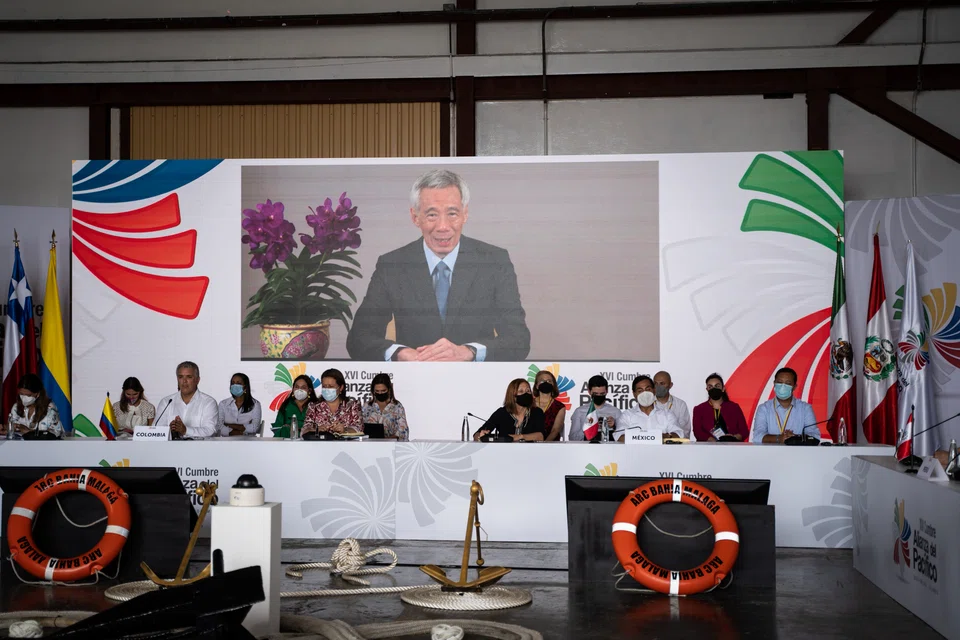
BOOSTING access to multiple regional markets in one swoop, Singapore and the Pacific Alliance countries of Chile, Colombia, Mexico and Peru signed a collective Pacific Alliance-Singapore Free Trade Agreement (PASFTA) this January – and there is already “growing interest amongst Singapore companies to know more about how they can tap on PASFTA”, said Singapore Business Federation chief executive Lam Yi Young.
Firms in the green economy might particularly stand to benefit, with countries such as Chile and Colombia making high-profile investments in clean energy transition.
Angela Torres-Andresen, executive director of the Latin American Chamber of Commerce, told The Business Times: “When we talk about renewable energy, clean energy goals, in particular with development of green hydrogen, there are a lot of new possibilities that are opening with the entrance of Singapore with the Pacific Alliance.”
Latin America’s infrastructure and commodities sectors are attractive too, with Torres-Andresen singling out the large market of Brazil as a key destination.
Singapore-based pulp and palm oil giant Royal Golden Eagle (RGE) entered Brazil in 2003, when it acquired a cellulose manufacturer in the state of Bahia. The group most recently constructed a pulp mill in São Paulo state last November.
RGE, which also has assets in Indonesia, China and Canada, has invested more than US$5 billion in Brazil so far, said group president Tey Wei Lin, calling that market “an integral part of RGE’s operations”.

He pointed to “an abundance of sustainable resources”, especially wood plantations, and added: “We have found the operating environment in Brazil to be investor-friendly and rules-based all these years.”
The PASFTA is just the latest strengthening of ties between Singapore and Latin America. Earlier measures include Singapore’s recent digital economy agreement with Chile and New Zealand; ongoing negotiations for a free trade deal with the Mercosur bloc of Argentina, Brazil, Paraguay and Uruguay; membership in the 11-nation Comprehensive and Progressive Agreement for Trans-Pacific Partnership, which also includes Chile, Mexico and Peru; and participation in the Forum for East Asia-Latin America Cooperation since 1998.
Both “high-level policies” such as PASFTA and on-the-ground support from Enterprise Singapore have been heartening for Gary Loh, CEO of startup DiMuto, which started market pilots in Latin America in 2020.



DiMuto, which offers digital supply chain management services for the agri-food sector, embarked on these pilots after it received an investment from a venture capital firm focused on that region. Latin America now accounts for 20 per cent of revenue, and DiMuto has sales and service teams in Mexico and Colombia, said Loh.
“For Latin American grower-exporters, exporting to Asia is a strong growth opportunity but it’s fraught with risk... This presents a very strong opportunity for DiMuto because we can link these companies up with our buyer network in the region,” he told BT.
Torres-Andresen noted that the tech sector is a main area of interest for investors, where appetite and growth are “much bigger” than other sectors, adding: “Last year, we led a key business mission with 22 tech companies that were looking to expand into the region.”
Decoding Asia newsletter: your guide to navigating Asia in a new global order. Sign up here to get Decoding Asia newsletter. Delivered to your inbox. Free.
Copyright SPH Media. All rights reserved.
TRENDING NOW

Indonesia’s coal tycoon Low Tuck Kwong replaced as Bayan Resources president-director

OCBC names Ang Eng Siong as global corporate banking head in rejig of wholesale banking business

Consider lowering homeownership barriers for some non-resident foreigners

DBS opens flagship investment strategy to retail investors with new fund

