Pharma lifts Q1 but Q2 will be painful; full-year GDP to dip up to 7%

Singapore
THE economic hit from the deadly novel coronavirus will likely be at its worst in the second quarter, according to forecasts from the Ministry of Trade and Industry (MTI) on Tuesday.
But even a "very gradual" recovery in the second half could be marked by negative year-on-year prints, policymakers warned at a briefing, as they downgraded Singapore's recession outlook deeper into the red.
Full-year gross domestic product is expected to shrink by between 4 per cent and 7 per cent, after the forecast was slashed for the third time. The earlier guidance had been for a contraction of 1 per cent to 4 per cent.
The downgrade is due to both a weaker external demand outlook for Singapore, and the impact of the two-month "circuit breaker" taken to curb the spread of the virus, the MTI said.
It noted that the prolonged circuit breaker, which shuttered businesses here in April and May, has "dampened domestic economic activity, along with domestic consumption".
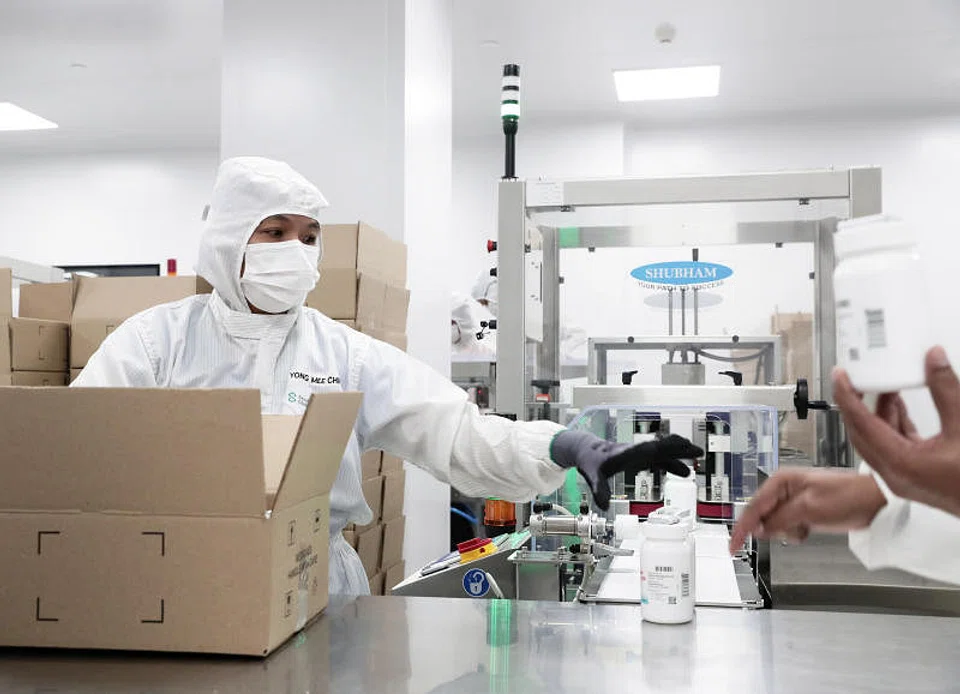
First-quarter GDP was revised to a decline of 0.7 per cent - beating the contraction of 2.2 per cent in flash estimates - on the back of a last-minute surge in pharmaceutical production.
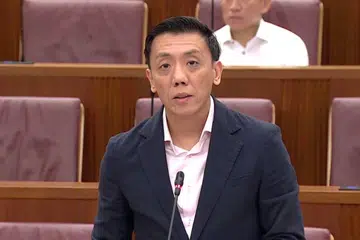
But MTI economics division chief Yong Yik Wei warned that hopes for "a very gradual recovery" in the next six months will depend on both a pick-up in major trading partners' economies, as well as a stabilisation of the virus outbreak situation in Singapore.
Terence Ho, director of the Manpower Ministry's manpower planning and policy division, added that deteriorating labour market conditions are expected from the second quarter on.
"We have to be prepared for a rise in retrenchments. Much of it will depend on the pace of opening up of businesses, not just in Singapore but around the world," he told reporters.
Indeed, Maybank Kim Eng economists Chua Hak Bin and Lee Ju Ye stuck to their earlier private-sector prediction of a 7 per cent full-year contraction - even though they think GDP could recover in the third quarter, as lockdown measures ease and pent-up demand offers "some support".
Irvin Seah, senior economist at DBS, added: "Despite the better-than-expected showing in the first quarter, the full impact of the pandemic will be felt only in the second quarter.
"Significantly weaker global demand, labour shortage in the construction sector, supply chain disruptions and restrictive measures imposed during the circuit breaker will inflict a severe blow to the economy."
To be sure, the impact of the virus crisis on the economy has been uneven - and is tipped to stay that way.
Permanent Secretary for Trade and Industry Gabriel Lim noted that the wholesale and retail trade, transport and storage, and accommodation and food services sectors were to blame for the decline in first-quarter GDP.
Services swung into a year-on-year contraction of 2.4 per cent, from 1.5 per cent growth the previous quarter.
Still, MTI named information and communications services and pharmaceutical and biological products manufacturing as "pockets of resilience" in the economy.
In fact, manufacturing - which had been expected to clock a mild decline - posted a 6.6 per cent jump in the first quarter. The biomedical manufacturing surge, plus precision engineering and transport engineering output gains, offset falls in electronics, general manufacturing and chemicals.
The Maybank Kim Eng economists have even dubbed the downturn a "services recession", while they expect manufacturing to stay expansionary on higher global drug demand and the search for a coronavirus vaccine.
Three MTI economists also wrote in a separate report that different industries will see varying business effects of the pandemic. Accommodation services, air transport, and arts, entertainment and recreation are projected to bear the brunt of a double whammy: lower tourist arrivals and a drop in domestic consumption.
In the second tier, food services, retail trade and land transport are expected to be "significantly affected". But growing demand for online sales and services, amid the virus crisis, will present "new opportunities" for e-commerce players such as food and grocery delivery providers, they added.
Still, MTI stressed that "a significant degree of uncertainty" lingers over Singapore's economic prognosis, outlook downgrade notwithstanding.
How the second half pans out will also depend on the global economy, and "that part we can't control, although we'll do our best to make a living under whichever circumstances come our way", Mr Lim told the press.
The official forecast - which, if borne out, would take Singapore to its worst recession on record - priced in the boost from three rounds of fiscal support, but not Deputy Prime Minister Heng Swee Keat's latest package.
His fourth fiscal injection, unveiled on Tuesday and dubbed the "Fortitude Budget", will pump another S$33 billion into the economy.
The Singapore government has pledged an unprecedented S$92.9 billion in all, or 19.2 per cent of the GDP, in response to the coronavirus crisis.
Barclays Bank economist Brian Tan said that, as fiscal policy does the heavy lifting, his base case is for the central bank to leave monetary policy untouched at its October meeting.
"However, we still view the risk of another downward re-centring of the (currency) policy band as relatively elevated, especially if the circuit breaker impairs the economy's ability to recover in the second half," he said.
But Mr Lim remarked: "Obviously, the best-case scenario - with organic economic recovery both domestically and globally - you can actually pull back some of the support measures, because the economy will grow."