SBF refreshes TAC Alliance; new capability framework, corporate governance badge unveiled
This will help trade associations and chambers better navigate a more volatile operating environment, says SBF

[SINGAPORE] Two new initiatives aimed at strengthening capability development and governance among trade associations and chambers (TACs) were unveiled on Thursday (Apr 9), as part of a broader push to improve their effectiveness.
The first initiative is the TAC Measurement Framework, developed by Enterprise Singapore (EnterpriseSG). It comprises a self-diagnostic tool and a step-by-step guidebook that enables TACs to assess their capabilities across a variety of functions and organisational practices.
“This in turn supports the TACs to identify gaps and prioritise areas to develop and strengthen,” said EnterpriseSG in a press statement.
Developed with the support of 60 TACs and PwC Singapore, the new framework expands on the existing TAC Governance Framework to cover six additional organisational capability areas: leadership; people and organisational change; financial stability; industry standing and track record; value proposition; and technology.
Ang Yuit, president of the Association of Small and Medium Enterprises, said the new framework provides a structured way to assess the association’s capabilities and improve its effectiveness, so it can “operate at our best for our members”.
EnterpriseSG chairman Lee Chuan Teck noted that TACs are “important partners in driving enterprise and sectoral development”, and a strong ecosystem would support businesses navigating an increasingly complex global environment.
The second initiative, the Qualified TAC Director Badge, was launched by the Singapore Institute of Directors as part of efforts to recognise specialised director expertise.
Supported by the Singapore Business Federation (SBF), the badge “affirms a director’s proficiency in corporate governance principles and duties”, a factsheet showed.
This includes a sound understanding of the Code of Corporate Governance, the TAC Governance Framework and the Code of Governance for Registered Societies.

The badge is issued digitally for “instant, verifiable recognition”, and can be viewed on digital platforms such as Accredible and LinkedIn.
TAC Alliance 2.0
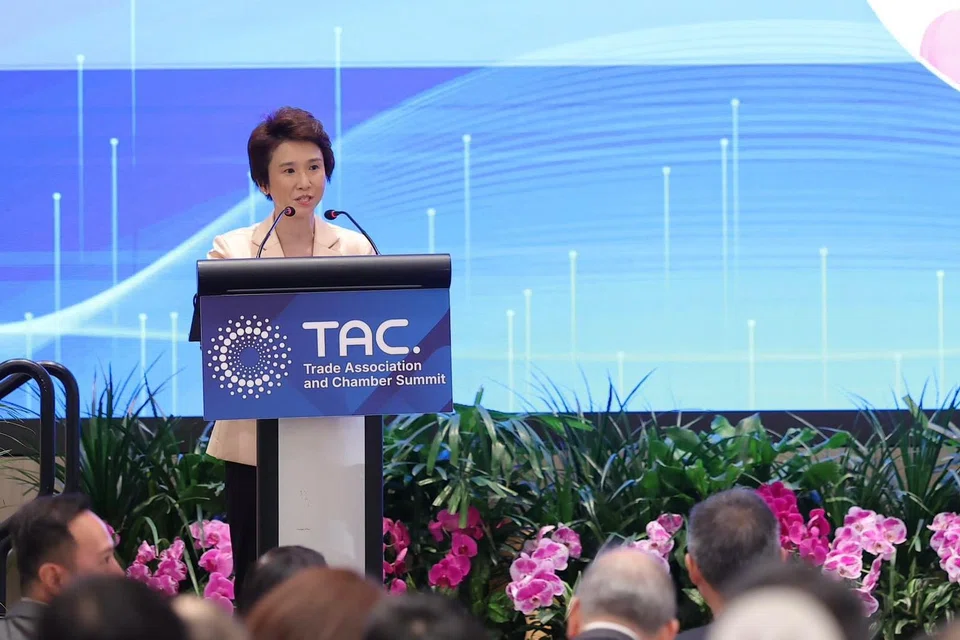
The two initiatives were announced in conjunction with the TAC Alliance 2.0 refresh, which was unveiled by Senior Minister of State for Trade and Industry Low Yen Ling on Thursday during the TAC Summit 2026.
She said the rise of the Middle East conflict has resulted in Singapore facing the prospect of slower growth and higher inflation as global supplies have been disrupted.
During this challenging period, she said TACs are “well-placed to forge deep partnerships” within members and across sectors, and that this spirit of solidarity would help strengthen enterprises and enable them to overcome hurdles ahead.
“When TACs pool together the resources, knowledge and expertise, they create a multiplier effect that benefits members, companies, associations and the entire business ecosystem,” she said.
On its part, she said the government will continue monitoring the Middle East situation and work with TACs to ensure businesses “get through the crisis and emerge stronger”.
SBF, which formed the alliance in 2017, said the refreshed alliance aims to strengthen the TAC sector by shaping government-TAC partnerships, fostering collaboration across TACs, and building capabilities in line with the TAC Measurement Framework.
It will be overseen by a steering committee composed of experienced TAC leaders and co-chaired by EnterpriseSG’s Lee and his SBF counterpart Teo Siong Seng.
SBF’s CEO Kok Ping Soon said the refresh is in response to firms calling for practical support such as regulatory guidance, business matching and sharper market understanding as they navigate a “more volatile environment”.
According to SBF’s National Business Survey 2025, 59 per cent of businesses were internationalised as at last year. However, expansion momentum has slowed in 2025, with 47 per cent planning to expand overseas, down from 59 per cent in 2024.
Key concerns included uncertain overseas demand (43 per cent), rising expansion costs (34 per cent) and more complex operating environments (31 per cent).
Firms said they needed support in financing (54 per cent), cross-border regulatory and compliance advisory (49 per cent), and business matching (48 per cent).
The survey also found that a sizeable “stay-local” segment (40 per cent) is constrained more by capacity and risk than opportunity, a finding SBF said underscores the role of TACs in providing market guidance and facilitating overseas expansion.
Kok said the refreshed TAC Alliance strengthens coordination across these organisations, shifting the focus from convening to execution – to help companies build capabilities, forge partnerships and stay competitive.
“And when businesses are ready to go beyond Singapore, the same coordinated ecosystem can help them navigate overseas complexity and scale with greater confidence,” he said.
Decoding Asia newsletter: your guide to navigating Asia in a new global order. Sign up here to get Decoding Asia newsletter. Delivered to your inbox. Free.
Copyright SPH Media. All rights reserved.