

Share of households in condos, apartments up almost 5 percentage points as proportion in HDB flats slips 3.7 points: census
 Add BT as a preferred source
DeeperDive is a beta AI feature. Refer to full articles for the facts.
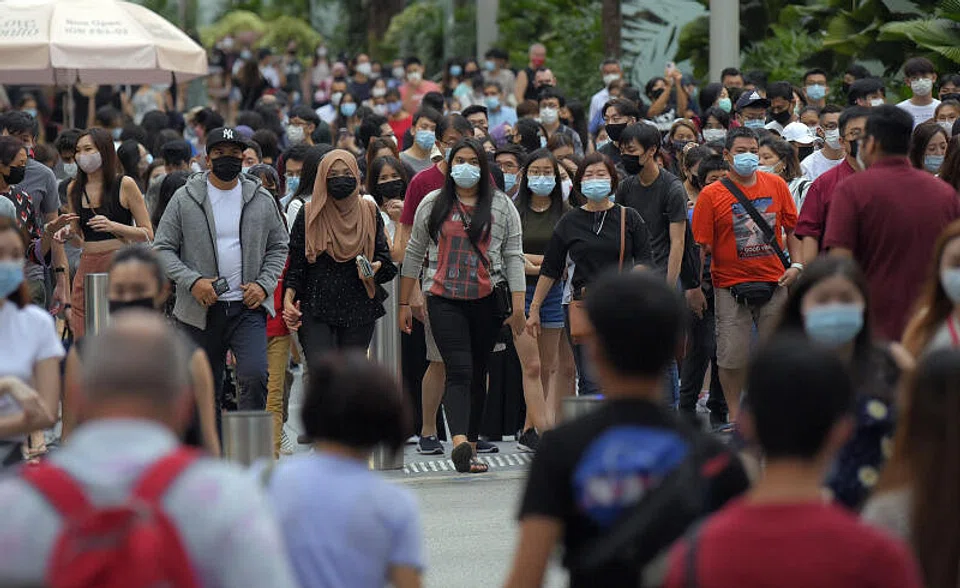
HOUSEHOLD incomes continued to rise in both real and nominal terms over the last decade, with a significant spike in households at the top end, according to data released on Friday by the Department of Statistics. (see amendment note)
The median monthly household income from work rose 3.3 per cent per annum - or 1.9 per cent in real terms - to S$7,744 in 2020, up from S$5,600 in 2010, as shown in the second of two statistical releases from the Census of Population 2020.
The increase was even more pronounced for median monthly household income per household member. This rose 4.2 per cent per annum - or 2.8 per cent in real terms - to S$2,463 in 2020, from S$1,638 before.
Notably, there was a sharp rise in households earning S$20,000 and more. These now account for 13.9 per cent of households, more than doubling from 6.6 per cent previously.
There were 1.37 million resident households in 2020, up from 1.15 million in 2010. But the average household size fell to 3.2 persons, from 3.5 persons before.
More households now live in condominiums and other apartments, with 16 per cent doing so, up from 11.5 per cent in 2010.
Navigate Asia in
a new global order
Get the insights delivered to your inbox.
The proportion of households living in Housing Board flats fell to 78.7 per cent, from 82.4 per cent previously.
The latest census covered two new areas - the geographic distribution of workplaces, and residents who faced difficulty performing basic activities.
As with census data in general, the new survey questions will help policymakers identify areas where intervention might be needed, and inform policy reviews, said Minister in the Prime Minister's Office Indranee Rajah in a media briefing.
The geographical distribution of workplaces, for instance, informs urban planning, particularly in line with the aim of enabling more people to work close to home, she added.
The downtown core planning area accounted for the largest share of employed residents, with 12.9 per cent working there. Coming a distant second was Queenstown, with 6 per cent of employed residents, followed by Geylang with 5.3 per cent.
As the survey was conducted during the Covid-19 pandemic, respondents were asked to indicate their usual place of work, even if they were currently working from home.
Meanwhile, the questions on difficulties with basic activities - distinct from the government's official definition of disability - can inform policies on aged care, said Ms Indranee.
The majority of residents facing difficulty with basic activities were aged 65 or older, with mobility issues being the most common.
Knowing the numbers and profile of such residents will inform policy on the sort of care and facilities that the ageing population may need, said Ms Indranee.
Amendment note: An earlier version of the story said in the headline that the share of households in condos and apartments was almost up 5 per cent, and the proportion in HDB flats slipped 3.7 per cent. These should have been 5 percentage points and 3.7 percentage points respectively. The headline has been amended accordingly.
Decoding Asia newsletter: your guide to navigating Asia in a new global order. Sign up here to get Decoding Asia newsletter. Delivered to your inbox. Free.
Copyright SPH Media. All rights reserved.
TRENDING NOW
Autobahn Rent A Car directors declared bankrupt over S$50 million each owed to DBS

Higher costs, lower returns: Why are Singaporeans still betting on real estate?

Richard Eu on how core values, customers keep Singapore’s TCM chain Eu Yan Sang relevant
Loyang Valley sold for S$880 million to SingHaiyi-led consortium

