Budget 2020: Lump-sum tax built into road tax for electric vehicles
 Add BT as a preferred source
DeeperDive is a beta AI feature. Refer to full articles for the facts.
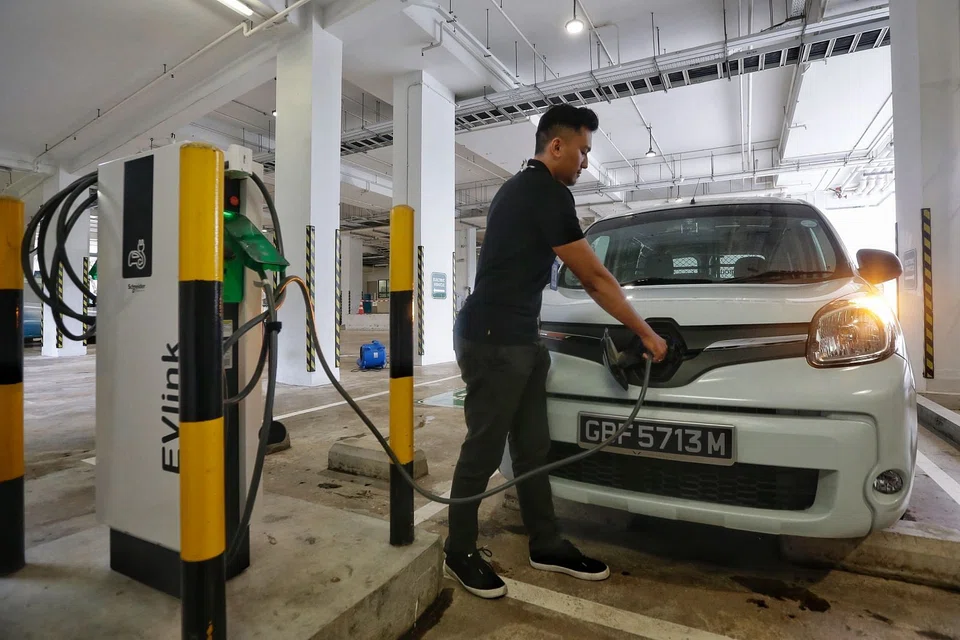
A lump-sum tax will be built into the road tax schedule for electric vehicles (EV) to partly account for the loss in fuel excise duties since owners of such cars do not pay them, Deputy Prime Minister and Finance Minister Heng Swee Keat said in his Budget speech on Tuesday.
The lump-sum tax will be phased in over three years starting from January 2021, with the full quantum implemented by January 2023.
Fuel excise duties today yield around S$1 billion per year and are significant contributors to government revenues, Mr Heng said.
They are also a form of mileage tax which discourages excessive driving, especially in private cars and thus helps to reduce road congestion, he added.
"But EVs do not pay fuel excise duties. Therefore, we will need to update our vehicular tax structure to preserve these two considerations," Mr Heng said.
He said the government would ideally like to implement a usage-based tax on EVs, but the technology to do this is still several years away, through the Next Generation ERP System.
Navigate Asia in
a new global order
Get the insights delivered to your inbox.
While total road tax will be higher for some EV models, Mr Heng noted that EV buyers can still enjoy substantial cost savings because of the significant EV Early Adoption Incentive.
For more Budget 2020 stories, visit bt.sg/budget20.
Decoding Asia newsletter: your guide to navigating Asia in a new global order. Sign up here to get Decoding Asia newsletter. Delivered to your inbox. Free.
Copyright SPH Media. All rights reserved.