

Singapore could introduce unemployment support as early as Budget 2023
Proposed in 2021 by tripartite partners, such a scheme might be restricted to older or lower-income workers

Tessa Oh
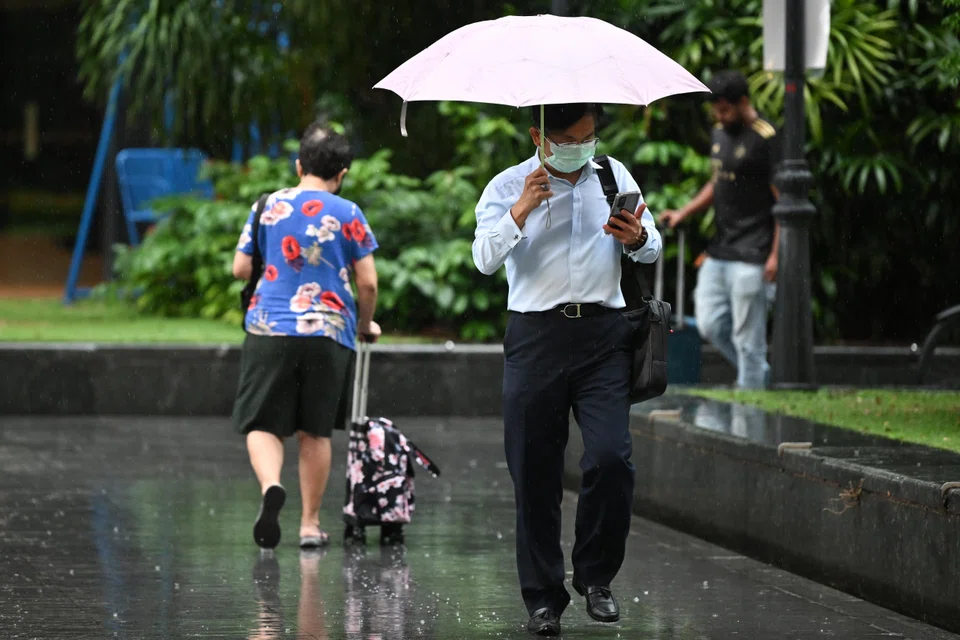
BUDGET 2023 - to be delivered in Parliament on Feb 14 - could include unemployment support for retrenched workers, though this may only cover a fixed period of joblessness and be for vulnerable workers, said economists.
In 2021, “unemployment income support” was one of nine recommendations by a taskforce formed by the National Trades Union Congress (NTUC) and the Singapore National Employers Federation (SNEF) to better support professionals, managers and executives (PMEs).
After NTUC reiterated its call for this last November, Manpower Minister Tan See Leng said the government is “looking very carefully” at how to structure such a scheme.
Such comments suggest some form of unemployment support is in the works, and could be announced as early as this year’s Budget, observers told The Business Times.
Supporting re-employment, not unemployment
Earlier in January, Deputy Prime Minister and Finance Minister Lawrence Wong implied that training could be made a requirement for such support. He drew a contrast with generous unemployment benefits elsewhere, which risk making it “more attractive to stay unemployed than to get back into the workforce”.
Singapore’s measures should be thought of as re-employment support, rather than unemployment support, he said.
“It is about... providing some form of financial cushion to workers while enabling them to upgrade their skills, and helping to place them in new roles that best fit their abilities and aptitudes,” said Wong.
In his speech at IPS Singapore Perspectives 2023, Wong said this was among “major changes” being considered to the SkillsFuture ecosystem.
Limited durations or attached conditions are common features of unemployment support schemes globally, economists told BT.
Singapore University of Social Sciences (SUSS) associate professor Walter Theseira said: “For example, schemes may provide a short duration of benefits without any requirements, and then extendable benefits that require proof that the worker is actively seeking employment or actively participating in training.”
Economist Kelvin Seah from the National University of Singapore pointed out that a training requirement would be “consistent with the government’s traditional ethos of enabling self-reliance”.
But one danger is “lock-in effects”, said Oxford Economics senior economist Alex Holmes. Attending a course means less time to find a job, and could cause workers to stay jobless for longer than they otherwise would have, he said. “As such, any programmes and their implementation must be carefully designed to avoid any unintended consequences.”
Asked what the NTUC expects from Budget 2023 on this front, assistant secretary-general Patrick Tay noted that the taskforce’s recommendation was specifically for older PMEs, especially those in their 40s to 60s, who face both the risk of job displacement and challenges in finding new jobs when retrenched.
“This may come in the form of ‘re-employment support’, together with job search or training support,” said Tay, who is also the taskforce co-chair.
“There should be active labour market policies to incentivise those who are actively looking to re-enter the workforce by going for employability camps, career coaching and job interviews.”
For those who need it most
Any unemployment support will likely be for vulnerable workers – those who are older, lower-income, or less educated, said Dr Seah.
Maybank economist Chua Hak Bin stressed that support will be for retrenched workers, not the unemployed in general. “Cash support for the retrenched is far less sweeping, more targeted at the workers who need the funds, and costs far less.”
He suggested that the scheme could resemble the Covid-19 Recovery Grant, which gave up to S$800 a month in temporary assistance to Singaporeans whose jobs were hit by the pandemic. A variation of this could be made permanent, with displaced workers receiving cash payouts that decline over a period of six months, suggested Dr Chua.
In addition to unemployment income, there ought to be a legal requirement for employers to pay displaced workers redundancy or retrenchment payouts, said Prof Theseira.
Employers should also be required to contribute to both unemployment and retrenchment support, he added, as is common elsewhere. Contributions could vary by the industry’s risk of retrenchment, or be capped at a certain income.
After all, retrenchment benefits can be seen as a “cost or penalty” that firms should pay for having employment or business practices “that lead to the untimely loss of employment”, he said.
A question of timing
While some see a Budget 2023 announcement as possible, Prof Theseira believes it is too early. The timing and policy details are likely still being ironed out, and the urgency of such a scheme has somewhat diminished as the pandemic had only a brief impact on Singapore’s labour market, he said.
“I believe there is a case for unemployment support schemes, but the implementation doesn’t need to be rushed if the labour market is doing well,” said Prof Theseira.
He noted that there are already other substantial labour market changes due this year: a new Employment Pass framework and anti-discrimination legislation.
But if the government plans to introduce an unemployment support scheme eventually, policy consultations or trials should be carried out this year, he added.
Major changes to existing support schemes are more likely to happen after the Forward Singapore feedback exercise ends in mid-2023, as that year-long exercise is also studying the issue of unemployment support, said Sim Gim Guan, executive director of SNEF.






