

Singapore electronics tipped to stay positive in 2022 despite slower exports growth

Annabeth Leow
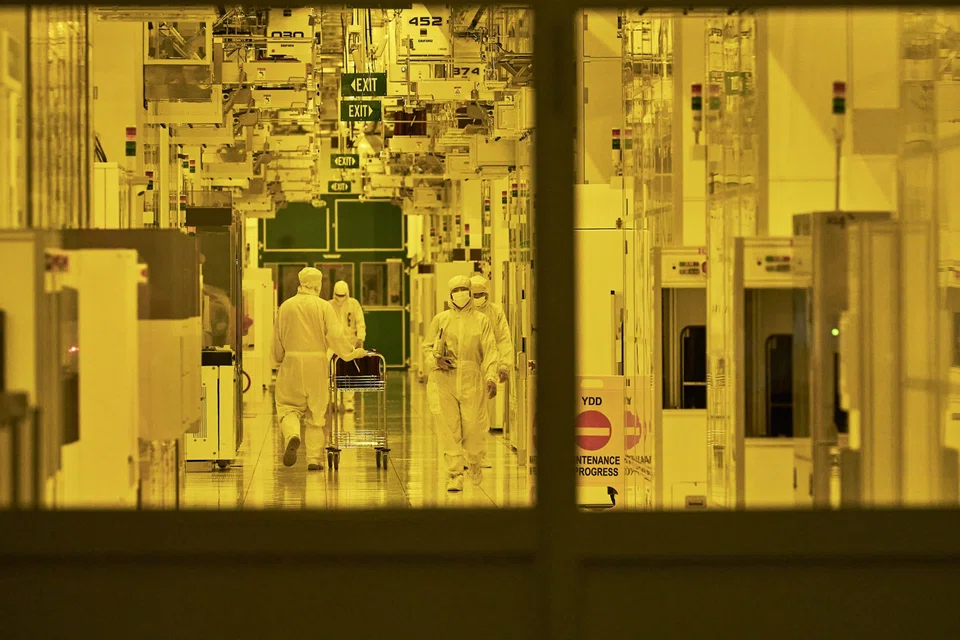
EXPORTS from Singapore’s linchpin electronics industry slowed in June, even as analysts warned of cooling economic growth and rising risks to global trade.
But the electronics cluster is not likely to hit a downturn yet, watchers believe, with the trade sector tipped to stay positive through the rest of 2022 despite headwinds in the year ahead.
Headline non-oil domestic exports (NODX) still came in ahead of expectations to expand by 9 per cent year on year in June, despite growth easing from 12.0 per cent in the month before, according to figures from trade agency Enterprise Singapore (ESG) out on Monday (Jul 18).
Selena Ling, chief economist at OCBC, observed in a research note that “the electronics export engine continued to lose altitude”, as electronics shipments growth slowed to 4.1 per cent year on year in June, from 12.9 per cent in the month before.
That’s in contrast with the 10.6 per cent year-on-year increase in non-electronics NODX in June – compared with 11.7 per cent in May – which ESG attributed to shipments of food preparations and petrochemicals on a low year-ago base, as well measuring instruments.
“The global trade outlook is dampened by the China slowdown, Russia-Ukraine war, and global monetary tightening,” wrote Maybank economists Chua Hak Bin and Lee Ju Ye.
They added: “Prices of some integrated circuits are falling due to declining market demand, which could further slow the electronics momentum in the second half.”
Similarly, Alvin Liew, senior economist at UOB, noted that electronics “has enjoyed a very long upcycle” and may grow more slowly in the second half, given the year-ago high base.
Still, his team is not expecting the electronics industry to turn negative in the next 6 months. He told BT: “Even as electronics NODX growth slowed in June, integrated circuits continued to grow strongly in the month and was one of the main contributors for its expansion.”
The electronics cluster’s performance was dragged down by disk media products, which reversed the previous month’s 10.3 per cent growth to fall by 10.8 in June, and personal computers, where the decline widened from 8.5 per cent in May to 45.2 per cent in June.
Meanwhile, integrated circuits grew by 26 per cent – against 26.6 per cent in May – while shipments of integrated circuit parts expanded by 86.1 per cent year on year in June.
Identifying “increasing divergence in the broad electronics shipments”, HSBC economist Yun Liu said demand for chips “appears to be holding up” even with a decline in consumer electronics.
“While there are some initial signs of a cooling tech cycle (for example, South Korea), Singapore’s electronics shipments remained resilient so far, though the pace has clearly moderated from last year’s impressive growth,” she added in her report.
Liew maintained his forecast for full-year NODX growth of 5 per cent in 2022, which takes into account “easing electronics NODX momentum”, among other downside risks.
Even if the pace of growth slows to an average of around 2 per cent year on year for the next 6 months, “the full-year projection still looks achievable”, he wrote in a note.
And Ling wrote that domestic and regional consumption remain resilient, while predicting that full-year NODX would grow by between 6 per cent and 8 per cent in 2022 – higher than the official growth estimate of 3 per cent to 5 per cent released by ESG in May.
To be sure, she told BT: “The electronics soft patch is already ongoing. Coupled with the pharmaceutical weakness, overall NODX growth may contract year on year by the end of the year, partly also attributable to base effects and heightened global growth slowdown concerns.”
Indeed, Maybank’s Chua and Lee expect growth to ease to the low single digits in the second half of 2022, before falling to between -2 per cent and 1 per cent in 2023 “as exports fall due to both lower prices and volume on the back of weak global demand”.
Yet Liu, from HSBC, said in her report: “Granted, we need to be mindful of trade headwinds, as demand from the West is likely to slow down in the near term. However, we are likely to see a gradual cooling trade cycle, rather than a collapsing cycle.”






