Singapore labour demand shifts to growth sectors such as tech; new roles make up nearly half of vacancies in 2025
Sectors with higher-than-average shares of new roles include information and communications and professional services

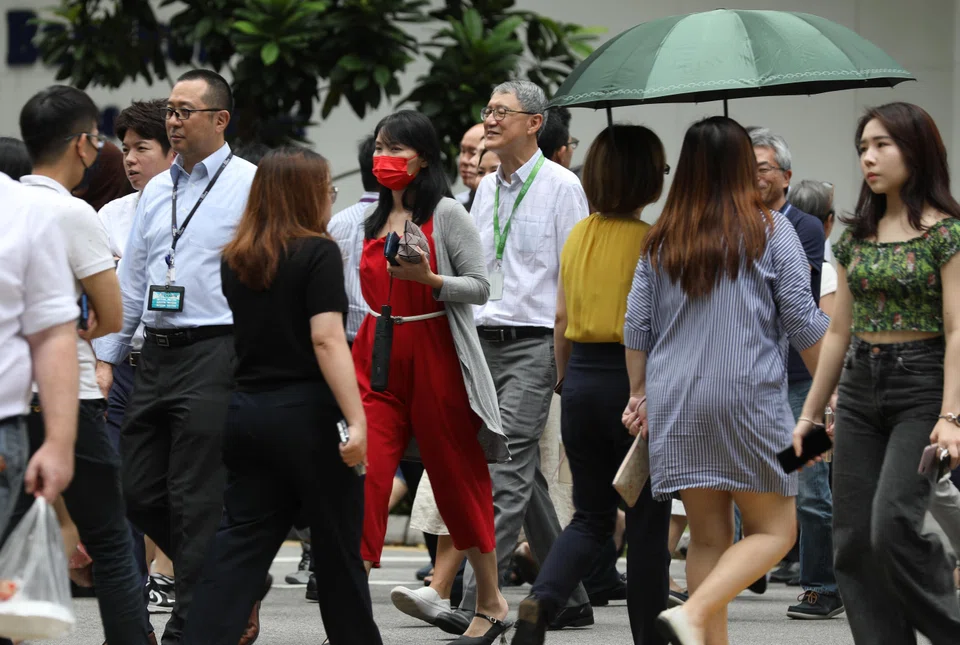
[SINGAPORE] The Republic’s labour market remains tight, with vacancies outnumbering job seekers, and new roles accounting for nearly half of all vacancies in 2025.
The Ministry of Manpower’s (MOM) annual Job Vacancies Report, released on Friday (Mar 20), indicated that the share of newly created roles – 49.3 per cent, up from 45.7 per cent in 2024 – suggests “that labour demand continued to be supported by business expansion rather than replacement hiring alone”.
Top sectors with above-average shares of new vacancies were information and communications (74.2 per cent), professional services (58.2 per cent) and financial and insurance services (54 per cent).
In 2025, the annual average of job vacancies was 75,900, slightly higher than the 75,400 in 2024.
The ratio of job vacancies to job seekers was 1.58 in December 2025, from 1.57 in December 2024.
Describing this ratio as “high”, MOM’s director for manpower research and statistics Ang Boon Heng attributed this partly to skills mismatch.
“It first shows that there’s a tight labour market, but at the same time, there are workers who might have some difficulties going to jobs that fit their educational (background),” he told the media before the report was released.
This mismatch occurs alongside digitalisation-driven shifts in labour demand. MOM noted that technological developments continued to drive demand for skilled professionals, managers, executives and technicians (PMETs) in technology and engineering.
The available roles include those in software, Web, multimedia, game development and design, systems analysis, data science and applications and systems programming.

Specialised PMET roles harder to fill
Nevertheless, hiring difficulties have eased, in that the share of vacancies that went unfilled for at least six months fell to a decade-low of 17.1 per cent, from 19.4 per cent in 2024. This was driven mainly by improvements in ease of hiring for non-PMET roles such as drivers, cooks and waiters.
In contrast, the share of PMET roles left vacant for at least six months went up to 16 per cent, from 14.4 per cent in the year before.
The top unfilled PMET roles were in software, Web, multimedia and games development and design (7 per cent); data science (5.3 per cent); and teaching and training (4.9 per cent).
The report said that employers cited two key reasons for why it is challenging to fill PMET roles with residents: the lack of specialised skills (52.3 per cent) and insufficient work experience (48.2 per cent).
Coming a distant third was competition from other employers (23.2 per cent), followed by unattractive pay (22.1 per cent), and gaps in personality traits, work attitude or motivation (17.5 per cent).
Skills matter more than academic chops
For nearly four in five vacancies, academic qualifications were not the main determinant in hiring.
For nearly seven out of 10 vacancies (69.2 per cent), employers said they reaped better outcomes with a skills-based approach. Hiring was done more quickly, and companies enjoyed access to a broader talent pool and better employee performance.
For more than two-thirds of vacancies (66.9 per cent), employers were willing to consider applicants with less than the minimum qualifications stated, up from 58.1 per cent in 2024.
Manpower Minister Tan See Leng said on Facebook that this shift is a promising sign and that he is “confident it will open up more opportunities for Singaporeans at various stages of their careers”.
Work experience requirements
In 2025, most vacancies were suitable for candidates with “limited to moderate prior experience”, said MOM.
Among non-PMET vacancies, 46.2 per cent required no experience, and 29.6 per cent required just a year’s experience.
In contrast, just over half of PMET vacancies required two to five years of experience.
Only 21.1 per cent required no prior experience, and 13.5 per cent required one year.
Vacancies that did not need experience tended to be for roles such as management executives, financial and investment advisers, and commercial and marketing sales executives.
The share of vacancies that could be filled remotely rose to 22.7 per cent in 2025, from 14.4 per cent in 2024.
But overseas recruitment for roles fell to 16.5 per cent from 23 per cent, “reflecting employers’ preference for suitable local candidates”, said MOM in its statement.
This also points to a shift in the way some roles are organised, which could support greater labour force participation among workers who benefit from flexible work arrangements, such as caregivers, noted the report.
Bracing for impact
MOM said that firms are expected to remain cautious in their hiring decisions this year; the proportion planning to hire in the next three months remained modest at 43.3 per cent in December.
It added that early indications, based on polls done in January 2026, point to a pick-up in hiring expectations, indicating a “cautiously positive outlook for labour demand”.
However, Dr Tan noted that the conflict in the Middle East is evolving, and the government is monitoring the situation as Singapore will be affected by the resulting increase in electricity prices and business costs.
“We cannot shield ourselves entirely from these external disruptions. But we are prepared,” he added.
Dr Tan reassured that the government will “act early where needed” to ensure Singapore’s labour market remains resilient in times of uncertainty.
Prime Minister Lawrence Wong said on Wednesday that the government is prepared to roll out measures beyond what was announced at Budget 2026, including utility rebates and various business assistance measures.
Decoding Asia newsletter: your guide to navigating Asia in a new global order. Sign up here to get Decoding Asia newsletter. Delivered to your inbox. Free.
Copyright SPH Media. All rights reserved.