

Singapore leaves monetary policy settings unchanged in January but raises inflation forecasts
MAS ups full-year core and headline inflation forecasts to 1-2%, from 0.5-1.5%

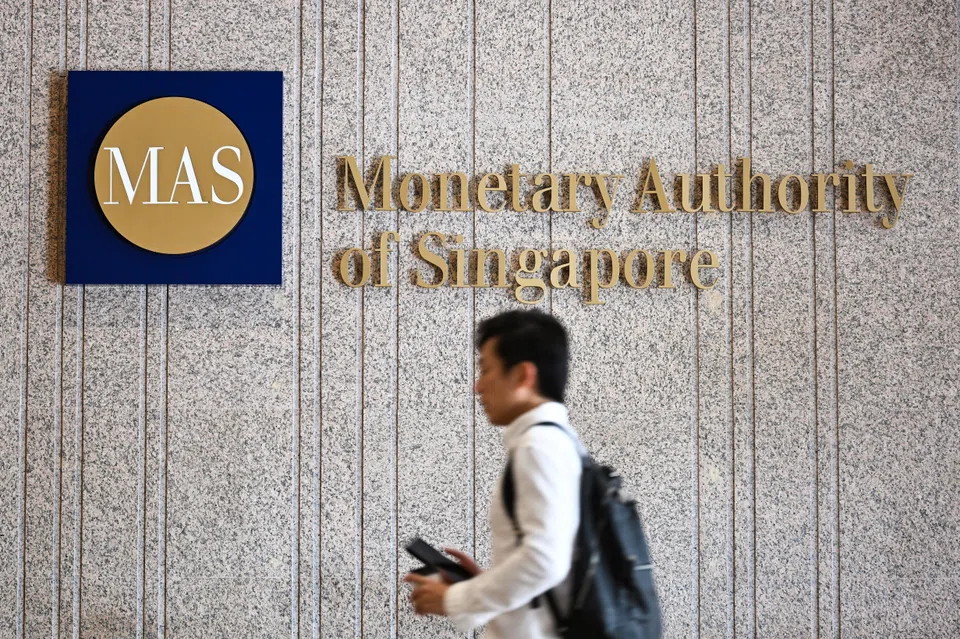
[SINGAPORE] The Republic’s central bank kept monetary policy settings unchanged for the third consecutive quarter on Thursday (Jan 29).
The Monetary Authority of Singapore (MAS) said it will maintain the prevailing rate of appreciation of the Singapore dollar nominal effective exchange rate (S$NEER) policy band, with no change to its width and the level at which it is centred.
“MAS is in an appropriate position to respond effectively to any risk to medium-term price stability and will continue to closely monitor economic developments amid uncertainties in the external environment,” said the central bank.
Since its October meeting when settings were unchanged, the S$NEER has strengthened in the upper half of the appreciating policy band, it said.
Thursday’s announcement was in line with economists’ expectations. In a Reuters poll, 15 of 16 economists believed settings would be unchanged. Similarly, 11 of 12 polled by The Wall Street Journal thought MAS would keep its settings.
For full-year 2026 inflation, MAS raised its forecasts for both core and headline inflation to a range of 1 to 2 per cent, up from its earlier range of 0.5 to 1.5 per cent.
Singapore’s 2025 full-year core inflation averaged 0.7 per cent, slightly above the official forecast of 0.5 per cent, data from the Department of Statistics Singapore showed on Jan 23.
Full-year headline inflation came in at 0.9 per cent, falling within the official forecast range of 0.5 to 1 per cent.
This was as December’s core and headline inflation both held steady at 1.2 per cent.

On Thursday, MAS said it expects core inflation to “increase modestly” in the near term, reflecting a pickup in the growth of services unit labour costs from its subdued pace in 2025.
At the same time, the recent rise in services productivity could be sustained and dampen the extent of cost increases, while imported inflation should stay contained, it added.
Global oil and food commodity prices are also expected to decline at a progressively slower pace over 2026, while regional consumer price inflation will edge up, it said.
On average, core inflation momentum is projected “to come in at a pace that is slightly below trend” over 2026, said MAS. Headline inflation will also reflect subdued accommodation costs, stemming from the impact of last year’s weaker housing rental growth.
Singapore’s gross domestic product is expected to grow 4.8 per cent in 2025, with fourth-quarter GDP growth to come in at 5.7 per cent, based on advance estimates released earlier in January. This exceeds the official full-year growth forecast of “around 4 per cent”.
MAS said on Thursday that it expects global growth to “ease modestly”, as the lagged effects of higher tariffs weigh on demand and trade.
But the extent of global economic moderation could be mitigated by supportive fiscal and monetary policies, it said, with the sustained global artificial intelligence capital expenditure upcycle in the near term providing strong support for economies plugged into the electronics supply chain.
Following Singapore’s strong performance in 2025, GDP growth in 2026 is expected to “remain resilient”, with the output gap positive for the full year, said MAS.
The latest move comes after the central bank similarly kept settings unchanged in October and July 2025. Prior to that, there were two consecutive rounds of easing in the January and April meetings, where it reduced the slope slightly.
Also set to be released later on Thursday is MAS’ Macroeconomic Review, which is published four times a year in conjunction with the release of the monetary policy statement.
Decoding Asia newsletter: your guide to navigating Asia in a new global order. Sign up here to get Decoding Asia newsletter. Delivered to your inbox. Free.
Copyright SPH Media. All rights reserved.
TRENDING NOW

Once staunchly pro-China, Malaysian Chinese businesses are now distancing themselves from Beijing

Looking beyond looming CEO succession, should UOB potentially pursue a transformative merger?

Could stablecoins be the future of money?

Grab CEO’s wife Chloe Tong on life with Anthony Tan and finding her purpose

