

Singapore Manufacturing Federation to develop AI consultancy, encourages firms to enter new markets amid tariff risks
Most SMEs automate only about 25% of their processes, which is too low: industry body’s president

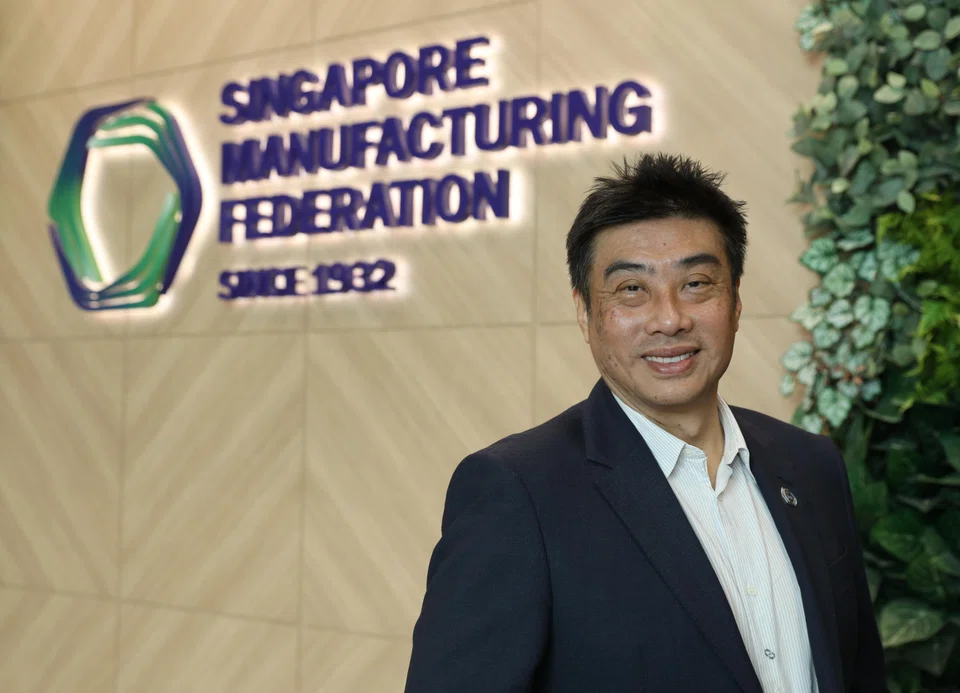
[SINGAPORE] To make artificial intelligence (AI) less intimidating, the Singapore Manufacturing Federation (SMF) is working on a consultancy service for its members.
For an accessible fee, advisers will help companies identify gaps in their processes where AI can be applied, and adopt affordable solutions.
“The main problem our members face (when it comes to AI adoption) is the lack of expertise, not knowing what’s out there, or how to use it,” said SMF president Lennon Tan in an interview with The Business Times, not long after Prime Minister Lawrence Wong highlighted the importance of AI in his National Day Rally speech.
Further details, including the launch date, will be announced later.
Tan did not disclose the expected fee, but said that the service will be “very much subsidised” for SMF’s 5,000 or so members, which include multinational corporations and small and medium-sized enterprises (SMEs).
“They don’t need to pay an arm and a leg,” he noted. “We’ll work with them to come up with a plan and then roll it out stage by stage, based on their ambition, funding and headcount.”
The consultancy service is meant to help members navigate both the risks and opportunities of AI adoption. While AI may be disruptive now, it will eventually allow workers to perform at a “higher, more productive level”, said Tan.
To illustrate AI’s potential in manufacturing, he gave the example of a Chinese garment producer that uses AI to analyse social media trends among customers aged 15 to 35, and develop design options around themes such as video games and K-pop.
Customers are then polled before the designs are produced and marketed.
This data-driven approach has helped cut manpower needs from about 50 employees to just five, explained Tan.
Addressing fears
However, many SMEs’ adoption of AI “doesn’t go beyond ChatGPT”, while others assume adoption is costly and complex, said Tan.
Countering that perception, he noted that narrow AI applications – for specific tasks such as quality inspection or production scheduling – can be relatively affordable.
Despite this, a study by the Institute of Policy Studies and partners found that about 70 per cent of Singapore manufacturers automate no more than 25 per cent of their processes – a level of automation that Tan considers too low.
Part of the problem, he argued, is insufficient support. Government grants cover only a fraction of the cost of full automation, which can run into millions of dollars, he noted. “Most businesses either don’t have the funds, or the return on investments takes too long, so they live with hiring people instead.”
Tan hopes that with more aid, SMEs can aim for around 50 per cent automation, which would allow them to enjoy greater dividends in productivity gains, more consistent quality and scalability.
He also acknowledged concerns that AI could disrupt certain roles – such as production scheduling, quality control and junior audit work – but stressed that new jobs will also be created, particularly in checking and “humanising” AI output.
Mid-career workers need not be left behind, as AI tools will increasingly act as a “super assistant” to help employees work more productively, rather than replace them outright.
The SMF’s Singapore Innovation and Manufacturing Excellence Awards are another effort to improve the manufacturing scene. Launched in July, these are “very different” from typical business accolades, said Tan. Instead of rewarding only top firms, the awards highlight manufacturers that embrace practices such as sustainability and innovation, with the aim of promoting a culture that others can learn from.
Tariffs and diversification
Beyond AI, another hot topic in manufacturing is the impact of US tariffs. The immediate effect on most Singapore manufacturers has been limited, pointed out Tan. This is because the current 10 per cent rate is largely absorbed by consumers or distributors, and the US accounts for only a small share of Singapore’s exports.
But the bigger concern lies in potential sectoral tariffs, where rates on semiconductors could climb to about 100 per cent, and those on pharmaceuticals to 200 per cent.
Short of setting up plants in the US, what Singapore can do is seek exemptions through continued negotiations with Washington, said Tan. This would mean demonstrating that the Republic’s manufacturers pose no security risks. For instance, the country could guarantee a continued supply to the US even during crises, or adjust supply chains to address US concerns, he added.
On SMF’s end, it is urging members to diversify not just into South-east Asia, but farther abroad to Latin America and Africa – regions once avoided for their distance and unfamiliarity. “Now we are leading mission trips there,” noted Tan. “Rather than sitting down doing nothing, this is our response to the US tariffs.”






