

Singapore PMI edges higher in December on firmer orders and output
The overall purchasing managers’ index is up 0.1 point at 50.3, marking the fifth straight month of expansion

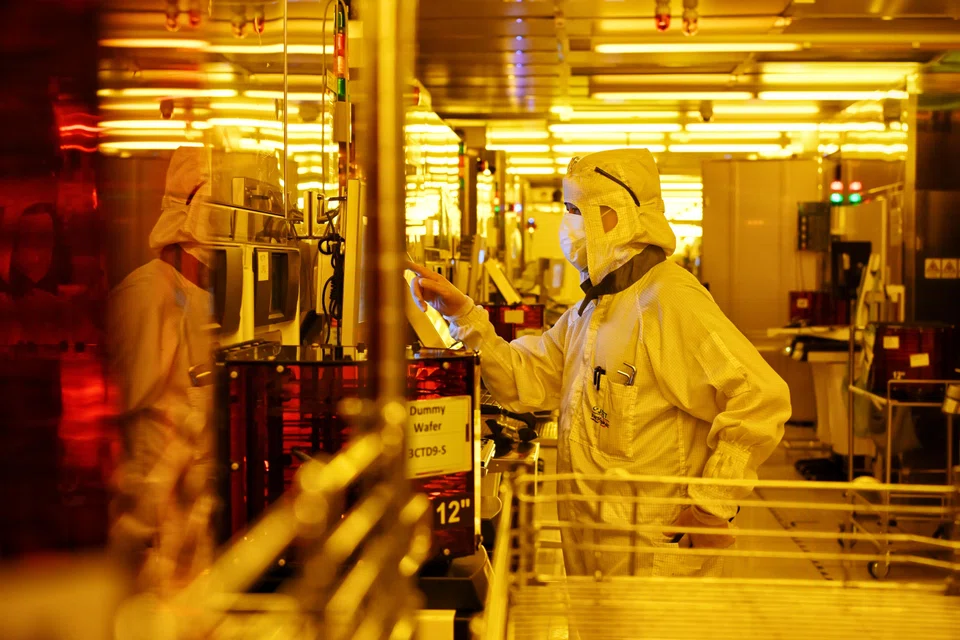
[SINGAPORE] Factory activity in Singapore grew modestly in December, driven by stronger growth in new orders and factory output.
The Purchasing Managers’ Index (PMI) edged up 0.1 point to 50.3 from November, data from the Singapore Institute of Purchasing and Materials Management (SIPMM) showed on Friday (Jan 2).
This marks the fifth straight month of expansion. A reading above 50 indicates expansion, while one below 50 indicates decline.
Within manufacturing, the PMI for the linchpin electronics sector likewise grew by 0.3 point to 50.9, marking the seventh consecutive month of expansion.
DBS senior economist Chua Han Teng said this growth momentum continues to “reflect the combination of strong near-term demand for artificial intelligence (AI)-related servers and server-related products, as well as US tariff exemptions on electronics goods”.
However, he cautioned that the current electronics upcycle is showing signs of maturing, and could face headwinds in 2026 from potential US semiconductor tariffs and a possible moderation in unusually strong AI-driven demand.
The overall PMI pointed to some moderation in broader manufacturing momentum, with slower growth in new export orders and input purchases, while employment conditions remained weak despite a slower pace of contraction.
In contrast, the electronics sector continued to perform strongly, with growth supported by faster expansion in new orders, new exports, factory output and employment.
OCBC’s chief economist Selena Ling said the divergence in these underlying indicators suggests that momentum in the broader manufacturing sector may be starting to lag behind the electronics industry.
She added that some easing in inventory-related measures suggests growth may be losing steam slightly as we head into the early part of the year, with supply side constraints – such as capacity limits and logistics disruptions – playing a bigger role than any weakening in demand.
Stephen Poh, executive director of the SIPMM, said the latest readings point to a positive outlook for the manufacturing sector heading into the new year, supported by sustained demand, particularly in electronics and semiconductors.
“However, manufacturers are facing capacity constraints, as well as disruptions from Red Sea diversions, which have led to longer transit times, higher logistics costs and delays in supplier deliveries,” he added.
Vessels have avoided the Red Sea since 2023 after attacks by Yemen’s Iran-aligned Houthis.
Regional trends
Most regional economies ended the year in expansion territory, with some marking improvements from the previous month.
China’s official PMI rose to 50.1 in December from 49.2 a month prior, reversing a record eight straight months of decline.
The RatingDog China General Manufacturing PMI, a private index compiled by S&P Global, similarly rose 0.2 point to 50.1 last month, beating analysts’ expectations.
South Korea likewise found itself in expansion territory for the first time since September after its PMI rose to 50.1 in December, up from 49.4 from before.
Meanwhile, Malaysia, Indonesia and Vietnam continued to post expansionary readings, though momentum was uneven.
Malaysia’s PMI was unchanged at 50.1 in December, while Vietnam eased slightly to 53 from 53.8 the month prior. Indonesia saw a sharper pullback, with its PMI falling 2.1 points to 51.2.
TRENDING NOW

High Court rules against Julius Baer’s Singapore trust arm in US$50 million family trust dispute

MSCI proposes standalone status for Indonesia; Jakarta stocks plunge 8%

Once staunchly pro-China, Malaysian Chinese businesses are now distancing themselves from Beijing

No chicken feed: How Malayan Flour Mills built an empire from flour to fowl

