

Singapore PMI slips to 50.1 in July as global demand softens
 Add BT as a preferred source
Tessa Oh
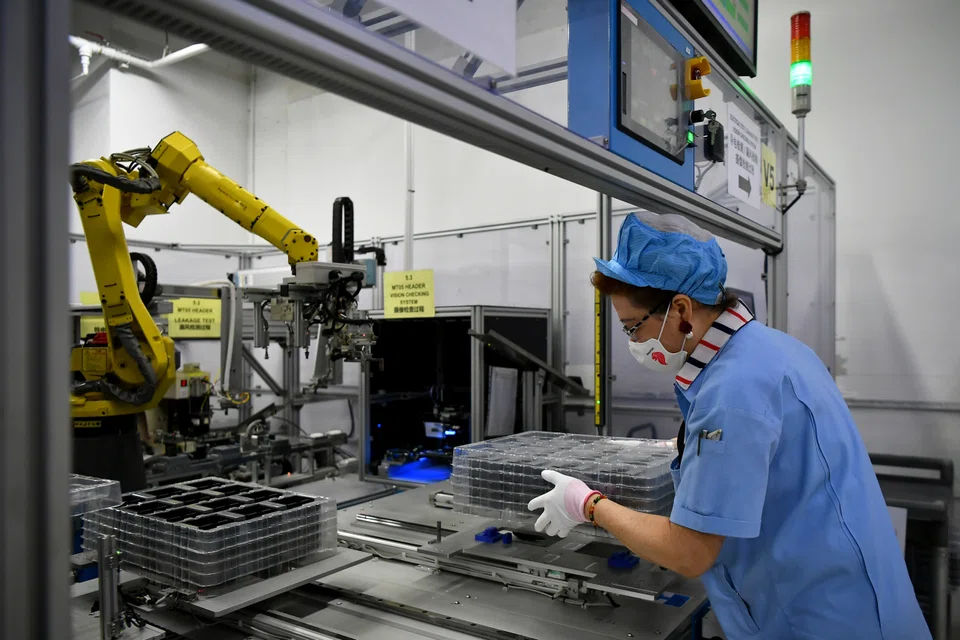
SINGAPORE manufacturing sentiment started the second half of the year on a gloomy note, as the sector continues to be weighed down by global supply chain disruptions and high inflation, according to the latest figures from the Singapore Institute of Purchasing and Materials Management (SIPMM) on Tuesday (Aug 2).
Singapore’s Purchasing Managers’ Index (PMI) fell 0.2 point to 50.1 in July, though this was still its 25th straight month in expansion.
A reading above 50 indicates growth from the previous month, while one below 50 means a contraction.
Likewise, the linchpin electronics sector dipped 0.3 point to 50.5, after rising slightly in the previous month. It was weighed down by slower growth in new orders and exports, factory output, employment, as well as a sharper contraction in inventories. Nevertheless, the sector still clocked its 24th month of growth in July.
Sophia Poh, SPIMM’s industry engagement and development vice-president, said the latest readings “signalled a start of the second half-year on a slightly dour outlook for manufacturers”.
“The sector continues to face global headwinds as high inflation hit almost all advanced economies. This further aggravates the costly disruptions on global supply chains due to the pandemic, as well as the prolonged uncertainties arising from the Russia-Ukraine conflict,” she added.
Selena Ling, chief economist at OCBC, said the slower growth was not entirely surprising given that “global manufacturing PMIs have been rolling over, especially in North Asia, led by China, South Korea and Taiwan”.
While Asean manufacturing PMIs have been “relatively more resilient as domestic demand recovers with the reopening of their economies”, she noted domestic manufacturing momentum has been “steadily losing steam in recent months”. The latest business expectations quarterly survey showed that manufacturers here have turned negative on their outlook for the second half of the year.
Global growth prospects have also deteriorated in the past month or so given the heightened recession fears for the US, the euro zone, UK and China amid the aggressive tightening of financial conditions, Ling added.


The S&P Global Asean PMI nudged up slightly to 52.2 in July from 52 previously, signalling a modest overall improvement in operating conditions at the start of the third quarter.
On the other hand, China’s official PMI slipped to 49 in July, down from 50.2. The Caixin PMI, derived from smaller private manufacturers, was at 50.4, down from 51.7.
The easing of Covid-19 restrictions in China has facilitated a continuous recovery in the manufacturing sector in July, though its foundation “remained weak”, said Wang Zhe, senior economist at Caixin Insight Group.
“Major macroeconomic indicators in the second quarter showed that the adverse impact of the latest round of Covid outbreaks on the economy is fading. The third quarter will therefore be a crucial period to get the economy back on track,” said Wang.
The slowdown in China’s activity, coupled with pullback in direct material spending on durable goods, is likely to start weighing visibly on manufacturing in Korea and Taiwan, after the sectors’ strong performance over the last 2 years, said analysts from Barclays.
The S&P Global Taiwan manufacturing PMI tumbled to 44.6 in July, from 49.8, the fastest rate of deterioration over the past 2 years. Similarly, the S&P Global South Korea manufacturing PMI slipped to 49.8, from 51.3 the month before — the sector’s first decline since September 2020.
Even then, the Barclays analysts believe the supply-side troubles for emerging Asia have either peaked or are close to peaking. “While price pressures and supplier delivery times are still cited as headwinds, there has been clear improvements over the past couple of months”.
Decoding Asia newsletter: your guide to navigating Asia in a new global order. Sign up here to get Decoding Asia newsletter. Delivered to your inbox. Free.
Copyright SPH Media. All rights reserved.
TRENDING NOW

The retirement advice that worries me the most
Showdown at Tanglin Club sees new rival slate elected to general committee

Stocks to watch: Mapletree Industrial Trust, The Hour Glass, UI Boustead Reit, Boustead Singapore, Aspial Lifestyle

‘I feel so stupid’: How young Indonesians get stuck on the debt treadmill

