

Singapore to raise corporate tax rebates from 40% to 50%, widen energy grant to ease Iran war impact
The government is also prepared to share fuel-related cost increases for critical public sector projects

[SINGAPORE] Singapore will step up support for businesses facing rising energy and logistics costs from the Iran war, boosting corporate tax rebates and expanding energy efficiency grants to help firms manage near-term pressures while building longer-term resilience.
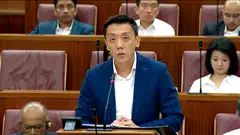
Speaking during a ministerial statement in Parliament on Tuesday (Apr 7) on the impact of the Middle East situation, Senior Minister of State for Finance Jeffrey Siow said higher energy and logistics costs are likely to persist across the economy.
“Small and medium-sized enterprises, in particular, are more vulnerable to sudden cost increases,” said Siow, who had earlier outlined support measures for Singapore’s transport sector.
To help businesses manage cash flow, Siow said that the corporate income tax rebate announced at this year’s Budget will be increased from 40 per cent to 50 per cent for the Year of Assessment 2026.
Furthermore, the cash grant component for eligible companies will be raised from S$1,500 to S$2,000, and the total benefits cap for each company will be raised from S$30,000 to S$40,000.
Eligible companies will receive the enhanced support quickly, with disbursements expected as early as the end of this month, he added.
Even as immediate relief is rolled out, the government will support businesses in building longer-term resilience against sustained energy price pressures, Siow said.
To support more companies in adopting energy-efficient equipment, the base tier of the Energy Efficiency Grant will be expanded from the current six sectors – food services, retail, manufacturing, construction, maritime and data centres – to cover all areas.
Under the existing framework, the base tier provides up to S$30,000 in funding support and was originally set to run until Mar 31, 2027. Siow said the scheme will be extended by a further year to Mar 31, 2028, so more companies can benefit.
SEE ALSO
“Responsible buyer”
Separately, Siow said that as a “responsible buyer”, the government is prepared to share fuel-related cost increases for critical public sector projects where delays or stoppages would significantly affect the public interest.
These include major infrastructure works such as the Cross Island MRT line and new public housing projects. More details will be provided by the Building and Construction Authority, he added.
Siow also noted that some companies in the energy and chemicals sector have been badly affected by feedstock supply disruptions.
The relevant agencies are engaging these firms and assessing how best to provide targeted support to preserve critical capabilities in the economy, he said.
Support for built environment sector
Separately, Minister for National Development Chee Hong Tat said in a Facebook post that rising diesel and bitumen costs have had a significant impact on contractors in the built environment sector, making it difficult for firms to absorb the increases over a sustained period.
To support affected firms working on critical public sector projects, the government will share 50 per cent of the additional costs incurred from diesel and bitumen, he said.
This includes contractors involved in earthworks, piling, roadworks and reclamation for public projects.
“I urge private sector developers to similarly support their contractors by sharing the diesel and bitumen cost increases,” Chee added.
Decoding Asia newsletter: your guide to navigating Asia in a new global order. Sign up here to get Decoding Asia newsletter. Delivered to your inbox. Free.
Copyright SPH Media. All rights reserved.
TRENDING NOW

DBS, OCBC, UOB rout lops billions off STI as inflation, rate concerns spook investors

Grab CEO’s wife Chloe Tong on life with Anthony Tan and finding her purpose

OCBC sheds S$8 billion in value as shares close nearly 6% down; analysts cautious on banks

Deal between tycoon friends sparks scrutiny of Philippine power sector

