Singapore may suffer collateral damage as Trump’s tariffs pave way for global trade war: analysts
Risks include slower growth and greater US scrutiny of Singapore’s relationship with China

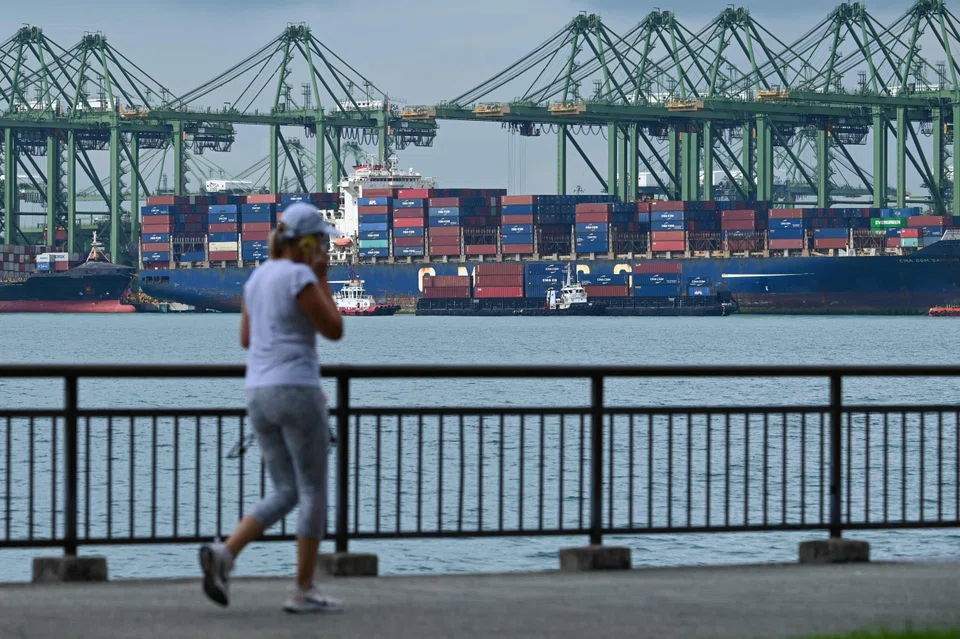
SINGAPORE may have to brace itself for serious economic fallouts and double down on trade pacts if the US’ sweeping new tariffs – on imports from China, Canada and Mexico – pave the way for a major trade war, observers told The Business Times.
In particular, a further slowdown in China’s growth prospects would be worrying, given its strategic and economic importance to this region, said OCBC chief economist Selena Ling.
“The analogy is that when two elephants fight, others in the grass may get trampled,” said Ling, who is also the bank’s head of global markets research and strategy.
Over the weekend, Trump signed executive orders imposing 25 per cent tariffs on Canadian and Mexican imports and 10 per cent on Chinese goods, starting on Tuesday (Feb 4). Energy products from Canada face a lower 10 per cent duty, following concerns from oil refiners.
Canada has since vowed to impose 25 per cent counter-tariffs on C$155 billion (S$144 billion) worth of US-made goods, while Mexico has also announced retaliatory measures. China said that it would file a lawsuit with the World Trade Organization (WTO).
China’s “measured initial response” of turning to the WTO is positive, “but ... events may still take a turn for the worse if negotiations fail”, said Ling.
This raises the possibility of what could be the “most significant global trade war since the 1930s”, said Stephen Olson, a visiting senior fellow of the regional economic studies programme at Singapore’s Iseas-Yusof Ishak Institute.
China’s WTO case is unlikely to have much practical effect, as the Trump administration could simply ignore the panel’s decision, noted Olson. But the move could give China a moral high ground for retaliation.
“By following WTO procedures, China will position itself as the defender of the rules-based global trade system and the US as an irresponsible ‘rule breaker’,” he said.
China has many ways to push back. Besides counter-tariffs, it could also restrict US access to critical materials or make business conditions difficult for US companies in the country, said Olson, adding: “Whatever the response, I expect it to be forceful.”
Stuck in the middle
Veteran economist Song Seng Wun believes that the tariffs and retaliations “will surely have ripple effects on Singapore and Asean”.
“And there’s really nothing Singapore can do except to advise all parties to stay cool; because if not, global growth momentum will surely slow down. This in turn will impact domestic business and consumer confidence,” he said.
Such consequences could in turn soften labour market conditions in Singapore, which means slower job creation and wage growth. “Simply put, tiny Singapore is totally stuck in the middle,” added Song.
Rising tensions between the US and China could be especially challenging. It could lead to greater US scrutiny of whether Singapore is directly or indirectly helping China circumvent trade and investment restrictions, noted Olson.
Eugene Tan, associate professor of law at the Singapore Management University, likewise said: “We may suffer collateral damage, given our extensive trade relations with China.”
“China will be a worthy opponent for the US, and we can expect a bruising economic war. It’s going to be ugly, and takes the rivalry to a new level of strategic competition,” he added.
He believes that the risk of a global tariff war cannot be discounted “because America’s affected trading partners are not going to keel over”.
“It will be ... tit for tat and a race to the bottom. Things will get worse before they return to some sense of normalcy,” he said.
Brace for impact
To be sure, the situation is still in flux, and “there is always hope that calmer heads will prevail”, said OCBC’s Ling.
There is also the possibility that agreements could be struck to “placate Trump’s complaints without creating the appearance that Mexico, Canada or China had capitulated to Trump’s bluster”, said Olson.
But if a tariff war breaks out, Singapore will have to be prepared for the worst.
The city-state will have to persevere with promoting the multilateral trading arrangements and free trade agreements to mitigate the impact, said Assoc Prof Tan. “We have to brace ourselves for a more challenging trading environment,” he added.
OCBC’s Ling noted that there may not be much that Singapore and other trade-reliant economies can do, “apart from reiterating our neutral stance, staying open for business and remaining committed to an open and transparent rules-based system”.