Singapore’s 2026 visitor arrivals may fall short of pre-Covid levels, but tourist spending should keep rising: observers
Growth in tourism receipts will be fuelled by Mice visitors, alongside rising demand for wellness, medical services and experiential offerings

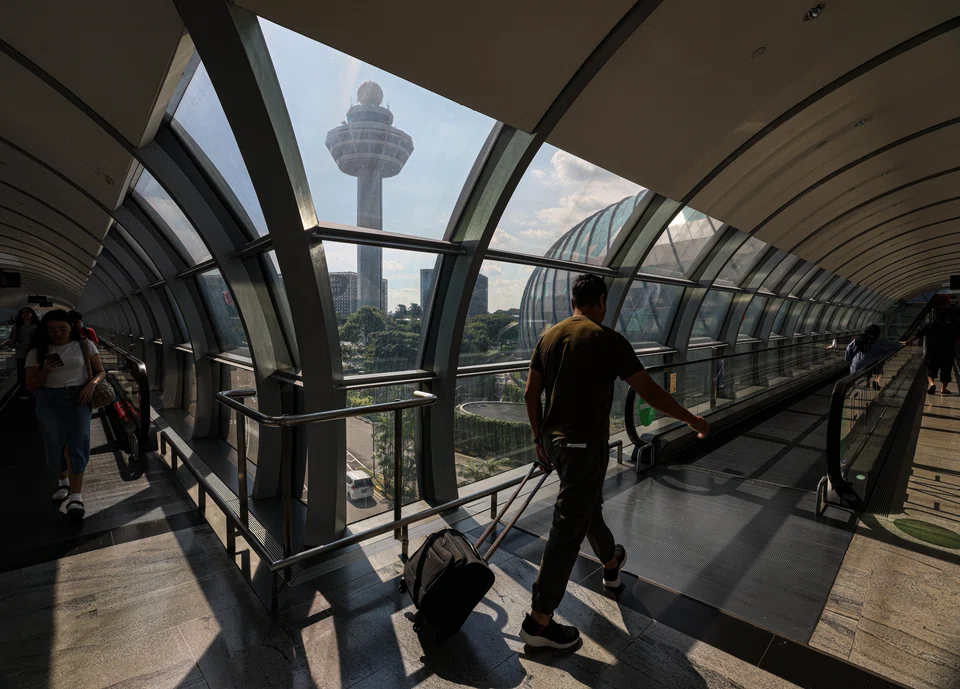
[SINGAPORE] Singapore’s international visitor arrivals are likely to remain below pre-pandemic levels next year, but tourism takings will keep rising, said observers.
Weighed down by global uncertainty, China’s slow recovery in outbound travel and the strong Singapore dollar, visitor arrivals may not surpass 2019’s 19.1 million peak.
But those who do come will spend more, said observers, noting a rise in the number of affluent travellers.
Tourism receipts have already exceeded pre-pandemic levels, reaching S$29.8 billion in 2024 – 7.6 per cent higher than in 2019. The Singapore Tourism Board (STB) expects the 2025 figure to be between S$29 billion and S$30.5 billion.
From January to October 2025, Singapore saw 14.3 million international visitors, up 3 per cent from the year-ago period.
STB’s full-year 2025 forecast is 17 million to 18.5 million. It usually releases the forecast for each new year in February at its year-in-review.
Uncertainty and costs
Industry observers expect 2026 arrivals to approach, but not necessarily reach, 2019 levels.
Most optimistic was Dr Samer Elhajjar, senior lecturer in marketing at the National University of Singapore Business School, who forecasts arrivals of 18.5 million to 20 million.
He noted an uneven rebound across key source markets, with South-east Asia, India and Australia performing “very well”, while North Asia remains behind.
Observers cited China’s slow outbound travel recovery, the strong Singapore dollar, and global uncertainty as the main factors dampening the 2026 outlook.
Still, Wong Xian Yang, Cushman & Wakefield’s head of research for Singapore and South-east Asia, noted: “While uncertainty persists, it has eased considerably, and regional leisure travel is expected to pick up as consumer confidence strengthens in 2026.”
He estimates arrivals of 17.5 million to 19 million, which are below 2019’s peak. Similarly, Joshua Loh, course chair for Ngee Ann Polytechnic’s diploma in tourism and resort management, sees 18 million to 19 million as a “realistic” figure.
While geopolitical uncertainty may make people less inclined to travel, it could also work in Singapore’s favour, he noted. Compared to other destinations, the Republic may be an “attractive option” for its stability and safety.
Least optimistic among the observers to whom The Business Times spoke was Alan Cheong, Savills Singapore’s executive director for research and consultancy. He expects 17.7 million arrivals, representing a likely 3.5 per cent increase from 2025.
Singapore faces “intense competition” from other countries and is weighed down by the high costs of shopping and accommodation, as well as a lack of natural attractions, he said.
Nonetheless, the pre-Covid threshold is expected to be crossed in 2027.
Christopher Khoo, managing director of tourism consultancy MasterConsult Services, thinks 2026 arrivals may “get very close” to 2019 levels but could fall short, adding: “2027 will be the year, though.”
Said Dr Elhajjar: “Many observers think the more realistic window for surpassing 2019 is around 2027 or 2028.”
Higher spending patterns
In contrast, overall tourist receipts have already exceeded pre-Covid levels and should still grow.
For 2026, Dr Elhajjar has the highest estimate of S$31 billion to S$33 billion. Cheong expects S$31.4 billion, a likely 5.5 per cent increase from 2025.
Loh gave “a conservative estimate” of S$30 billion to S$31 billion, given that several major tourism-related projects are still in development.
These include the expansion of Marina Bay Sands (MBS) and the phased opening of Changi Airport’s Terminal 5, with the latter expected to “significantly” expand Singapore’s air capacity, he said.
But Wong thinks spending might only be “broadly in line” with 2025 levels, as travellers become more cost-conscious.
The rise in overall receipts is supported by visitors spending more on average.
Between 2019 and 2024, growth in receipts was supported by a 24.4 per cent increase in spending per visitor, according to Ministry of Trade and Industry figures.
Said Dr Elhajjar: “Even if arrival numbers take a little more time to match the old peak, the value of each visitor is rising in a way that supports long-term growth.”
Wong noted a continued shift towards “high-quality tourism”, driven by business travellers and affluent leisure travellers.
In terms of sectors, this should benefit accommodation, food and beverage, and entertainment the most, he said. “Shopping should also see gains, though spending patterns seem to be shifting towards experiences rather than shopping goods.”
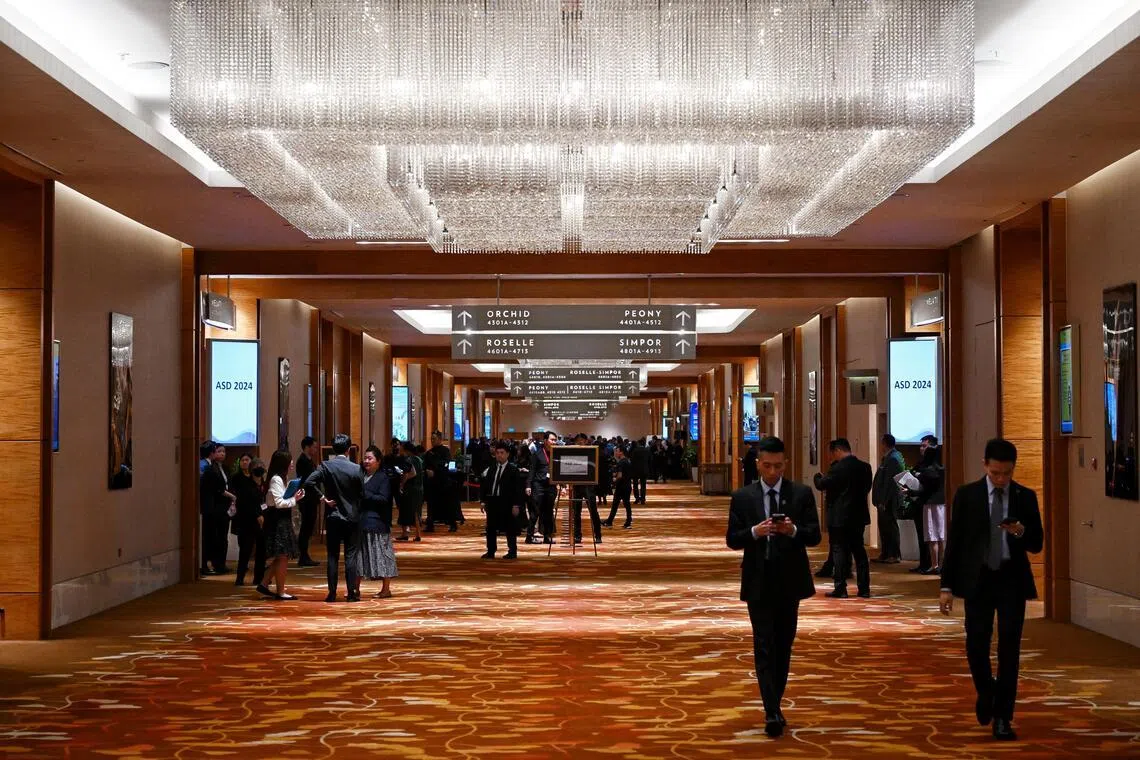
Traffic in the meetings, incentives, conferences and exhibitions (Mice) segment will be driven by stronger infrastructure – such as a wider range of new hotel options and the recent launch of the Singapore Mice Sustainability Certification framework – as well as more international conferences and exhibitions, said Loh.
As for leisure travellers, Dr Elhajjar said: “Travellers today spend more per trip because they are prioritising experiences such as dining, attractions, wellness, medical services, and shopping.”
Singapore is “very well-placed” to serve them, with premium retail, Michelin-level dining, a strong bar and cafe scene, and international events such as the Formula 1 Singapore Grand Prix, he added.
Events will continue to play a part in Singapore’s long-term success, noted Jesper Palmqvist, regional vice-president, Asia-Pacific, at hospitality research firm STR.
Their impact is broader “than ever before”, extending islandwide and across a variety of hotel classes – something “that was not always the case”, he added.
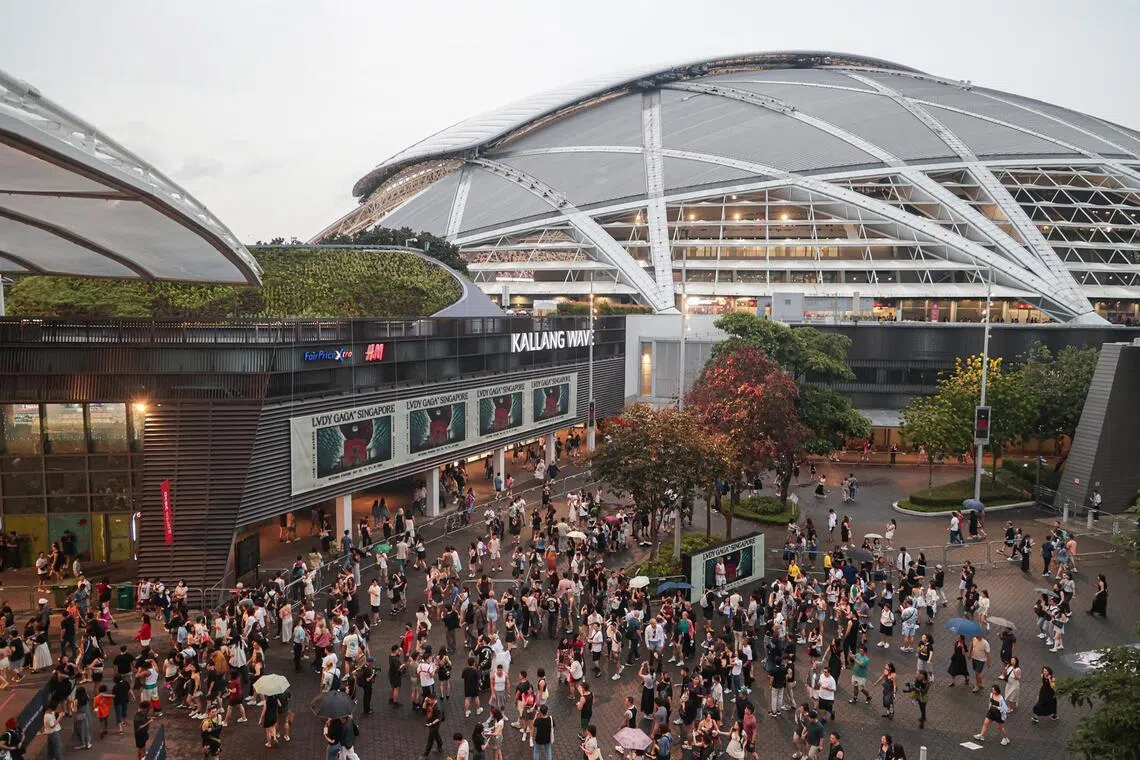
Khoo highlighted live entertainment and concert tourism as a key growth driver.
While this has always been “a big part” of Singapore’s attractions, the Republic has been drawing more high-profile acts, from Taylor Swift to Lady Gaga, he said.
“If not already, we will be the recognised entertainment capital of Asia as this momentum gathers.” MBS’ upcoming 15,000-seat performance arena will cement the Republic’s status as such, he added.
Spending abroad
One question is how much tourists can boost overall consumer performance, as local demand continues to be diverted abroad.
Dr Elhajjar sees tourism as “the biggest structural driver” for consumption.
He outlined two scenarios: a “more optimistic” one where the global economy “avoids a hard landing”, and a “less optimistic” one with ongoing trade tensions, higher-for-longer interest rates and energy price shocks.
“If the optimistic scenario unfolds, tourism (will do) more than cushion the domestic leakage. It (will lift) premium retail, integrated resorts, high-end dining and the broader experience economy.”
UOB’s associate economist Jester Koh said that this October, for instance, the 4.5 per cent year-on-year growth in retail sales was likely supported by the F1 Singapore Grand Prix and higher Chinese tourist arrivals during China’s Golden Week.
He highlighted “notable improvement” in tourism-sensitive segments such as watches and jewellery, recreational goods, and food and alcohol.
Even in the “less optimistic scenario”, tourism will still perform “relatively well”, added Dr Elhajjar. “Singapore attracts high-trust, high-spend travellers who remain resilient even in softer global conditions.”
Higher occupancy to drive hotel growth
After a “softer” 2025, the hotel outlook is expected to strengthen in 2026, based on a JLL poll that included 32 Singapore hotel operators.
Nearly nine in 10 of the local respondents believe that revenue will grow. This is expected to be driven by higher occupancy rates, cited by 81 per cent. Two-thirds also think the average daily rate (ADR) will rise, but only marginally.
“Singapore’s hospitality market is demonstrating renewed optimism following a year of consolidation,” said Sashi Rajan, executive vice-president for hotel asset management, South-east Asia, at JLL Hotels & Hospitality.
“International demand remains supportive, and the supply pipeline is stabilising with more modest hotel openings expected in 2026 compared to previous years.”
Palmqvist noted that Singapore hotel rates dipped for a few months in 2025 – “less so” among high-end hotels and those around the Marina Bay area – but have seen a “positive adjustment” towards the end of the year.
He forecasts revenue per available room (RevPAR) to grow 1.2 per cent this year. For 2026, he expects “low” occupancy growth of 1.1 per cent and ADR “recovering some pace” to grow 1.9 per cent, resulting in RevPAR growth accelerating to 3 per cent.
In particular, luxury hotels could see an uptick in demand.
Cheong expects much of tourism spending to go towards accommodation, noting that business travellers and ultra-high-net-worth individuals form a growing share of visitors.
He forecasts average room rates (ARR) to grow 1 to 2 per cent in 2026, in line with inflation.
Wong believes that while ARR may have peaked in 2025, “steadily recovering” occupancy rates mean that RevPAR will see “moderate growth” in 2026.
Based on year-to-date data, the luxury segment has been the “most resilient”, he noted, “with demand centred on luxury hotels that combine wellness amenities and distinctive experiential offerings”.
Luxury hotel brands remain keen to come here, he said, citing upcoming openings by new-to-market brands such as Aman and Avani. This reflects “confidence in Singapore’s positioning as a high-value tourist destination”.