Singapore's economy must adapt with greater integration, new connections: Heng
 Add BT as a preferred source
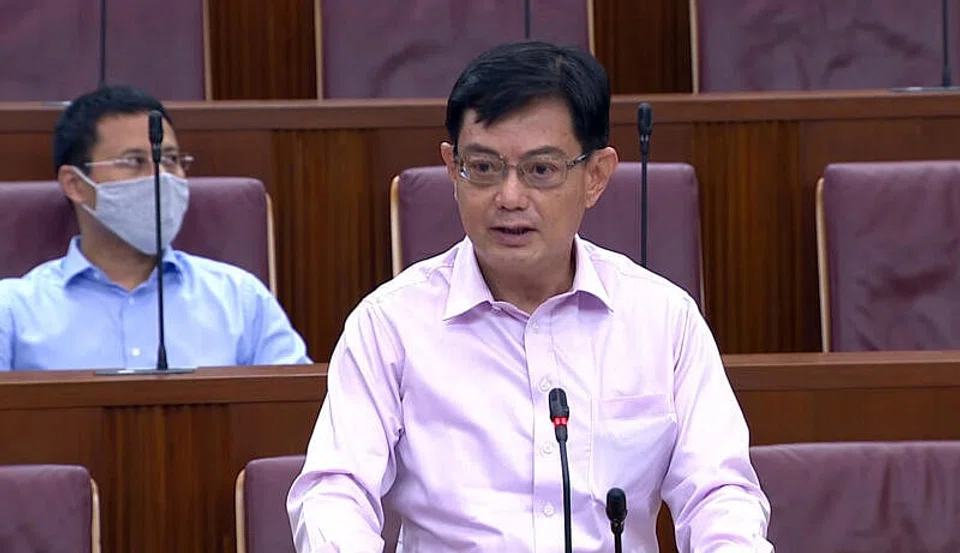
SINGAPORE must adapt its economy to the post-Covid world by taking a more integrated approach to transformation; developing human potential, starting even at pregnancy; getting better at spotting opportunities; and finding new ways to be a global node, said Deputy Prime Minister and Finance Minister Heng Swee Keat in Parliament on Monday.
"We cannot take for granted that in a post-Covid-19 world, we can continue to be the same kind of hub that we used to be," he warned.
To ensure Singapore's survival and success, and improve the lives of Singaporeans, Singapore must "adapt to change, but stay true to our values", he summed up, in a speech that laid out how Singapore must adapt as an economy, a society and a people.
Mr Heng, who is also Coordinating Minister for Economic Policies, identified four ways that Singapore's economy must adapt.
First, an "even more integrated and coordinated approach to economic transformation" is needed. This means strengthening the existing tripartite relationship between the government, businesses and the labour movement, as well as working closer with education and research institutions, community groups and international partners.
Second, Singapore must redouble efforts "to develop everyone to their fullest potential", from birth through schools and continuing with lifelong learning.
This includes exploring "new possibilities for developing our people fully", with the National Research Foundation supporting research into how better measures in pregnancy and childhood - including nutrition, parenting and learning - can improve outcomes for mothers and children.
Third, Singapore must get better at finding bright spots amid economic disruption, said Mr Heng, pointing to the Emerging Stronger Taskforce that was set up for this four months ago.
The taskforce has commissioned seven Alliances for Action, which are industry-led coalitions for the swift piloting of ideas, ranging from environmental sustainability to supply chain digitalisation.
Fourth, Singapore "must find new ways to be a vital node, with rich and deep interconnections with the rest of the world". This includes forging new forms of connections, such as digital economy agreements, while deepening linkages with regional markets to ride on Asia's potential.
Through all this, Singapore must remain open to investment and talent from around the world, even while protecting Singaporeans' interests, he stressed.
Beyond the economy, Singapore's society must adapt so every Singaporean benefits from progress. This means keeping inequality in check and adapting social safety nets.
The government "will keep an open mind" to the many ideas that have been proposed, such as a minimum wage, universal basic income, and unemployment insurance, while considering the trade-offs and maintaining principles such as not creating dependency, said Mr Heng.
"As members debate how we can strengthen our support for Singaporeans, let's keep in mind how new enhancements can be funded equitably and sustainably over time, and strengthen our people's capacity to not only succeed throughout life, but help others succeed too. These are the values that we must strengthen, even as we adapt."
Finally, even while adapting, Singapore must stay united as one people, said Mr Heng. It will take more effort to do this as society becomes more diverse and faces "new differences along the lines of identity, socio-economic status and political beliefs".
"There will always be different perspectives on subjects like race, language and religion, and the rights and obligations of citizenship," he said. But it is essential to find common ground, he added: "Harmony in diversity will always be a work in progress. We may not always agree, but we cannot afford to let our disagreement turn into division."
Decoding Asia newsletter: your guide to navigating Asia in a new global order. Sign up here to get Decoding Asia newsletter. Delivered to your inbox. Free.
Copyright SPH Media. All rights reserved.