Singapore's non-oil domestic exports slip in April
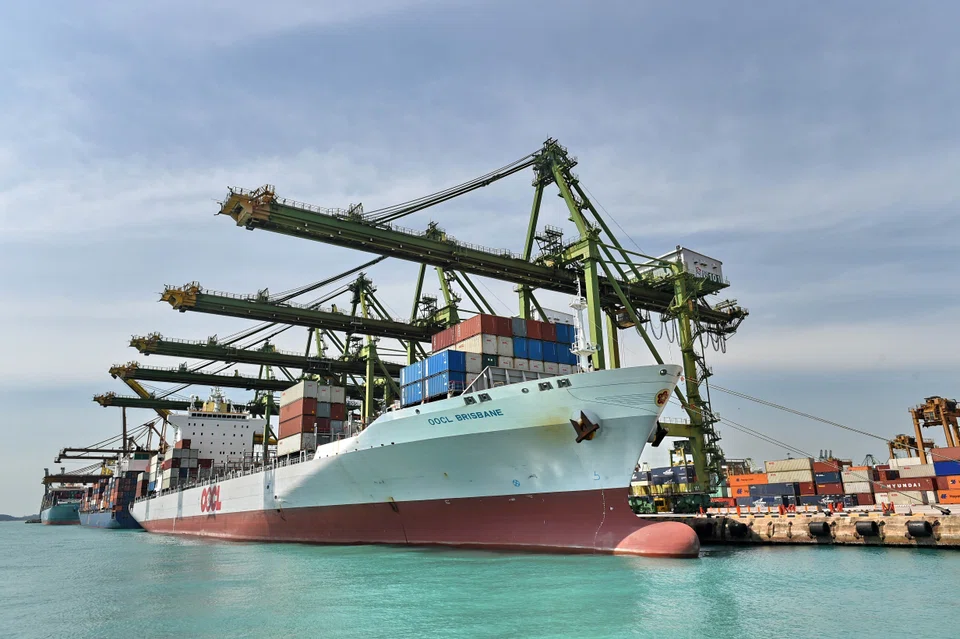
AFTER a surprisingly big jump in March, Singapore's non-oil domestic exports (NODX) slipped back to slow growth in April, rising just 2.2 per cent year on year last month after an 18.5 per cent increase in the previous month.
Month on month, the NODX tumbled a seasonally adjusted 8.7 per cent in April against a 23.1 per cent surge in March, data released by trade promotion agency International Enterprise Singapore (IE Singapore) on Monday morning showed.
The electronic NODX was also back to its old self, posting a 3.8 per cent year-on-year dip in April. This was in contrast to 10.4 per cent rise in March.
The overall NODX was only saved from returning all the way to negative territory because the non-electronic NODX managed to stay on the growth path. It grew 4.7 per cent. While this was a far cry from the 21.6 per cent growth in March, IE Singapore said it was enough to outweigh the decline in the electronic NODX.
Non-oil re-exports (NORX) also fell 1.9 per cent last month, following a 1.6 per cent rise in March. Both the electronic and non-electronic NORX declined in April.
Shipments to South Korea and the European Union (EU) were the two top contributors to NODX's growth last month. NODX exports to South Korea jumped 30.6 per cent, while those to the EU were up 11.4 per cent.
NODX shipments to Taiwan, the United States, China, Malaysia, Indonesia, Hong Kong, Thailand and Japan declined last month.
Read more: Quick takes: Growth in Singapore's exports in April beat expectations, but still soft
Share with us your feedback on BT's products and services