Singapore’s official 2023 growth forecast gloomier than expected: analysts

Tessa Oh
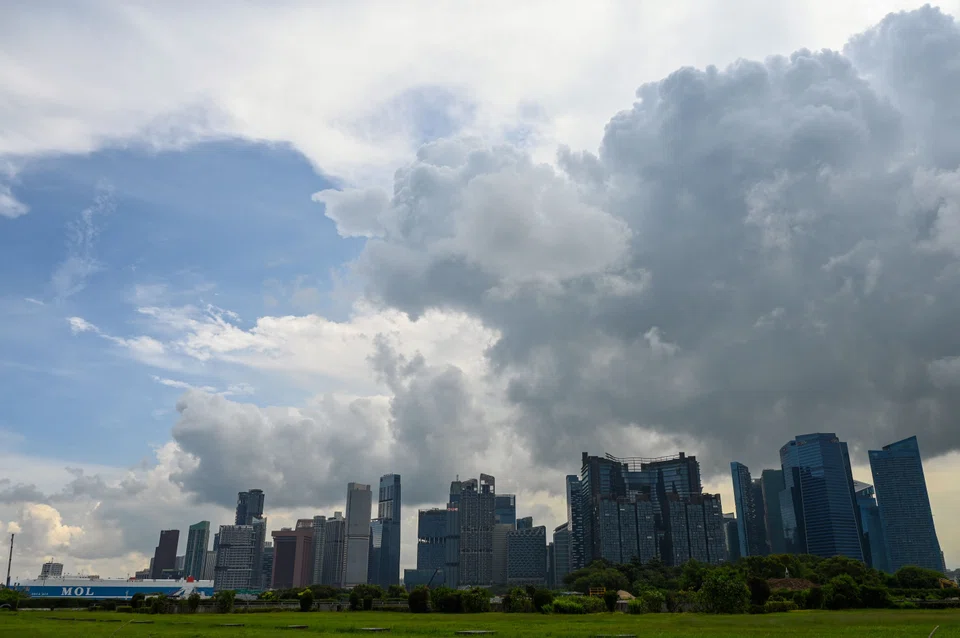
SINGAPORE’S economic growth is officially forecast to slow to between 0.5 per cent and 2.5 per cent in 2023, a range that private-sector economists find surprisingly low.
The latest forecast by the Ministry of Trade and Industry (MTI) “is lower than the current market consensus expectation”, said Khoon Goh, head of Asia research at ANZ Bank in Singapore, adding: “Their cautious outlook reflects the challenging global backdrop which is expected to weigh heavily on Singapore’s export-oriented sectors.”
The 2023 gross domestic product (GDP) growth forecast was released on Wednesday (Nov 23), alongside a narrowed full-year forecast for 2022 and downgraded third quarter figures.
Moody’s Analytics economist Denise Cheok had expected the official projection for 2023 to be around 2.5 per cent – her current baseline forecast. Although a global slowdown is a key downside risk for Singapore, Moody’s Analytics expects that “the global economy will manage to skirt recession in the next 12 months, albeit barely”.
Though growth is expected to moderate significantly next year, the authorities do not expect Singapore to enter either a full-year or technical recession, defined as two consecutive quarter-on-quarter contractions, MTI chief economist Yong Yik Wei told reporters in a briefing that morning.
Nevertheless, noting downside risks, she added: “We are expecting fairly flattish growth for the next one to two quarters, and obviously we would not rule out the possibility that in some quarters, we may dip into negative territory on a quarter on quarter basis.”
External economic and geopolitical headwinds are brewing, with sharp slowdowns – if not outright recession risks – in major economies like the United States and the Eurozone, noted OCBC chief economist Selena Ling. Exacerbating this is the ongoing Russia-Ukraine war; aggressive global monetary policy tightening to curb inflation; and China’s ongoing struggle with Covid-19 and a weak property market.
OCBC’s forecast of 1-3 per cent growth for 2023 rests on two key assumptions, she said. First, that major central banks will pause rate hikes in the first half, as inflationary pressures start to ease with slowing global growth; second, that China will further relax its zero-Covid policy and shore up its property market with more proactive policy support.
Should the external economy further deteriorate, a sequential dip in quarterly growth momentum “cannot be ruled out” – but this may not deter central banks from persisting with hawkish monetary policy until inflation shows signs of abating, cautioned Ling.
Even if Singapore enters a technical recession, it is likely to be a “short, shallow, and an orderly one”, said RHB senior economist Barnabas Gan, who expects reopening tailwinds to balance out a contraction in the outward-facing sectors. He maintained his 2023 growth forecast of 3 per cent.
In Wednesday’s release, Singapore’s Q3 growth was revised downwards to 4.1 per cent year-on-year, lower than both the earlier advance estimate of 4.4 per cent, and Q2’s 4.5 per cent growth.
But on a seasonally-adjusted, quarterly basis, GDP was up 1.1 per cent on the quarter before, a reversal from Q2’s 0.1 per cent contraction.
MTI narrowed its full-year growth forecast for 2022 to “around 3.5 per cent”, from the previous range of 3 to 4 per cent. This took into account Singapore’s economic performance for the first three quarters – when growth averaged 4.2 per cent year on year – as well as the latest external and domestic developments.
“Unsurprisingly, it was the weaker-than-expected manufacturing sector performance that contributed most to the Q3 downward revision,” noted UOB senior economist Alvin Liew. Manufacturing grew just 0.8 per cent year on year in Q3, much slower than Q2’s 5.6 per cent growth.
Wednesday’s release gave a sectoral breakdown of Q3 growth. Construction growth picked up to 7.8 per cent, from 4.8 per cent previously, on the back of both public and private sector construction output.
The overall services sector expanded by 5.8 per cent, up from 5 per cent in the quarter before. F&B services saw the biggest increase as sales volumes rose at food caterers, restaurants, cafes, food courts and other eating places. The only industry with negative growth was accommodation services, which shrank 1.9 per cent in an extension of previous quarters’ contractions.
The growth of outward-oriented sectors like manufacturing is expected to weaken further as external demand deteriorates next year, said MTI. Semiconductor manufacturing is expected to be hit by a global fall in demand, and as these manufacturers cut back on capital spending, this may in turn hurt the machinery and systems segment of precision engineering.
In a separate release on Wednesday, trade agency Enterprise Singapore upgraded its 2022 full-year trade forecasts for the third time this year, but predicted trade growth of -2 per cent to 0 per cent for 2023.
Nevertheless, some bright spots remain, said MTI. The aviation- and tourism-related sectors are expected to remain buoyed by the continued recovery of travel.
A “two-sided economy” could therefore become more stark in 2023, said Maybank economists Chua Hak Bin and Lee Ju Ye, who maintained their 2023 growth forecast of 1.5 per cent. “Some of the reopening sectors, like hospitality, aviation, food and beverage, and construction, will expand at a healthy pace, even as manufacturing and external-oriented sectors contract.”
Asked about the inflation outlook at Wednesday’s briefing, MAS chief economist Edward Robinson reiterated that inflation is expected to stay at an elevated rate “at least for the first half of the year”, barring further supply shocks.
Ahead of the next policy review due in April, MAS will “carefully examine all factors pertinent to inflation and growth conjuncture and outlook”, as well as the cumulative tightening moves since October 2021, he added. Private-sector economists remain split on whether MAS is likely to tighten policy again at the April meeting.