

Singapore’s PMI dips in April but remains in expansion for 8th straight month
The linchpin electronics sector, however, posts slightly faster expansion at 50.9 for the month

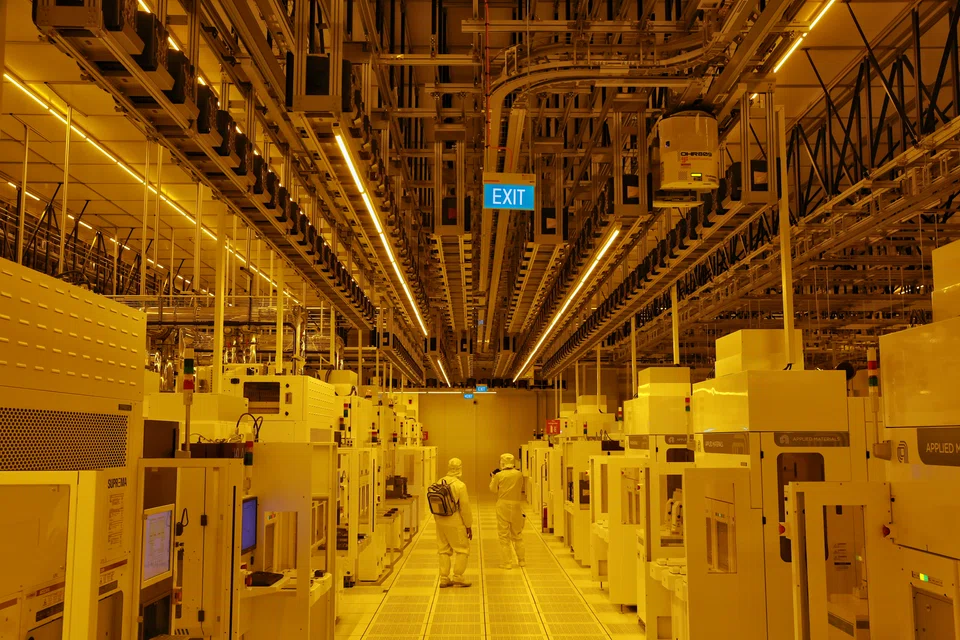
SINGAPORE’S overall factory activity grew at a slightly slower pace in April, but the key electronics sector saw a faster pickup, according to data from the Singapore Institute of Purchasing and Materials Management (SIPMM) on Thursday (May 2).
The purchasing managers’ index (PMI) dropped 0.2 point to 50.5 last month, though it still remained in expansion territory for the eighth straight month.
A reading above 50 on the index indicates growth from the previous month, while one below 50 points to a contraction.
On the other hand, the linchpin electronics sector edged up 0.1 point from the previous month to post a slightly faster expansion at 50.9 in April. This marks the sixth consecutive month of expansion for the sector.
SIPMM’s executive director Stephen Poh noted that it was “heartening” to see that the overall manufacturing sector remained in expansion at the beginning of the second quarter of 2024.
“This was boosted by demand for enhanced integration capacity in generative artificial intelligence and consumer electronics,” he said, noting that growth, however, was dampened by global uncertainties arising from ongoing geopolitical conflicts and the effects of inflationary pressures.
DBS economist Chua Han Teng said the bank continues to see signs of improving demand for the electronics cluster, on account of April’s faster growth in new orders, new export orders, and backlog orders.
For one, electronics factory production quickened for the second consecutive month to 50.6, the highest reading since end-2021, he noted, adding: “Hopefully, this can be sustained to fulfil improving demand.”
Overall, UOB associate economist Jester Koh remains optimistic on the recovery prospects in the electronics sector. This is given the “supportive base effects in Q2 and Q3 of 2024 and underlying end-demand fundamentals remain intact”, he said, driven by the boost from generative AI-related applications which have positive spillovers to the consumer segment.
Financial conditions are also expected to ease, he noted, as central banks in major advanced economies begin to reduce policy rates towards the second half of the year.
“This could provide some tailwinds to global investment and consumption activity.”
However, Chua highlighted the need to keep an eye on ongoing global uncertainties “that could keep Singapore’s manufacturing improvement fragile”. These include geopolitical tensions that could disrupt supply chains, as well as the timing and extent of potential interest rate cuts by the Federal Reserve, he said.
Some regional economies saw marginal improvements in April, while others posted steeper contractions.
China’s official manufacturing PMI expanded for the second straight month albeit at a slower pace, posting a reading of 50.4 in April compared to 50.8 in March. The Caixin PMI, derived from smaller private manufacturers, edged up to 51.4 from 51.1.
Caixin Insight Group senior economist Wang Zhe said China’s economic performance in the first quarter had surpassed market expectations, “with steady growth in manufacturing and a gradual recovery in consumption”.
He added that the strong start to the year is in line with the Caixin PMI, which has remained in expansionary territory for six straight months.
Elsewhere, both Taiwan and Vietnam bounced back into expansion territory. Taiwan’s S&P Global Manufacturing PMI rose to 50.2 in April, up from 49.3 in March, registering growth in operating conditions – albeit marginal – for the first time in two years. Vietnam’s S&P Global Manufacturing PMI climbed to 50.3 in April, from 49.9 in March.
On the other hand, Thailand’s and South Korea’s manufacturing PMIs remained in contraction mode, pulling back in April from the previous month. Thailand’s S&P Global Manufacturing PMI slipped to 48.6, from 49.1, while South Korea’s S&P Manufacturing PMI dropped to 49.4, from 49.8 previously.
TRENDING NOW

Inside Jensen Huang’s last hours as Nvidia CEO

Higher rates, weaker spending: Is the Philippines entering stagflation?

‘I’ll be buying more’: Singapore investors pour into Nvidia shares on Jensen Huang’s exit

Demand, tech capabilities position Apac and AI as Skyscanner’s next growth frontiers: CEO Bryan Batista

