Singapore’s PMI inches up to 51 in May as electronics sector maintains growth
This marks the index’s highest reading since December 2024

[SINGAPORE] The Republic’s factory activity grew at a faster pace in May as artificial intelligence-related tailwinds continue to drive electronics growth, amid challenges arising from the ongoing Middle East conflict.
The purchasing managers’ index (PMI) marginally expanded last month, edging up 0.3 point to 51, data from the Singapore Institute of Purchasing and Materials Management (SIPMM) showed on Tuesday (Jun 2). This marked the highest reading since December 2024 and the 10th straight month of growth.
A reading above 50 indicates expansion, while one below 50 indicates decline.
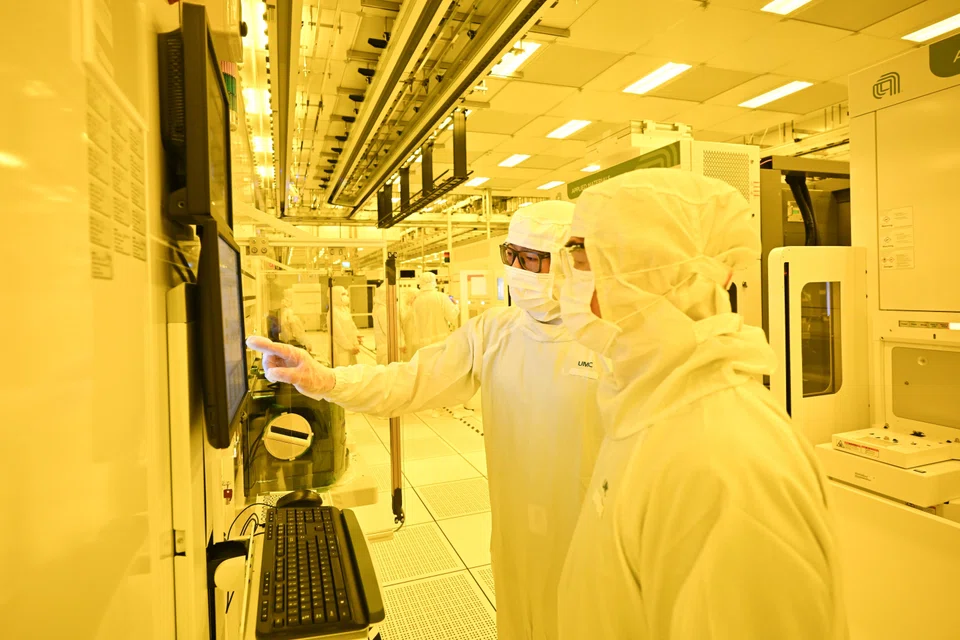
The PMI for the linchpin electronics sector increased 0.2 point to 51.9, marking the 12th straight month of growth.
Why did the PMI go up?
SIPMM’s executive director Stephen Poh said the latest figures point to “a continued positive outlook” for the overall manufacturing sector, supported by robust demand from the AI-driven technology up-cycle.
Though margins and operational efficiency are still affected by rising input costs and slower supplier deliveries, “the build-up of order backlogs and improving business sentiment suggest that manufacturers remain cautiously optimistic about near-term growth prospects”, he added.
OCBC chief economist Selena Ling attributed the outperformance of the electronics PMI to the AI-related boom, even as she, too, highlighted challenges with supplier deliveries and input prices stemming from persistent supply chain disruptions and extended lead times.
She pointed out that the finished goods index has reverted to contractions, which imply that inventory drawdown is under way despite a rise in the imports index.
“There may be a real supply constraint on future activity pipelines if the sourcing of intermediate components cannot keep pace with the demand conditions,” she said.

Likewise, UOB associate economist Jester Koh noted that May’s order backlog and finished goods indexes data suggest that electronics production is not keeping pace with demand.
As he sees it, greater scope to enhance capacity utilisation will bode well for electronics manufacturing activity in the coming months, with firms expected to continue drawing down inventories.
Economists also flagged the continued rise in the input prices sub-index and decline in the supplier deliveries sub-index, which underscore the strain placed on supply chains from the Middle East conflict.
DBS senior economist Chua Han Teng said: “With the Iran war dragging into its fourth month, Singapore’s factories are grappling with severe disruptions in the Strait of Hormuz, posing downside risks and adding uncertainty to the outlook.”
Regional PMI performance
Many regional economies picked up in May, though there were some exceptions.
China’s official manufacturing PMI decreased to 50 in May, compared to 50.3 the previous month. Likewise, the RatingDog China General Manufacturing PMI fell to 51.8, from 52.2.
Malaysia’s S&P Global Manufacturing PMI slipped into contraction territory at 49.9, from 51.6.
On the other hand, South Korea’s S&P Global Manufacturing PMI rose to 54.8 in May, from 53.6 in April. Taiwan’s S&P Global Manufacturing PMI increased to 56.1, from 55.3.
Ling noted that both South Korea and Taiwan are riding on the wave of AI-related demand, which is likely to contribute to growth tailwinds from tech. Singapore is also likely to be on the bandwagon, she added.
Meanwhile, the Philippines rebounded into expansionary territory with a reading of 50.8 in May, up from 48.3 in April.
Decoding Asia newsletter: your guide to navigating Asia in a new global order. Sign up here to get Decoding Asia newsletter. Delivered to your inbox. Free.
Copyright SPH Media. All rights reserved.