Singapore’s PMI rises further in May, mirroring improvements in regionwide factory activity
Index edges up to 50.6, a 0.1 point gain from the previous month

SINGAPORE’S factory activity rose further in May, mirroring improvements in regionwide factory activity.
The purchasing managers’ index (PMI) edged up to 50.6, a 0.1 point gain from the previous month, indicated data from the Singapore Institute of Purchasing and Materials Management (SIPMM) on Monday (Jun 3). This was the ninth straight month that it remained in expansionary territory.
A reading above 50 on the index indicates growth from the previous month, while one below 50 points to a contraction.
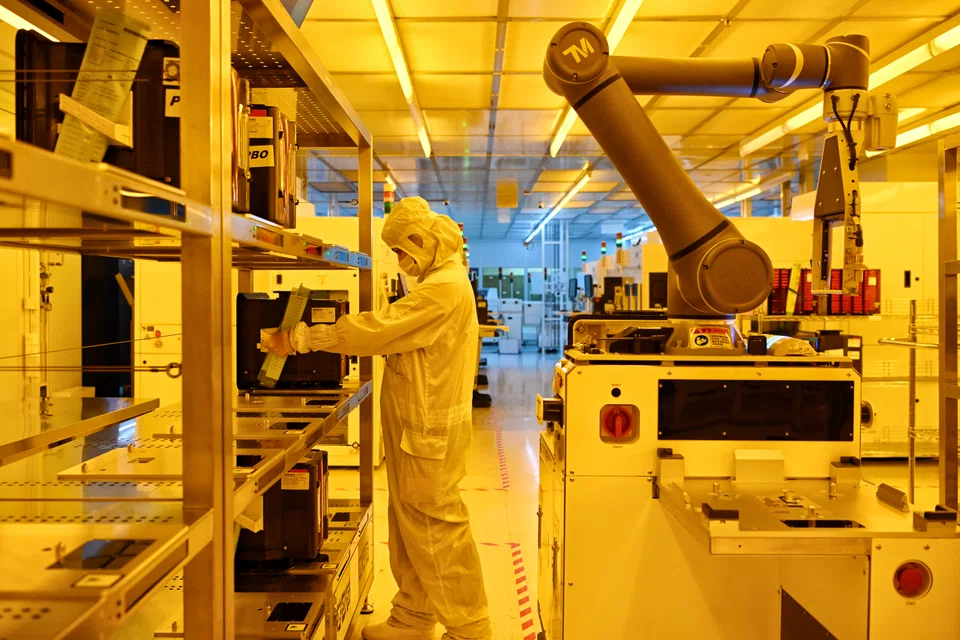
The lynchpin electronics sector rose by 0.2 point to record a slightly faster expansion at 51.1 in May, marking the seventh straight month of expansion.
OCBC chief economist Selena Ling expects the outlook for the manufacturing and electronics sector in H2 2024 to “remain supportive”, though she flagged geopolitical tensions as incoming headwinds.
She noted ongoing conflicts between Russia and Ukraine, and Israel and Hamas, the Red Sea Houthi attacks, as well as the run-up to the United States presidential election. Also, global supply chains may be impacted by “soaring” shipping costs and potential trade route diversions, with some businesses already frontloading their Christmas orders, she added.
“While the scale of these disruptions are not yet as severe as during the Covid-19 pandemic, nevertheless it still creates uncertainties ahead,” she said.
Commenting on Singapore’s electronics PMI reading, UOB associate economist Jester Koh said the improvements in new orders, new export orders and output “suggest that underlying end-demand fundamentals remain intact”.
This is despite April’s “tepid” electronics industrial production reading, he added, noting that the recent weakness in electronics industrial production “possibly reflected some degree of temporary inventory digestion”. He remains optimistic on the recovery prospects for the electronics sector.
Most regional economies chalked up healthy manufacturing PMIs in May and remained in expansion mode.
One key exception was China. Its official manufacturing PMI unexpectedly entered contraction mode in May, falling to 49.5 from 50.4 in April. In contrast, the Caixin PMI – derived from smaller private manufacturers – hit a two-year high in May. It beat economist expectations to rise to 51.7, from 51.4 the previous month.
In South Korea, the S&P Global Manufacturing PMI rebounded sharply to 51.6 in May, up from 49.4 in April. This marked its strongest growth in manufacturing output in nearly three years.
Taiwan and Vietnam had modest gains. The S&P Global Taiwan Manufacturing PMI rose to 50.9 from 50.2 the previous month, while the S&P Global Vietnam Manufacturing PMI remained unchanged at 50.3.
On the other hand, the S&P Global Indonesia Manufacturing PMI experienced its slowest rate of expansion since last November, slipping to 52.1 in May from 52.9 in April.