

Singapore's total fertility rate continues to dip, but citizen births and marriages are up
Singapore
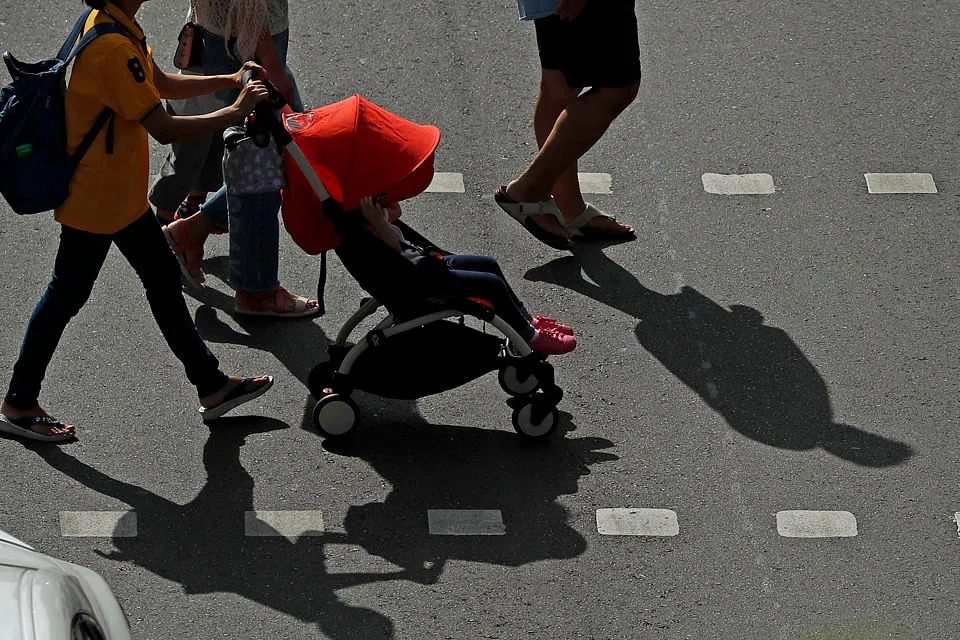
HOW Singapore can build a sustainable population in light of its ageing demographic was foremost on the minds of various Members of Parliament (MPs) on Day 1 of the Committee of Supply (COS) debates on Thursday.
MP Vikram Nair, for example, wanted to know why Singapore's total fertility rate (TFR) has continued falling despite efforts to arrest it.
The TFR, which is the average number of children a woman would have in her lifetime, dipped to 1.16 in 2017, and to 1.14 last year.
Josephine Teo, Minister for Manpower and Second Minister for Home Affairs on Population, identified two driving forces behind this - longer-term changes in values and social norms, as well as short-term factors such as economic uncertainty.
Falling TFR aside, she highlighted other more positive population trends. For instance, the average number of citizen births in the past five years has risen, compared to previous five-year periods.
The average number of marriages in the past five years is also higher than in the past decade.
"Given the positive marriage trends, I remain hopeful of an uptick in TFR when the children of baby boomers start having babies themselves."
She laid out three broad strategies to build a sustainable population: making Singapore a "great place for families", maintaining a careful balance in immigrant flows, and enabling Singaporeans to age well.
Working parents now have stronger support networks so they can manage work and family responsibilities, and more are now making use of the enhanced parental leave provisions, she noted.
For example, the take-up of paternity leave has risen from 37 per cent in 2014 to 53 per cent for recent cohorts.
But she cautioned against offering more leave for parents to care for their children, as proposed by MP Louis Ng: "Given the recent enhancement to the parental leave schemes, we are mindful of the possible impact on businesses' operational and manpower costs, and we will give companies some time to adjust."
More businesses are also implementing or looking to start flexible work arrangements (FWAs). Around 53 per cent of employers now offer at least one formal FWA, up from 47 per cent in 2014, which she described as "significant".
"The tide is shifting and I'm hoping FWAs will become much more commonplace."
But Mrs Teo noted that beyond workplace flexibility, there are "deeper issues" of workplace culture.
"As the nature of work evolves, there is value in organisations adopting new ways of working that achieve good business outcomes while giving staff enough down-time to recharge."
On Singapore's second strategy to maintain a careful balance in immigrant flows, she disclosed that 22,600 Singapore citizenships were granted last year, similar to the past few years. Some 32,700 permanent residents (PR) were added last year, with the PR population remaining "stable" at 520,000, she said.
In her COS speech last year, the manpower minister had noted that the total workforce growth was expected to grow at a rate of 1 to 2 per cent up to 2020. Even with immigrants, the number of Singaporeans aged 20 to 64 is projected to peak at 2.2 million around 2020, and will decline after.
Mrs Teo added that more initiatives to shape the workplace environment and an update on the employment of older workers will be given during the Manpower Ministry's COS debate next week.
TRENDING NOW
8 public officers referred to police over property buys near unannounced MRT stations: Chan Chun Sing

DBS tops trades in smaller board lots on debut of revised SGX framework

Grab CEO’s wife Chloe Tong on life with Anthony Tan and finding her purpose
Retrenched PMETs who return on lower pay see median 25% wage cut

