Singapore’s tourist arrivals climb for 5th straight month in June

Tessa Oh
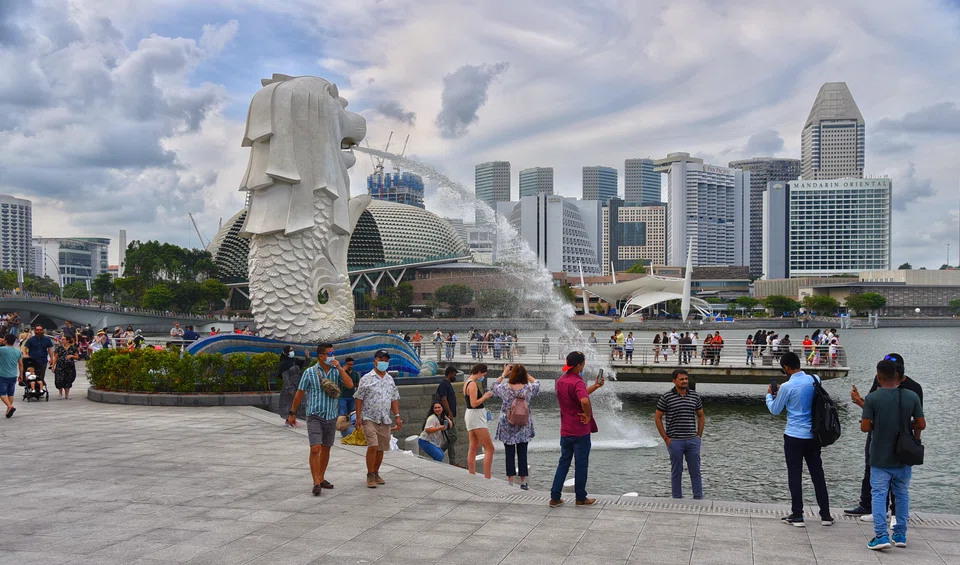
SINGAPORE’S international visitor arrivals grew for the fifth straight month in June, once again hitting a new record number of travellers since the beginning of the Covid-19 pandemic, according to the latest figures from the Singapore Tourism Board (STB).
Some 543,732 visitors arrived in Singapore in June, up from the 418,458 recorded in May. But this was still far below the 1.6 million recorded in June 2019 before the pandemic.
The continued month-on-month growth is in part due to Singapore benefiting from the lockdowns in China, and to some degree Japan, which are both still lagging behind in the travel relaxation curve, said DBS Group Research analyst Geraldine Wong.
“Other Asia Pacific countries are gaining market share to accommodate the first flock of pent-up travel demand that we are seeing right now in Asia,” she said, pointing out that Singapore was the most searched destination for this summer by travel website Trip.com, ahead of Bangkok and Seoul.
As it is currently the summer holiday season for the Western countries, Calvin Li, head of transaction advisory services for JLL Hotels & Hospitality Asia-Pacific, expects the international visitor arrival numbers to keep on growing until at least September.
“People should continue to travel in South-east Asia for vacation, with a transit in Singapore where all travel restrictions are lifted,” said Li, though he noted that the number of corporate tourists should also moderate during the summer break.
However, Maybank economist Chua Hak Bin noted that growth may slow down in the coming months as rising cases of Omicron Covid-19 sub-variants may cause some travellers to put off their plans.
“Airlines and airports are also struggling with manpower shortages and the restoration of more flights and destinations may take some time,” he added.
Indonesia continued to clinch first place as the biggest source of arrivals for the third straight month in a row, sending some 110,093 travellers in June, up from 86,745 in May. There were 64,337 visitors hailing from India, up from 59,198 a month ago.
Australia overtook Malaysia to come in third place in June, sending 50,412 travellers, up from 31,406 in May. Malaysia came in fourth and accounted for 49,878 visitors, a slight nudge up from the 43,214 travellers that arrived the month before.
China, Singapore’s biggest inbound market from 2017 to 2019, sent just 10,191 visitors in June, though this was still slightly more than a month ago when just 7,150 visitors from there arrived in Singapore.
On whether current inflationary pressures will have an impact on visitor arrivals moving forward, Wong said pent-up travel demand and the return of Mice (meetings, incentives, conferences, exhibitions) events will supersede the recessionary impact on travel.
“A bigger concern I foresee to distract inbound numbers for H2 22 would be the further relaxation of Japan to start capturing a larger travel market share within Asia, potentially towards Q4 22,” she added.
Agreeing, Li believes that Singapore will continue to see the number of international visitors grow in the months ahead, though at a slower pace until early 2023.
Govinda Singh, executive director for hotel and leisure for Asia at Colliers, argued that is visiting friends and family as well as delayed C-suite meetings and events, that are driving demand at the moment.
“We expect these will continue to drive demand over the next few months. However, if inflation persists into Q4 and air tickets remain at elevated levels, we could see some pullback as the initial pent-up demand wanes,” said Singh.
STB recently announced that it expects Singapore’s international visitor arrivals to come between 4 and 6 million for the full year.
Wong believes that the lower bound of STB’s forecast will be easily met so long as the growth momentum seen in the second quarter is sustained. “I would think that inbound travellers will land at the higher end of the forecast range — 5 to 6 million — or slightly above the quarter percentage of 2019 levels.”
Given the current global economic headwinds, Li, too, expects the final figure recorded by the city-state to come in at the lower part of the forecast, of around 4 to 5 million foreign visitors.