

South-east Asia may be ready for this El Nino – but tackling climate risk is still urgent
Even with better mitigation measures, governments must still tackle the elephant in the room – carbon emissions
Annabeth Leow
WILDFIRES in southern France in July forced evacuations and disruptions to operations at key defence engineering and aerospace players, including Thales and Airbus Atlantic.
In South Korea, where soaring temperatures have already killed more than 20 people and sickened 2,400 others, farmers in parts of the agricultural heartland are now being told to work shorter hours.
And in Japan, carmaker Toyota shuttered nine factories on Aug 7 as Typhoon Dolphin barrelled towards the south-west of the country, bringing strong winds and heavy rain.
From record heat to more intense storms, extreme weather events across the planet continue to make clear the social and economic toll of climate change.
The impact of this is likely to hit even closer to home in the coming months, as the meteorological phenomenon El Nino advances on South-east Asia.
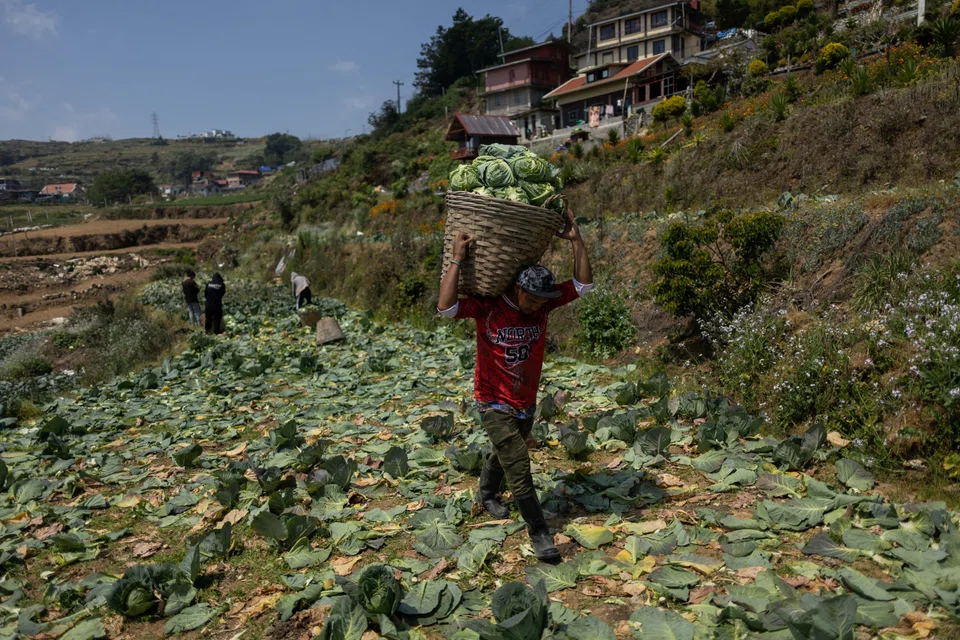
El Nino conditions could cut the output of high-value crops such as rice and corn in the Philippines, Macquarie equities analyst Karisa Magpayo wrote in a note in July.
Citing also the potentially higher costs of ingredients such as wheat, coffee, sugar and cocoa, she added that lower incomes and higher food prices would fuel inflation and crimp demand.
Spiking palm oil prices could also trigger the clearing of land in a dry region. With parts of Kalimantan and Sumatra already ablaze, the risk of severe trans-boundary haze is growing.
The mitigation measures taken
Mitigation measures could, however, play a big part in reducing the impact of this El Nino.

In Malaysia, the authorities have just released fresh guidance on the hazard posed by heat to workers engaged in prolonged outdoor work – such as in construction and agriculture – or who are exposed to heat-generating equipment such as in foundries and mills.
Stronger water-management practices are also tipped to help various South-east Asian economies ride out some of the agricultural risks from El Nino-related drought.
Besides improving irrigation and switching to less water-intensive crops, governments are adjusting farmers’ planting timelines – all in the hope of beating the dry spell in the Philippines and saltwater intrusion in the crucial Mekong delta region of Vietnam.
S&P Global suggested in a new report on Aug 4 that “stronger early-preparedness frameworks” can help South-east Asia manage the economic fallout of climate disruption.
Hailing regional initiatives boosting intra-Asean coordination on issues like drought, the analysts said: “For now, things look better than they have during past El Nino events.”
Still, mitigation alone cannot be enough.
El Nino: “the fuel to the planet already on fire”
United Nations Secretary-General Antonio Guterres recently remarked that El Nino, which is tied to higher Pacific Ocean surface temperatures, is “adding fuel to a planet already on fire”.
It is increasingly critical for governments on both the national and regional level to take action to address the underlying factor responsible for climate change: carbon emissions.
Though Asean contributes to less than 7 per cent of global greenhouse gas output, its net emissions have seen practically straight-line growth over the decades.
A landmark climate change report released by the Asean Secretariat in 2021 said the bloc’s long-term strategy “needs to adopt low- to zero-carbon energy sources… and to enhance the sink functions in land systems” to reach net-zero emissions.
Yet the approach today prominently features the financial development of carbon markets, which trade in credits that put a dollar price on emissions.
As researchers at the Iseas – Yusof Ishak Institute warned in a report last December, this tactic “could eventually pose risks of over-reliance on carbon offsets, thus disincentivising direct-emission reduction actions and questions over the integrity of credits traded”.
Singapore Minister for Sustainability and the Environment Grace Fu told Parliament on Aug 4 that it is important for the Republic’s climate adaptation strategy “to consider and balance the needs for economic development, social services and environmental protection”.
Such a balancing act is not always easy – but it must be done, and quickly.
Decoding Asia newsletter: your guide to navigating Asia in a new global order. Sign up here to get Decoding Asia newsletter. Delivered to your inbox. Free.
Share with us your feedback on BT's products and services
TRENDING NOW

Companies still in search of AI use cases with worthwhile ROI, says Broadcom’s CEO

Malaysian king buys stake in Singapore-listed mining firm expanding into rare earths

Once staunchly pro-China, Malaysian Chinese businesses are now distancing themselves from Beijing

Singapore’s wealth management success should extend to everyday families

