Surge in Singapore’s tax revenue in FY2021 driven by ‘sentiment-based revenue’: DPM Wong
 Add BT as a preferred source
Sharon See
DeeperDive is a beta AI feature. Refer to full articles for the facts.
THE sharp rise in Singapore’s tax revenue in financial year 2021 was partly driven by the higher-than-expected collection of “sentiment-based revenue”, which cannot be relied on to meet the city-state’s rising recurrent expenditure needs, said Deputy Prime Minister Lawrence Wong on Monday (Sep 12).
Tax revenue in FY2021 surged 22.4 per cent to S$60.7 billion, the annual report of the Inland Revenue Authority of Singapore released a month ago showed.
This prompted parliamentary questions from Members of Parliament (MPs) on whether the government would consider deferring the Goods and Services Tax (GST) hike to 9 per cent, which will be implemented in 2 stages starting from next year.
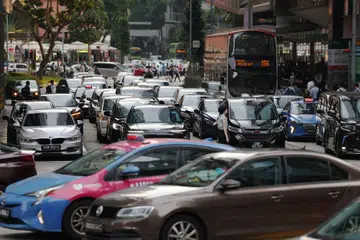
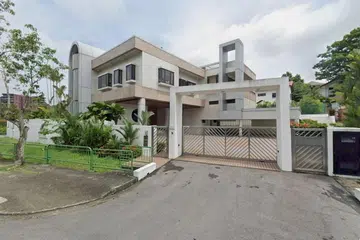
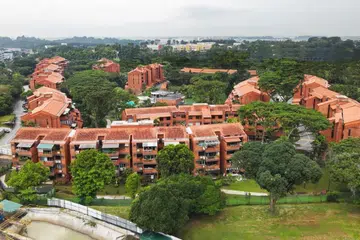
Wong told the House that while the revenue increase was due partly to the low base in FY2020, there had been a higher-than-expected increase in “sentiment-based revenue”. Stamp duty collection in particular accounted for the largest share of tax revenue increase in FY2021.
“The property market has recovered at a much faster rate than many market observers had anticipated,” said Wong, who is also finance minister.
“But just as a bullish property market can provide upsides, there can also be downsides in a muted market, as past experience has shown,” he said.
Navigate Asia in
a new global order
Get the insights delivered to your inbox.
“We therefore cannot rely on such sentiment-driven collections, which can fluctuate from year to year as a stable and sustainable source of revenue to meet our rising recurrent expenditure needs.”
Wong added that the government has used the higher tax revenue in FY2021 to support new spending needs, including the enhancements to the progressive wage credit scheme as well as to provide short-term relief for businesses and families, such as the Covid-19 support packages during periods of heightened restrictions last year.
Singapore’s spending needs are growing, said Wong, driven by higher healthcare expenditures as the population ages, alongside a need to accelerate its economic and green transformation while shoring up its resilience in essentials such as food and energy amid the global economic uncertainty.

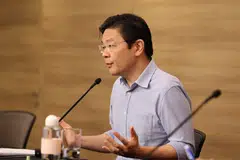

He said this is why he introduced a slate of revenue measures in Budget 2022 that will provide the resources Singapore needs to meet its longer-term priorities.
“We will proceed with these measures including the GST increase as planned, but as I have assured members previously, we will also ensure that the majority of Singaporean households will not feel the impact of the GST increase for at least 5 years, while lower income households will not feel the impact for about 10 years,” he said.
In light of the strong revenue growth, West Coast GRC MP Foo Mee Har asked if the expected overall deficit of S$5 billion in FY2021 and S$3 billion in FY2022 would materialise.
Wong said it is still too early to tell, with revenue and expenditure expected to fluctuate from month to month, adding that these do not necessarily follow a “constant trajectory”.
“Our aim is not to accumulate a surplus. Let’s be very clear about this. Our aim is to run a balanced Budget over the medium term – that’s our consistent fiscal policy,” he said.
“And should there be revenue upsides, I think that’s a plus for us because if the economy does better than we had projected, I think we should take comfort that we are in such a situation rather than the reverse situation,” he added.
Asked by Yio Chu Kang MP Yip Hon Weng whether the government would “better project and estimate” tax revenue in the future, Wong said there are inherent challenges and that it is fundamentally difficult.
This is because of the volatility of the property market, which means the stamp duty is “fundamentally always going to be a difficult revenue item to predict” since it depends on asset prices.
Revenue estimates based on Singapore’s gross domestic product, said Wong, are less volatile than asset prices, but there is a high degree of uncertainty given how small and open Singapore’s economy is.
Sengkang GRC MP Jamus Lim from the Workers’ Party asked if the Ministry of Finance has performed studies to ascertain if the progressive wage model payouts will more than offset real income losses those workers have already incurred as a result of inflation.
He added that there has been a larger-than-expected erosion of real wages expected by the very poorest, and that it would make sense for them to have their GST Vouchers adjusted accordingly.
Wong replied that the government gives out a lot more help to the low-income groups, such as in the Assurance Package and the cost of living package rolled out in June this year.
“We fully understand that higher inflation disproportionately impacts the lower income groups, which is why our measures have already taken that into consideration,” he said.
He added that the government will consider doing more to help those that continue facing difficulty even after taking the different packages and measures into account.
Decoding Asia newsletter: your guide to navigating Asia in a new global order. Sign up here to get Decoding Asia newsletter. Delivered to your inbox. Free.
Copyright SPH Media. All rights reserved.