

Taiwan still central to Singapore chipmakers despite geopolitical tensions

Tessa Oh
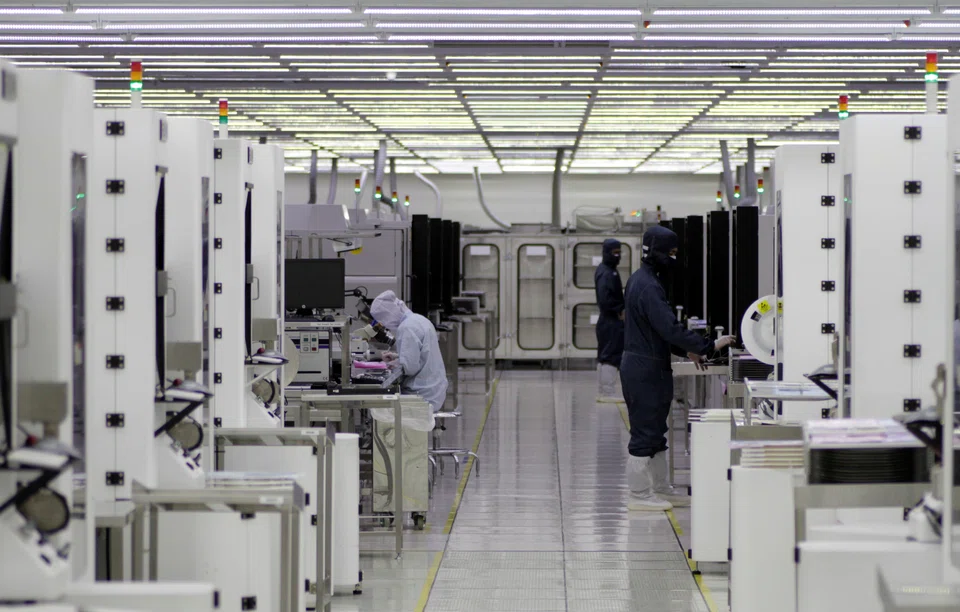
TAIWAN remains a crucial supply chain link for semiconductor firms in Singapore despite tensions in the Taiwan Strait – though the sector’s long-running diversification efforts could gain urgency if tensions with mainland China persist or result in an extended blockade.
“Taiwan has a long-standing and solid position in the world of semiconductors given that it constitutes about 25 per cent of the global semiconductor production. Taiwan will remain a very pivotal link to most companies,” said Ang Wee Seng, executive director of the Singapore Semiconductor Industry Association (SSIA).
China began conducting military drills in the seas and airspace around Taiwan on Aug 4, following Speaker of the United States House of Representatives Nancy Pelosi’s visit to the island. On Aug 10, the Chinese military announced that it had “successfully completed various tasks” around Taiwan, but plans to conduct regular patrols, as well as to continue further training and combat preparation.
Chipmakers contacted by The Business Times said China’s military drills had no or minimal impact on supply chains to Singapore and the region, nor do they plan to cut supply chain ties with Taiwan in light of the tensions.
Stanley Loh, UMS Holdings’ executive director, told BT that the company has seen no impact to its operations in the last week, but is in any case prepared for disruptions: “We are not overly reliant on Taiwan suppliers. We also have buffer stocks to cushion any supply shocks.”
The precision engineering company added that it currently has no plans to reassess its business links with Taiwan.
A Micron spokesperson on Wednesday said the company is monitoring the situation closely: “At this time, we do not expect any negative impact to our supply chain or production, but this is an evolving situation and we remain vigilant.”
Similarly, German chipmaker Infineon said it is monitoring the situation, and “currently there is no impact to operations and business is as usual”.
But while China’s activities may not have had an immediate impact, they could fuel a longer-term trend of risk diversification.
OCBC chief economist Selena Ling said the ongoing tensions between Taiwan and mainland China may act as another catalyst for the semiconductor sector’s diversification push, though she noted that it is “by no means the only consideration”.
“The diversification push started much earlier with the US Trump-era trade war and also the supply chain bottlenecks. The energy crisis and food security issues are also important factors driving the need for diversification,” she added.
Khoon Goh, head of Asia research at ANZ, does not expect the drills to have had much impact on Taiwan’s overall export and business activity – but noted “increased geopolitical risk” for businesses.
This is something that the sector has gradually been preparing for in the last few years, especially in light of the US-China trade war, he said: “The move towards diversifying production risks had started a few years ago and will likely intensify as a result of the increased tensions.”
“This would include Taiwanese companies looking to set up manufacturing facilities in South-east Asia or even India,” he added.
SSIA’s Ang said companies here have always been mindful to diversify their businesses so as to not be dependent on a singular source. “In recent years, even prior to the pandemic, tensions between US and China have further emphasised the urgency for diversity in our supply chain to ensure business resiliency.”
He added: “Even Taiwan semiconductor companies are looking at diversifying their semiconductor presence globally.”
Even so, analysts said businesses are unlikely to diversify very far away from Taiwan given the integral role it plays in the sector.
“Taiwan is still the biggest producer of high-end chips by far, and given how challenging it is to develop local capacity for making these chips, it is unlikely that there will be sudden shifts in the production patterns for these chips,” said Moody’s Analytics senior economist Tim Uy.
TRENDING NOW

Things to know about DBS’ incoming chairman Anthony Lim
DBS eyes prime brokerage business as Q3 profit falls 5% on weaker trading income

Royal Group and Sunset Hospitality abandon plans to open Casa Mett hotel off Orchard Road

George Yeo adds 100,000 Wilmar shares at S$2.97 apiece, taking stake to over 1 million shares

