US, China share common interest - a stable Asia-Pacific

Minister in Prime Minister's Office Chan Chun Sing on Trump, China and Singapore politics
Published Mon, Aug 21, 2017 · 09:50 PM

    Singapore

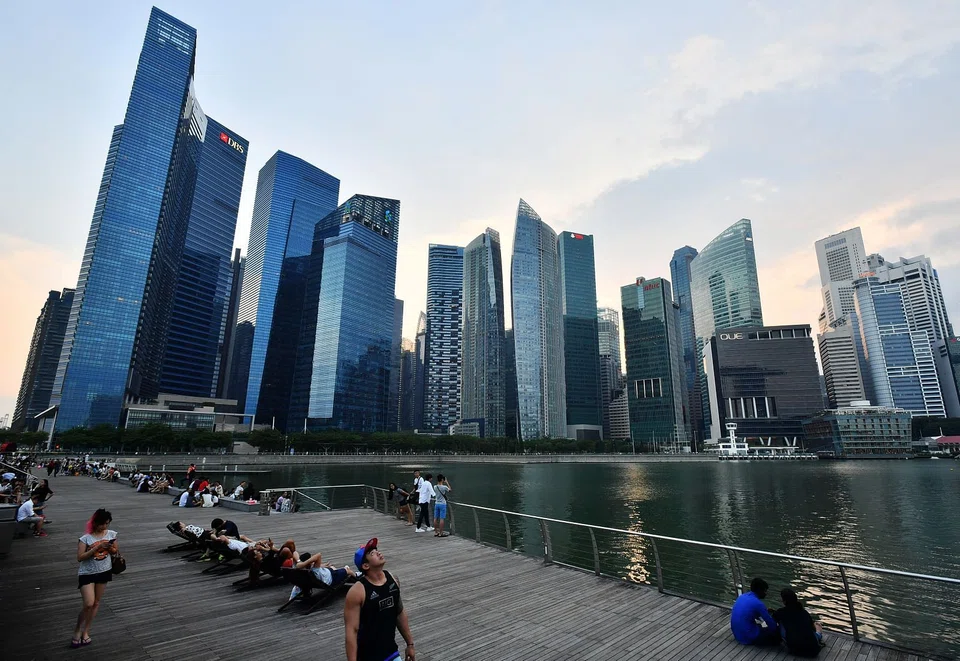
    SINGAPORE is South-east Asia's wealthiest state, a financial centre where some of the world's biggest banks do business. But the small nation has been snared in a tussle for influence between the US and China.

    Prime Minister Lee Hsien Loong has said his country should not have to choose between the big powers, but maintaining that balance has not been easy.


    Singapore has found itself in China's cross-hairs for allowing the US military to operate from the island-state. Equally, the election of Donald Trump as president has cast doubt on the future of the US commitment to the region.

    Minister in the Prime Minister's Office Chan Chun Sing is part of Mr Lee's "nucleus" of a new team of Singaporean leaders. The 47-year-old, who is also secretary-general of the National Trades Union Congress and deputy chairman of the People's Association, has been tipped as a potential future leader.

    In an interview with Bloomberg News, Mr Chan discussed Mr Trump, China and domestic politics.

    Many people speculate about what Mr Trump will do both on the security and economic fronts.

    I think the other thing we have to watch very carefully is dynamics. What kind of perspective the American public is taking with respect to its political system and, in the longer term, what kind of leadership it is likely to throw forth. That will have serious implications on the world.

    Some people say that Mr Trump is an aberration, but is he an aberration or is he a reflection of a larger set of forces within the US?

    I don't think it's a binary option. The issue is really how focused the US will be in providing that security umbrella within the Asia-Pacific.

    Having said that, with a rising, more confident China, China would also want its own geopolitical space. But it's not a zero-sum game.

    I think both the US and the Chinese share a common interest, which is a stable Asia-Pacific.

    I think it is a broad relationship and it's deep. There will be differences once in a while. To say that you never have differences is probably unlikely and unreal.

    I am confident that the relationship will continue to grow but, of course, as a small country, we must be keenly aware of what China's development priorities are and see where we can play a role.

    We never start our foreign policy with the thought of whose side we should be on. That's the wrong way to look at the issue. What we believe to be the correct way is to first consider what Singapore's interests are. Secondly, what a foreign player's interests are and, finally, where we can work with them on a win-win relationship where we can value-add. It doesn't mean that just because Singapore is small that we can't value add.

    As a small country, you have to constantly balance between your principled approach and your pragmatic approach. You can't be all principles and no pragmatism or you'll be in the dustbin of history quite fast unless you navigate the waves of change.

    I don't think it's the first time we've done something like that and we did not name any country. We do not like nor do we allow foreign interference in domestic politics. I think every sovereign country would want to preserve its own right to self-determination.

    We try to maintain the big picture, we try to make sure that the bigger relationship is not disrupted and held hostage by a small episode.

    Any Singaporean leader and the whole leadership team must have the ability to connect with Singaporeans and win confidence. That takes time.

    In today's world, the demand for connection is much more intense. I have this saying that if you're a military commander, you can go left or you can go right, but you make sure everybody goes with you.

    At every turn of our history, our No 1 challenge has been to find a set of leaders who have the capability and commitment to run a country.

    I don't think Singaporeans will accept a leader just based on a certain surname. We do not run a dynastic system here. It's an open, transparent system and Singaporeans will vote for the leader they think is best. It is not about the family.

    I think it's too premature to say, not because it is impolite but because the most important question to ask at that point in time is what is the kind of leader required for that moment. BLOOMBERG