Water-efficiency efforts expected to mitigate price hike for major manufacturers


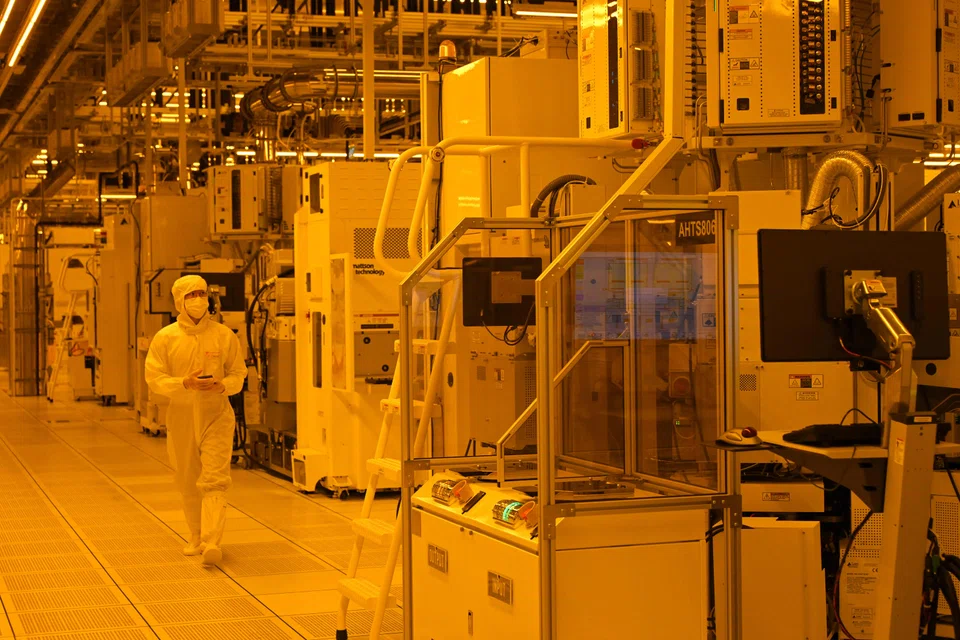
SINGAPORE’S upcoming water price hike will raise costs in major industries such as semiconductor and pharmaceutical manufacturing, but long-running efforts to raise water efficiency should keep the impact manageable, companies told The Business Times.
“The semiconductor manufacturing process is highly water-intensive, as vast amounts of purified water are required for chip fabrication,” said Ang Wee Seng, executive director of the Singapore Semiconductor Industry Association (SSIA).
But most new semiconductor fabs here are designed to recycle more than half their water usage, he noted. The impact of the price hike will vary, depending on where semiconductor player is along the manufacturing value-chain, he explained, based on questions from SSIA members.
National water agency PUB announced in the middle of this week that water prices will be raised – by S$0.50 per cubic metre, or 18.2 per cent – in two phases over the next two years. PUB said that after the two phases are completed, three in four businesses will pay less than S$25 more for water every month.
Some multinational corporations here are from industries with high water consumption, but the hike will have a minimal impact on them because they manufacture overseas. For instance, Singapore-listed iX Biopharma manufactures in Australia, and Aslan Pharmaceuticals does mainly finance, business development and some clinical development in the city-state.
Uneven impact
The hike is yet another addition to companies’ cumulative cost burden, even as the economy slows, noted OCBC chief economist Selena Ling.
Besides semiconductor and biomedical manufacturing, other water-intensive industries include hotels, office buildings, commercial laundry shops, data centres, and food and beverage (F&B) manufacturing, she said. F&B services such as hawkers and restaurants may also be hit.
“Businesses will try to pass on some of these cost increases to end-consumers if demand is sufficiently inelastic,” she felt. But with the government keeping an eye on profiteering, “some businesses may have to absorb the higher costs through narrowing their profit margin”.
Taking questions from reporters on Thursday, Finance Minister Lawrence Wong said that for smaller businesses, especially in F&B, water prices have a small impact on overall costs, relative to rental and labour, for example. But he acknowledged that cost increases will eventually filter into consumer prices.
For beverage manufacturer Really Addictive Drinks, water makes up a large part of raw material costs, and contributes to some 3 per cent to 7.5 per cent of its total operating costs, depending on order volumes.
Managing director Isaac Tan forecasts the company’s water costs to rise by two percentage points once the full hike kicks in; this works out to an additional S$1,000 to S$2,000 in operating costs each month.
But the company would pass on this higher cost to consumers only as a “last resort”, he said. He expects higher water prices to be “bearable”, because the company intends to cut costs in other areas.
Peter Barber, chief executive officer of hydroponic rooftop farm ComCrop, describes the outfit as “extremely water-efficient”. It recycles all its water, and uses less than a 10th of the water of a soil-based farm. “That said, any increased costs of production inputs will affect the cost of production,” he noted, adding that accumulated costs will eventually show up in shelf prices.
Reducing and recycling
For large-scale industrial users, water-saving technologies and practices will likely mitigate the impact.
To save water, German speciality chemicals company Evonik has explored alternative cooling systems and using seawater for cooling in its Singapore plants. This will limit cost increases, according to a spokesperson.
At electronics manufacturer I-Pex, water accounts for just 0.43 per cent of the manufacturing cost; its monthly water bill was S$3,600 on average this year. Even so, the company is still making efforts to increase water efficiency, said Joseph Choo, engineering section head.
I-Pex has tapped PUB’s Water Efficiency Fund for a water-recycling project that supplies its cooling tower. It also plans to study the areas with the highest water use, and invest in technology to identify leaks, inefficiencies and opportunities for further water conservation.
Chipmaker GlobalFoundries has worked with PUB to cut freshwater consumption through water-reclamation solutions, said Daniel Steele, senior director of its global environmental, health safety and security operations.
Its newest expansion fab has rainwater-catchment systems, advanced reclaim methodologies and waste-water treatment solutions.
“With such technologies, the Singapore expansion facility will be able to recycle more than 55 per cent of its water use at full ramp, equivalent to saving 17 Olympic-sized pools of water each day,” said Steele.
Over at Bollywood Farms, a 4-hectare vegetable farm, owner Ivy Singh-Lim collects rainwater run-off from her home’s roof in a holding pond.
Tan of Really Addictive Drinks is considering a water-efficiency assessment, and installing water-efficient equipment, and may apply for PUB’s Water Efficiency Fund next year.
But businesses – especially smaller players – need to weigh the benefits of technology against the cost of adoption.
Commercial laundry operators can reduce water consumption by more than 70 per cent if they buy tunnel washers with built-in water recovery systems, said Chan Tai Pang, CEO of laundry consultancy and solution provider Laundry Network.
The catch is that such machines cost S$1.5 million or more.
Businesses should therefore conduct feasibility studies to determine whether their water-consumption levels are worth the capital expenditure, he added. “Medium to large laundry operators could see returns on investments in three to five years, which is ideal.”
However, smaller coin laundry operators may just have to bear higher water costs if their consumption levels are “not high enough” to warrant the investment.