Working closely with foreign counterparts key to Singapore’s money-laundering fight: observers
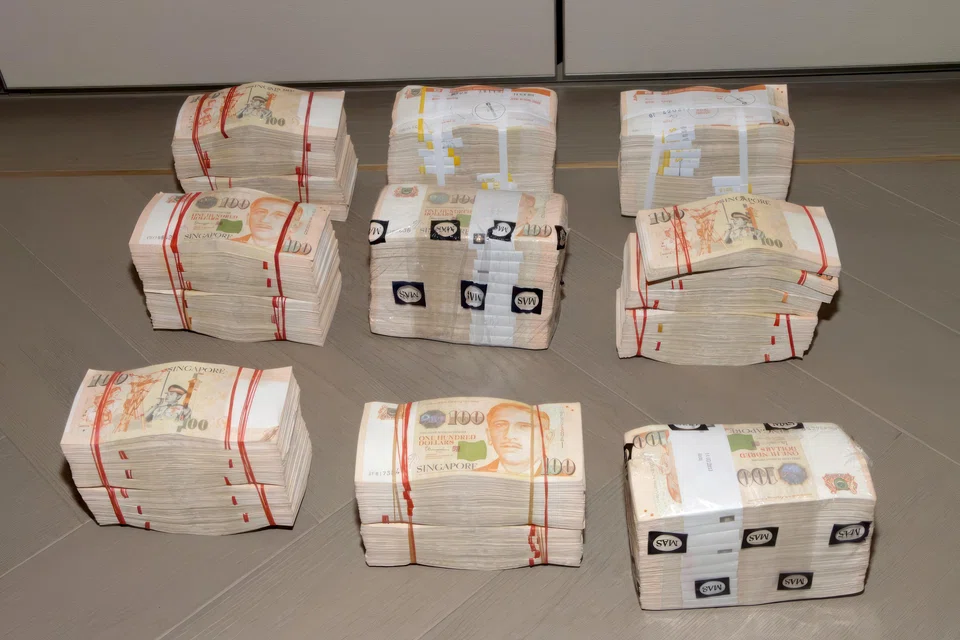
SINGAPORE will benefit from beefing up its tie-ups with other countries as it continues to strengthen its anti-money laundering regime, watchers told The Business Times.
The Republic, which is already a leader in anti-money laundering, announced on Tuesday (Oct 3) it will set up an inter-ministerial committee to study how various sectors can better spot red flags.
As Singapore is a financial hub where the exposure to money laundering risks is mainly from crimes done overseas, the main conduits are banks, remittance agents, shell companies, and individual money mules, said Nydia Remolina Leon, an assistant professor of law at the Singapore Management University.
That’s as researchers have found that the types of activities associated with money laundering will depend on each country.
For instance, a Dutch team of economists reported in 2020 that relatively small countries – such as Latvia, Luxembourg and Portugal – tended to experience money laundering as throughflows of illicit funds. Larger economies such as Germany, Australia and the United States, however, saw more proceeds from domestic crimes.
“The financial sector is highly interconnected worldwide. Hence, it is not possible to isolate the financial infrastructure of almost any jurisdiction, not only financial centres. However, financial centres, while essential hubs of economic activity and global finance, can indeed face a higher risk of money laundering problems,” said Prof Remolina.
The Monetary Authority of Singapore is working to set up its so-called “Cosmic” platform, which will let financial institutions share information on red-flagged customers.
Cosmic will be ready by the second half of 2024, said Minister of State for Trade and Industry Alvin Tan in Parliament on Tuesday.
Citing the ongoing work on Cosmic, Prof Remolina called Singapore a “first mover” in using technology to improve supervision. She added that financial institutions, regulatory authorities, and other stakeholders can take proactive action by further fine-tuning transaction monitoring systems “to effectively incorporate fraud prevention techniques”, among other measures.
Asked whether dirty money is the price of doing business for a financial hub, Michael Schaper, an adjunct professor from Australia’s Curtin University, said: “You can’t stop all money laundering. Like almost every other form of regulation, the focus has to be on detecting as much of the lawbreaking as possible, prosecuting those involved, and educating the broader community to prevent further occurrences.”
In an article for the Georgetown Journal of International Affairs, consultants Stefan Cassella and Yehuda Shaffer wrote in a 2020 article that one challenge in prosecuting international money laundering cases has been “the need in most criminal money laundering cases to prove that the money being laundered is in fact the proceeds of an act that constitutes a criminal offence in the country where the act occurred”.
The funds in the Fujian Family case are reportedly linked to crimes such as illegal gambling and unlicensed moneylending that were carried out overseas.
On top of money laundering, some of the suspects have been charged with offences such as forgery and perverting the course of justice.
Still, Danny Ong, the managing director of Setia Law, pointed out that the Corruption, Drug Trafficking and Other Serious Crimes (Confiscation of Benefits) Act in Singapore allows for the confiscation of all “unexplained wealth” after someone has been convicted of a serious offence, such as forgery, under the Act.
This option “greatly increases the prosecution’s ability to disrupt criminal funds flows without having to prove each and every predicate offence”, he explained. Predicate offences refer to the activities, such as cheating or illegal gambling, that may be linked to the funds.
He added: “This is also crucial because the evidence linking the kingpin of an operation to the predicate offences may be weak – the frontline cheating would likely have been carried out by a low-level operator who is many layers beneath the kingpin.”
Meanwhile, observers highlighted the importance of working with foreign counterparts. That’s as examples of cooperation raised in Parliament included a case of embezzled Angolan state funds, as well as the British probe into former Formula One boss Bernie Ecclestone.
Granted, establishing a link between dirty money and its illicit origins is a major challenge when “the money trail spans several jurisdictions”, especially places with more opaque disclosure rules, said lawyer Ong, a specialist in fraud, financial crimes and investigations.
“Increasingly, we have seen the use of sophisticated forgeries of commercial documents which serve to disguise the reasons for funds-flow or pull the wool over the eyes of banks doing anti-money laundering checks,” he told BT.
“The types of ownership structures, especially offshore structures, are increasingly complex – for example, involving multiple shell companies and the use of trusts.”
Said Prof Remolina: “Preventing the cross-border flow of illicit funds and incentivising source countries to control both the outflows of funds and the crimes generating them requires a comprehensive, coordinated effort at the national, regional, and international levels.”
For instance, international actors can help to train law enforcement agencies and judicial systems and enhance information-sharing efforts, she suggested.
In a case of the carrot and stick, trade deals with countries behind dirty fund flows may come on the condition of effective anti-money laundering measures, or else these countries may also face sanctions.
“Regional collaboration is important, especially in the Asean context where nations are closely bound in by cross-border trade and the frequent movement of people,” said Dr Schaper, who studied small business, crime, and sustainability as an ISEAS-Yusof Ishak Institute visiting senior fellow.
“Singapore is clearly the most advanced economy in the region in terms of its approach to preventing money laundering,” he said.
“This means it’s in the country’s own interests to help improve anti-laundering skills among neighbouring states. That takes the form of helping fellow South-east Asian states improve governance, reduce corruption and have enforceable laws.”