

WP chief Pritam Singh calls for public ‘report cards’ on major spending, questions ministerial bonus metrics
He says publicly reporting outcomes would strengthen transparency and enable MPs to better scrutinise government spending

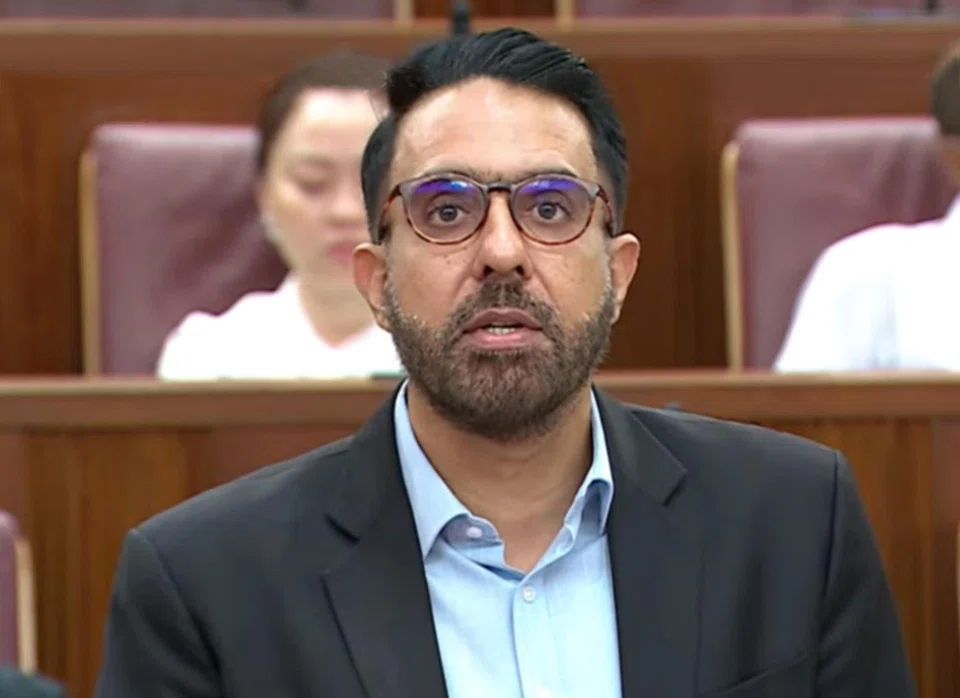
[SINGAPORE] Workers’ Party chief Pritam Singh has urged the government to institutionalise public “report cards” for major multi-year spending programmes, to track how the billions committed to key national initiatives have translated into results, as Singapore starts a new term of government with strong fiscal reserves and projected surpluses.
“There is real value in reporting such outcomes publicly,” he said in Parliament on Tuesday (Feb 24), the first day of the debate on the 2026 Budget statement.
Suggesting that these reports could take the form of occasional papers, he said: “Such transparency allows Members of Parliament on both sides of this House to fulfil their duty in scrutinising public expenditure as part of their responsibilities as MPs.”
Singh added that the practice would also give Singaporeans, and youth in particular, a clearer picture of the opportunities ahead; it would also help attract the best minds to Singapore.
Still, he said, there has been a lack of easy-to-track outcomes once the headlines have been announced in Budget statements.
For instance, Budget 2024 announced plans to spend S$40 billion on the “Forward Singapore” initiatives through to 2030, with S$5 billion committed in that inaugural Budget.

“To my knowledge, there has been no well-publicised tracking of cumulative spending since then,” he said.
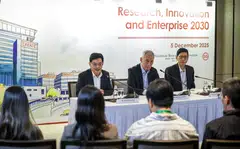
Similarly, he said that this year’s Budget announced that S$37 billion would go towards the next cycle of the Research, Innovation and Enterprise plan, or RIE2030, up from S$25 billion in the 2021 to 2025 cycle.
Yet, he said, there has been no comprehensive report on how the previous S$25 billion was used, including the number of jobs created for Singaporeans, whether the plan’s objectives were met, where programmes fell short, or whether it was premature to assess the outcomes.

“There is much work still to be done in demonstrating how efficaciously taxpayer dollars have been spent,” he said.
Singh warned that the government should be “conscious of the public cynicism and detachment” that grows when Singaporeans cannot see a clear accounting of how public funds are being used and the results that have been achieved.
“That is not good for Singapore – and it sits in contradiction with the participatory spirit that Forward Singapore was meant to embody.”
Turning to Singapore’s fiscal position, Singh noted that the government begins the new term “on a firm footing”, with a projected surplus of S$15 billion for FY2025 and a further S$8 billion expected in FY2026.
These surpluses, he pointed out, already far exceed the S$2 billion to S$3 billion in additional annual revenue that the goods and services tax hikes in 2023 and 2024 were expected to generate.
“There will be significant public interest in how these surpluses are ultimately deployed, especially given the pressures of an ageing population and the persistent concern over inequality,” he said.
National Bonus criteria
In his speech, Singh also referenced the Economic Strategy Review (ESR) committee’s warning in January that economic growth no longer automatically translates into job creation.
He said that what this does is to put every job-related policy, initiative and scheme announced by this government into a sharper perspective than ever before.
“For each, more so than before, Singaporeans deserve a well-publicised and detailed report card: One that distinguishes rhetoric about promises kept, with measurable outcomes subject to parliamentary and public scrutiny.”
Singh added that the ESR committee’s warning also called into question whether three of the four National Bonus components – which are partly used to determine ministerial salaries – remain fit for purpose.
If the Progressive Wage Model is driving income gains for the lowest 20th percentile independently of productivity growth, he asked, to what extent should it continue to feature as a criterion in the National Bonus formula?
He also questioned whether the unemployment rate among Singaporeans remains the right gauge, or whether underemployment has become a more telling and fairer measure of labour market health when assessing ministerial bonuses.
“And if GDP (gross domestic product) growth will no longer reliably create good jobs for Singaporeans, should it remain in the ministerial bonus formula at all?”
Decoding Asia newsletter: your guide to navigating Asia in a new global order. Sign up here to get Decoding Asia newsletter. Delivered to your inbox. Free.
Copyright SPH Media. All rights reserved.
TRENDING NOW

DBS, OCBC, UOB rout lops billions off STI as inflation, rate concerns spook investors

Grab CEO’s wife Chloe Tong on life with Anthony Tan and finding her purpose

OCBC sheds S$8 billion in value as shares close nearly 6% down; analysts cautious on banks

Deal between tycoon friends sparks scrutiny of Philippine power sector

