

EY proposes AI, green transition support, tax system tweaks in Budget 2026 wish list
The firm is also calling for measures to support the green transition and the workforce

[SINGAPORE] EY is calling for measures to address artificial intelligence (AI) adoption and the green transition in its Budget 2026 wish list. Its proposals also seek to maintain a relevant tax system as well as empower workers and families.
The raft of proposed measures focus on “supporting Singapore and Singaporeans to navigate present and future challenges amid global uncertainties and domestic priorities”, the professional services firm said on Monday (Jan 5).
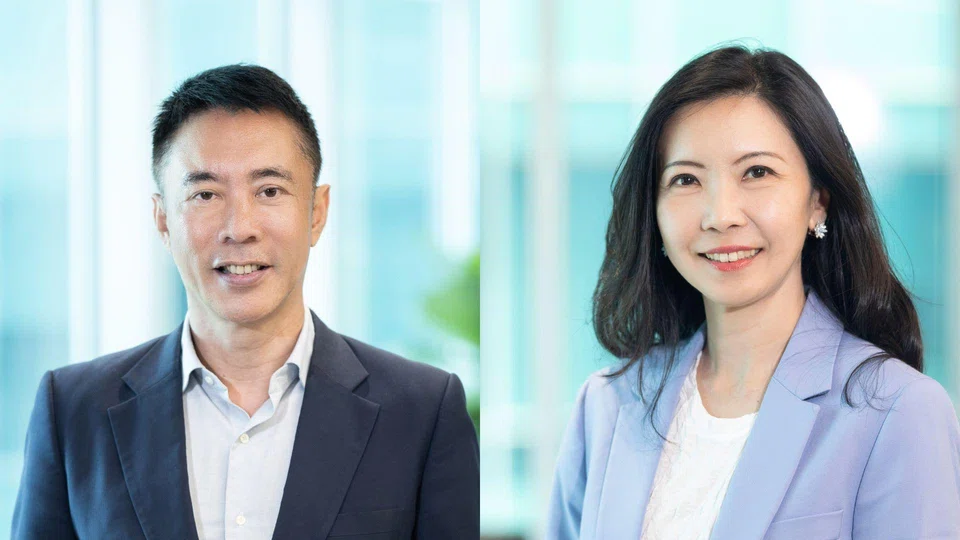
Liew Nam Soon, EY Asia East deputy regional managing partner and EY Singapore managing partner, said that in an uncertain world, the city-state must position itself for inclusive growth and compete to lead in an AI-driven economy.
“In line with the Economic Strategy Review’s focus on technology and innovation, Budget 2026 is a pivotal moment to accelerate and scale enterprise AI readiness through enhanced targeted support for AI adoption, infrastructure investment, ecosystem partnership and workforce upskilling,” he said.
Meanwhile, EY’s Singapore head of tax, Amy Ang, said Singapore must ensure that its tax regime remains relevant and effective even as it refines its policies, so that the country can support Singaporeans and businesses to navigate challenges.
“A core part of a country’s success rests on an effective tax system,” she said.

Acceleration for AI, sustainability
Singapore must position itself as a trusted AI hub by building capabilities, fostering a vibrant startup ecosystem, upskilling the national workforce and ensuring sustainable infrastructure growth, EY said.
Manik Bhandari, EY Asean data and AI leader, suggests that the government can reinvigorate the startup ecosystem by making fewer but larger investments in high-potential AI startups, with more funding and grants to help local ventures scale globally and attract international investors.
Talent development will also be critical in accelerating AI adoption.

Samir Bedi, EY Asean people consulting leader, suggests that the government could consider establishing a comprehensive national AI workforce strategy, defining Singapore’s position on the AI value chain and talent pathways.
He also recommended providing more AI-related education programmes and training subsidies, to increase literacy in the technology; providing “AI vouchers” similar to CDC vouchers, to improve access to essential AI tools; and creating a digital AI Skills Passport, for tracking and credentialling competencies in the tech.
To ensure sustainable and ready digital infrastructure to support AI’s intensive demands, Bhandari recommended exploring pathways for data centre capacity expansion, including strategic green energy allocations and regional cooperation.
Sovereign infrastructure can ensure AI tools and services are accessible, reliable and free of foreign control, he added.
As for the shift towards sustainability, EY-Parthenon Asean and Singapore energy leader, Sanjeev Gupta, proposed incentives for research and development (R&D) and pilots in next-generation nuclear technologies.
He also recommended tax deduction or grants for early stage carbon capture, utilisation and storage projects; and funding demonstration projects and demand-side incentives for alternative fuels.
“These proposed targeted incentives will help to enhance operational efficiency, reduce carbon intensity and strengthen Singapore’s position as a smart energy hub,” he said.
Keeping the tax system relevant
EY recommended several refinements to Singapore’s tax system, to ensure it remains relevant.
One area it targeted is Singapore’s qualified refundable tax credit (QRTC) framework, introduced in 2024 to align the Republic’s tax incentive landscape with the Organisation for Economic Co-operation and Development’s framework.
Johanes Candra, partner, business incentives advisory, recommended expanding the QRTC framework to support a broader range of business models, beyond the existing focus on capital-intensive and R&D-driven businesses.
Tracy Tham, also a partner in the business incentives advisory, suggested more holistic and flexible evaluations for the QRTC quantum, which currently relies on metrics such as capital expenditure, local business spending and headcount.
Additional parameters – such as cost of goods sold, product or shipping volume, as well as level of profits and value of intellectual property brought into Singapore – “better reflect the economic spin-offs generated by companies” and more accurately assess their economic contributions, she said.
EY also looked at increasing the expenditure cap under Section 14N of the Income Tax Act, which provides a tax deduction for qualifying renovation or refurbishment (R&R) expenses incurred on business premises.
The current deduction limit of up to S$300,000, unchanged since year of assessment 2013, has not kept pace with rising costs and transformation needs, said Chai Wai Fook, partner, tax services, who recommended increasing the expenditure cap to S$500,000 per three-year period.
Other tax-related proposals include enhancing the existing merger and acquisition scheme for more flexibility, introducing an international expansion tax credit to complement the existing Double Tax Deduction for Internationalisation scheme and an array of measures targeting the maritime, financial services and manufacturing sectors.
Empowering workers
Finally, EY discussed empowering workers and families. This can firstly be done by enhancing support for hiring and reskilling seniors.
Many seniors, who bring with them experience and institutional knowledge, face challenges in securing or retaining employment due to “outdated skills, health considerations or the lack of flexible work arrangements”, it said. Meanwhile, businesses navigating digital transformation, AI adoption and sustainability transitions require adaptable and skilled talent across all age groups.
Goh Jia Yong, partner, people consulting, recommended providing enhanced support for employers to hire, reskill and retain senior workers.
This support can be through further extension of existing schemes such as the Senior Employment Credit, he said. It could also be in the form of a reskilling grant to subsidise training costs for older workers transitioning into new roles, especially in digital, AI and green economy sectors.
Subsidies for courses under SkillsFuture or TechSkills Accelerator tailored for seniors could also be raised, and a new scheme to help companies redesign full-time roles into part-time, flexible or shared roles suitable for seniors could also be useful.
The firm also noted the need to update tax relief frameworks to make them more inclusive and responsive, considering that more families are caring for both younger and older dependents.
Kerrie Chang, partner, people advisory services tax, suggested that caregiving-related reliefs be expanded. The Parent Relief, for instance, could be extended to include caregiving for extended elderly family members, she said, to acknowledge broader caregiving responsibilities.
She also proposes revisiting the treatment of National Service (NS) allowances and internship stipends in relation to relief eligibility.
These allowances may currently disqualify parents from claiming relief due to the S$8,000 annual income threshold, she said, adding that NS allowances and internship stipends should be excluded from this calculation, as they are temporary earnings that do not reflect sustained financial independence.
For more of BT’s Budget 2026 coverage, go to bt.sg/budget26
Decoding Asia newsletter: your guide to navigating Asia in a new global order. Sign up here to get Decoding Asia newsletter. Delivered to your inbox. Free.
Copyright SPH Media. All rights reserved.
TRENDING NOW

Once staunchly pro-China, Malaysian Chinese businesses are now distancing themselves from Beijing

Stocks to watch: HPL, Aims Apac Reit, Zico, Advanced Systems Automation, ComfortDelGro

‘How many will survive?’: Bubble fears arise as China’s humanoid robotics face reality check

Smaller board lots can’t fix a market run by three banks

