Farmland south of Lim Chu Kang to be zoned for defence, land further north to be used for agriculture
Affected farms in the south may continue to remain on site until their land tenures expire
[SINGAPORE] Agricultural land south of Lim Chu Kang will be zoned for defence use in the near future; military land in the north, closer to other farms, will be reallocated for future farming use.
Concentrating farmland in the north of the area will advance development of an agri-food hub that has faced delays since it was announced in 2020 under the Lim Chu Kang master plan.
The land-use changes were announced on Monday (May 25) by the Singapore Food Agency (SFA), the Ministry of Defence (Mindef), the National Parks Board and the Singapore Land Authority.
“(This) will allow the government to explore how the physical co-location of food and non-food farms to the north of Lim Chu Kang could benefit from shared facilities and integrated infrastructure planning for more efficient operations, better logistics and to lower production costs,” the organisations said.
Affected farms in the south may continue to remain on site until their land tenures expire, after which the land will be returned for consolidation for military use. The tenure expiry dates range from 2026 to the mid-2030s.
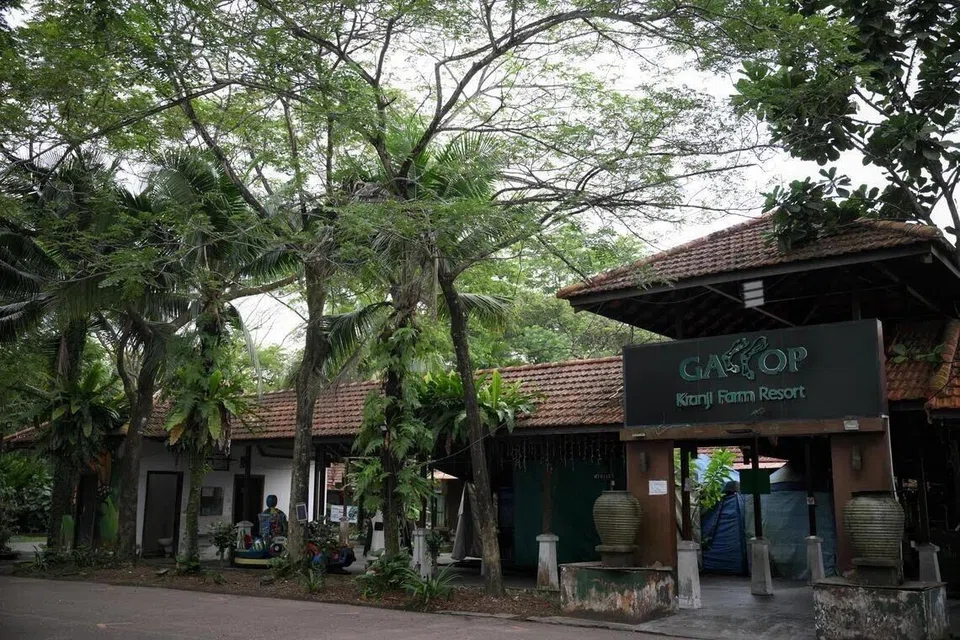
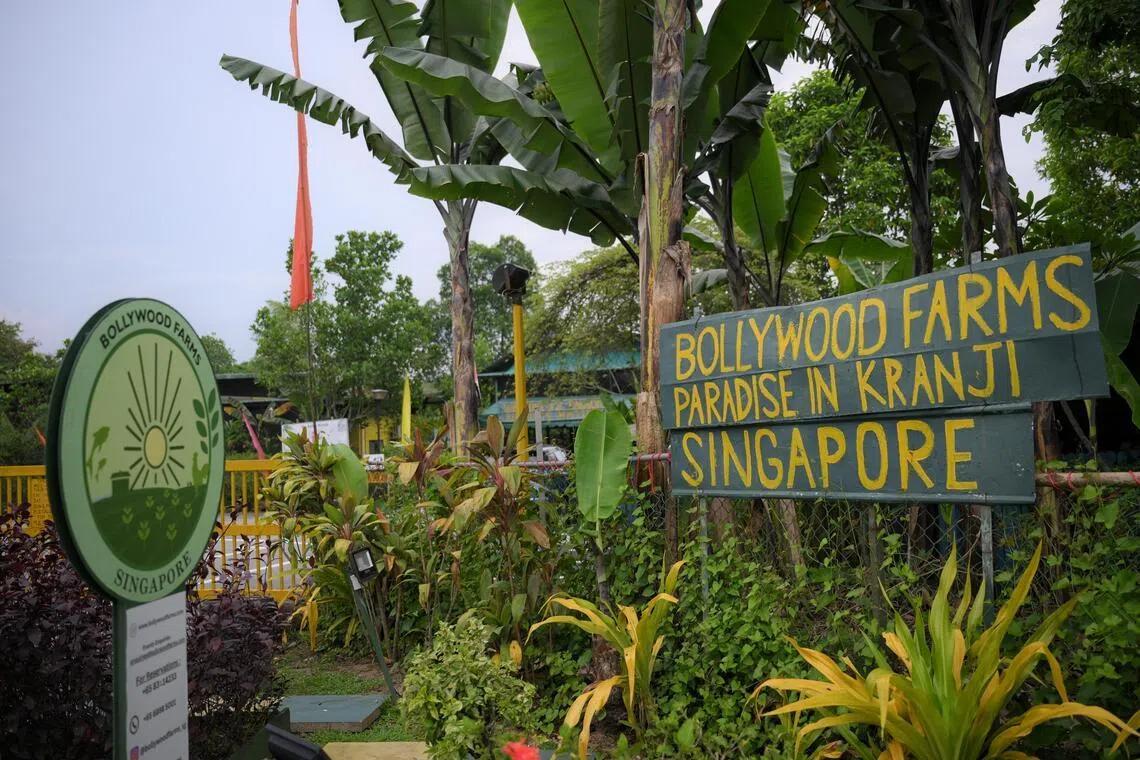
Five farm leaseholders currently occupy the southern plots in Neo Tiew Lane and Neo Tiew Road: Seng Choon Farm, Bollywood Farms, Gan Aquarium Fish Farm, Gallop Kranji Farm Resort and Malaysian Feedmills Farms, which has multiple agricultural tenants on its plot.
Affected farms that wish to continue operations when the rezoning takes effect have to bid for agricultural land, as it is not guaranteed they will be relocated to the northern plot.
The government agencies said that Singapore’s 2035 local production targets – which include producing 20 per cent of the country’s consumed fibre by that date – have taken into account the land use and transition plans in Lim Chu Kang. “The impact on affected farms is not expected to have a material effect to our overall food supply,” they added.
The leases for Bollywood Farms and Gan Aquarium will expire in December, and Gallop Kranji Farm Resort’s lease will expire in March 2027.
SFA said that they had been notified since 2020 that no further tenure renewals would be granted.
The leases for Seng Choon – one of three egg farms in the country – and Malaysian Feedmills Farms will expire in 2036 and 2037, respectively, and they were given at least 10 years’ notice ahead of their lease expiry.
“All affected farms had been informed early, to provide clarity and enable them to have sufficient lead time for business and operational planning,” the agencies added.
SFA said that it is working closely with the egg farm to support its operations and minimise disruptions to safeguard the supply of locally produced eggs and Singapore’s broader food security.
Local egg farms’ productivity has been more consistent than those of aquaculture and high-tech vegetable farms.
Seng Choon managing director Koh Yeow Koon said that the egg farm was hoping to stay on in Neo Tiew Road beyond 2036 to make the best use of its investments in the latest farming technologies.
“With the lease decay, these investments would become harder to make. We are disappointed that the lease could not be extended,” he added. The farm is currently working with the authorities to find a future site.
While Bollywood Farms’ 20-year lease expired in 2021, the government granted two short-term tenancy extensions “on a goodwill basis to facilitate its transition”.
The latest extension expires on Dec 31.
“Bollywood Farms has since requested a further tenancy extension and we are considering the request carefully,” SFA said.
The organisations said that the changes in land use announced on Monday are part of the planning process for the Lim Chu Kang master plan.
In 2020, SFA said that about 390 hectares of land in the area, which stretches from near Sungei Buloh Wetland Reserve to the south of Lim Chu Kang, will come under a master plan to create a “high-tech, highly productive and resource-efficient agri-food cluster”.
It was later reported in 2024 that developmental work for the master plan, which was to begin that year, was delayed.
With more land zoned for agriculture in the north, it is unclear how the master plan’s profile will change.
“SFA is advancing the Lim Chu Kang master plan through interagency planning and assessment on land use optimisation, infrastructure needs and environmental considerations, including coastal protection,” said the organisations.
The master plan will also study infrastructure requirements for non-food farms, such as ornamental fish farms and nurseries.
To test new ideas that could be applied under the master plan, SFA will be embarking on a technical and feasibility study on a multi-tenant facility where multiple types of farms can operate under one roof and share resources, which can help reduce their production costs.
The agency is conducting market-sensing and technical studies to evaluate which concepts and ideas should be pursued.
Gallop Kranji Farm Resort’s deputy director Mani Shanker was hoping that its lease could be renewed until 2030 at least, but is currently evaluating the resort’s future plans after 2027.
“We remain open to exploring possible opportunities, including participating in future tenders if suitable options arise, or assessing alternative locations depending on feasibility and operational considerations,” she said.
“Relocating a resort and recreational facility is definitely not an easy process,” she added. “There are significant investment and reinstatement costs involved, as well as the challenge of rebuilding infrastructure, customer base, and business continuity at a new site.”
Mindef began the process of taking over the land parcels in the northern plot in Lim Chu Kang Lane in late 2025.
Converting the southern plot for military use ensures contiguous land that will better serve defence uses, said the agencies.
Tengah Air Base and Murai Camp are located nearby.
“The change in land use also increases the terrain capacity for Mindef and the Singapore Armed Forces’ training,” said Mindef.
“This will enhance training realism, support combined arms training across a wider range of training scenarios and improve contiguity for platform operations, resulting in more effective training and operational readiness.” THE STRAITS TIMES
Decoding Asia newsletter: your guide to navigating Asia in a new global order. Sign up here to get Decoding Asia newsletter. Delivered to your inbox. Free.
Share with us your feedback on BT's products and services