F&B business openings slow so far in 2024, but observers say industry remains attractive
The rates at which they are being set up and closing are both at the lowest in eight years


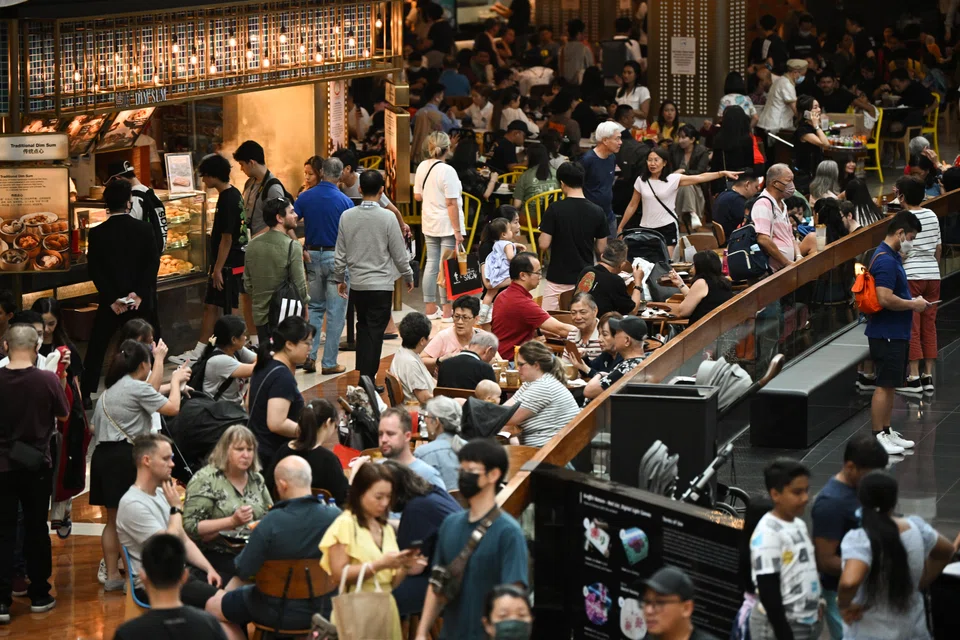
FOOD and beverage (F&B) businesses have been opening at a slower rate in Singapore this year, but observers believe the industry remains attractive despite rising costs.
For the first nine months of 2024, the formation rate of F&B entities – that is, the rate at which these businesses are being set up – was the lowest in eight years. The number of formations divided by the total number of live businesses was 11 per cent, down from 14 per cent in the year-ago period.
This was even though the absolute number of formations, at 2,937, was the second-highest in the last eight years, according to data from the Accounting and Corporate Regulatory Authority (Acra).
Yet, observers still see a strong drive to enter the industry, partly due to its low entry barriers.
The flip side of the formation rate is the closure or cessation rate. In the first nine months, the cessation rate was 9 per cent, at the low end of the range in recent years. Since 2018, this rate for the first nine months has come in at between 9 and 11 per cent.
This was even though 2,465 F&B entities ceased business in the first nine months of 2024, the highest absolute number for that period since 2017.
Caution and consolidation
The slower formation rate likely reflects “several converging factors”, said Dr Samer Elhajjar, senior lecturer from the National University of Singapore Business School’s department of marketing.
First, operating costs such as rent, labour and utilities are rising. Second, certain F&B segments – casual dining to mid-range restaurants – are “approaching saturation”, he said.
Third, financial institutions may have tightened lending criteria for F&B ventures, making it harder to secure startup capital, he added.
“The post-pandemic landscape has also likely contributed to more cautious entrepreneurial behaviour, with potential business owners having witnessed the vulnerabilities of F&B operations during a crisis period,” he said.
Association of Small & Medium Enterprises (ASME) president Ang Yuit has also picked up on a “cautious” mood in the sector.
He has seen cases of operators taking over leases and assets from distressed operators, which enables them to acquire premises with minimal renovation and thus save on hefty upfront set-up costs, compared to starting afresh.
Fluctuations “within normal range”
If the closure rate for the rest of this year is similar to that of past years, 2024 will see the highest number of cessations since 2017, noted Dr Guy Llewellyn, assistant professor at the EHL Hospitality Business School.
But 2024 is also on track for the second-highest number of F&B formations since 2017.
“These numbers indicate that the F&B sector is still incredibly strong,” he said. “Corporations, businesses or investors interested in operating in the F&B sector are still opportunistic about the potential in their investments.”
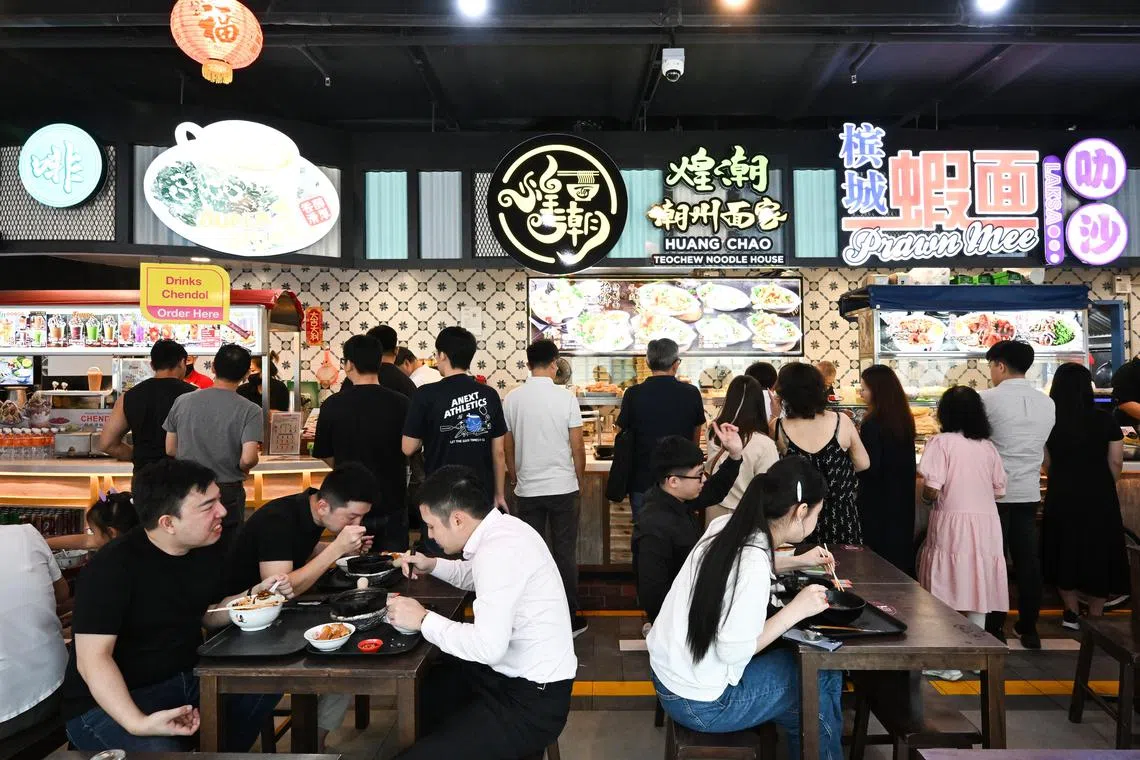
Observers also noted the relative stability of cessation rates since 2018. The fluctuations are “within the normal range”, said a spokesperson from the Restaurant Association of Singapore (RAS).
In Dr Elhajjar’s view, the rates indicate “regular turnover”, not “an acute crisis of closures”.
Commenting on both rates, OCBC economist Selena Ling said: “It is not easy to discern what is cyclical or what is structural, but both factors are likely at play.”
Assuming most formations are of mass-market rather than high-end F&B businesses, this may indicate improved growth conditions, she noted.
“This is not unexpected, given that the domestic labour market conditions and private consumption both remain resilient, and any diversion of consumer spending to overseas travel is somewhat mitigated by rising inbound tourism,” she said.
While Michelin-starred restaurants appear to be “under pressure”, suburban mall footfall in Singapore “remains steady”, she added. There have also been more foreign F&B players, including from China, entering the market.
Said DBS group research analyst Chee Zheng Feng: “F&B continues to be a very challenging market with low entry barriers, so we expect to see frequent turnover in F&B businesses for the foreseeable future.”
Pandemic effect
Business formation tends to be higher in good times. But the 2021 spike could be an anomaly, driven by home businesses formed amid Covid-19 restrictions, said Chee.
Danial Cheah, co-founder of beverage brand Fruce, agreed: “The pandemic prompted many individuals to pivot in their careers, leading to a surge in home-based F&B businesses.”
These Covid-era creations may have since closed, he said. “Cessations picked up as reality set in, with rising cost pressures and easing restrictions that led to outbound travel.”
In 2022 and 2023, the cessation rate was 11 per cent for the first nine months, at the top end of the range in the eight years tracked.
The rise in cessations reflects the earlier rise in formations, roughly in line with the one to two-year lifespan of many F&B businesses, he added. This may also be why cessations eased in 2024.
During the Covid years of restricted travel, local F&B players had a “significant” increase in revenues; they grew optimistic and opened more establishments, said ASME’s Ang.
When social curbs eased but travel curbs remained, there was an “excess of income” to spend on dining, he said. This demand has since eased.
“Some restaurants that were previously generating S$450,000 a month in revenue are now struggling with only S$200,000 per month – which is loss-making – even while remaining in the same location and maintaining the same brand,” he noted.
“This year, F&B operators are reporting lower footfall, even on public holidays.”

Not a full picture
Still, observers noted that formation and cessation data does not give a full picture of the F&B sector.
Dormant companies – those still registered with Acra but without income or transactions in a financial year – do not show up in cessation figures.
“Many establishments enter a kind of limbo state – technically still registered, but practically inactive,” said Dr Elhajjar.
These may include home-based businesses whose owners have returned to work post-Covid but “choose to keep their businesses dormant as a safety net, or operate them only on an ad-hoc basis”, said Cheah.
Other home-based businesses may be excluded altogether. Entrepreneurs do not have to register home-based businesses with Acra if they use their own name as the name of their business.
It is also common for F&B businesses, especially larger ones, to test new brands by replacing existing concepts with new ones in the same locations, said Cheah.
“This practice means that using formation and cessation data as indicators of growth or decline might not provide an accurate reflection of market trends,” he said.
Hybrid business formats may not be captured either, noted DBS’ Chee. These include supermarkets that have expanded into F&B services – such as Scarlett Supermarket, NTUC Fairprice and Don Don Donki – but would likely still be categorised under retail trade.
As formation and cessation rates “may fluctuate but not necessarily indicate a significant trend”, other data is required for a better overview of the F&B landscape, said ASME’s Ang.
These could include the industry’s overall annual operating expenditure and operating revenue, he said, citing a commentary by Dr Llewellyn on how Singapore’s restaurants made an average loss of about S$21,000 per year in 2022.
Quality over quantity?
Though the formation rate of F&B services has fallen, ASME’s Ang expects it to continue outpacing the cessation rate, given the relative ease of starting a business in Singapore.
But Dr Elhajjar raised the possibility that the trend in formation and cessation rates could signal a structural shift in F&B services.
If the formation rate keeps declining and the cessation rate is “stable but elevated”, this could mean a “fundamental shift in market dynamics” with a move towards “quality over quantity”.
“While fewer new businesses are being formed, those that do enter the market may be better capitalised and have more sophisticated business plans,” said Dr Elhajjar.
“This maturation process, though challenging for some market participants, might ultimately result in a more robust and resilient F&B sector.”