

Government likely to achieve balanced budget in current term despite Covid deficit

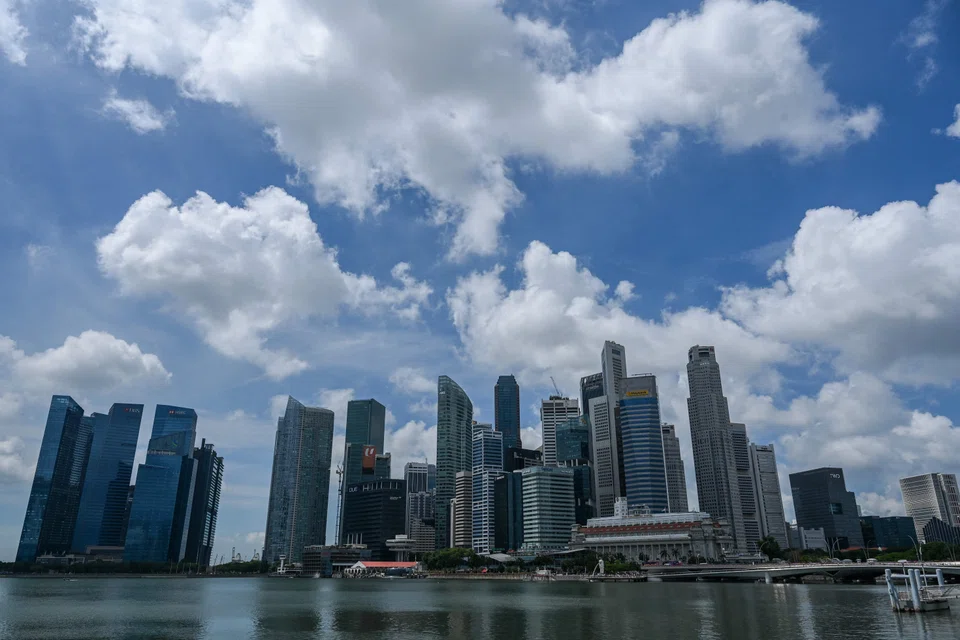
THE Singapore government is expected to balance its budget for the current term, set to end by 2025, despite a record S$51.6 billion overall budget deficit in financial year 2020 when the Covid-19 pandemic hit, analysts told The Business Times (BT).
This is even as the government has not planned or implemented any revenue measure to make good on the reserves drawn for the fight against Covid-19, a spokesperson from the Ministry of Finance (MOF) said in response to queries from BT.
The deficit resulted from multiple rescue packages rolled out as the economy took a beating from the pandemic, records by the Accountant-General’s Department (AGD) show.
But the bulk of this – up to S$42.9 billion – was funded by past reserves.
The Constitution requires the government to keep a balanced budget over its term, with the next General Election to be held by 2025.
According to the MOF spokesperson, the reserves have proven to be a “valuable ‘crisis fund’ that was used to supplement our revenue” to deal with the pandemic.
“We were able to meet the significant cost of our Covid-19 response, as we tapped on past reserves in FY2020, FY2021 and FY2022, as approved by the President,” said the spokesperson. The spokesperson added that such draws are taken “very seriously” and only considered in “extraordinary circumstances” such as the global financial crisis (GFC) or the Covid-19 pandemic.
Return to reserves?
The real question, analysts told BT, is whether the S$42.9 billion must be returned to the reserves.
In other words, would a draw on past reserves help to offset any deficit incurred, such that the government is able to end its term with a balanced budget?
Said MOF: “As to whether the balanced budget includes the amount drawn from past reserves, it does not. A draw on past reserves does not ‘help’ the government in balancing its budget.”
At the same time, there is no legal requirement for the government to return what it has drawn from the reserves, its spokesperson said, adding: “The government has not planned or implemented any revenue measure to make good on the reserves drawn for the fight against Covid-19.”
This would stand in contrast to the previous decade, when the government returned S$4 billion to the reserves in 2011 after the economy rebounded from the GFC that had prompted an unprecedented drawdown just two years prior.
Noting that the government has reiterated its commitment to rebuilding its reserves, See Wei Hwa, partner for property tax and dispute resolution at KPMG in Singapore, said that doing so signals to both Singaporeans and investors that the country is in a position of strength and remains a good place for doing business.
Still, not having to return the sum would make balancing the budget “definitely more manageable”, said OCBC chief economist Selena Ling, noting the “challenging deficit hole to cover”.
“From what I understand, FY2022 Budget may come in flattish to a small deficit, despite buoyant tax revenues from corporate and personal income tax and even GST (goods and services tax),” she said.
Khoon Goh, head of Asia research at ANZ, is more sanguine, believing the government to be in a “good fiscal space” and on track to “resume running consistent surpluses”, absent another major global shock.
“Budget 2022 forecast an overall fiscal deficit of S$3 billion. But for the first six months of the fiscal year, revenue is running well ahead of budget and total expenditure is below expected,” he said.
Noting that revenues in H1 stand at S$48.9 billion while expenditure is S$39.1 billion, he added: “At this rate, a surplus will be achieved compared to the deficit forecast at the Budget.” The main driver of higher tax intake has been better-than-expected economic activity, he said.
FY2021 too saw better-than-expected performance that resulted in a surplus of S$1.9 billion – in contrast to the Budget 2021 forecast of an S$11 billion deficit, revised to a S$5 billion deficit in Budget 2022.
At the Singapore Economic Roundtable (SER) in early December, OCBC’s Ling asked Senior Minister of State for Finance Chee Hong Tat for his thoughts on balancing the books for this term. Chee replied: “GST is of course one of the options that we explored. We are not closed to other options.”
“If you look at Budget 2022, we have actually raised other areas as well, including income tax for the higher end and property tax for the higher end,” he said. “So these are all different ways in which we can raise revenue to make sure that we balance our books.”
Keeping a balanced budget is a discipline to which the government will adhere, though there is a need to prepare for rising government expenditure due to the ageing population, he added.
To tax or not
KPMG’s See noted that the government has been gradually raising a bevy of taxes over the last five years, such as personal income tax, GST, wealth-related taxes, casino tax, water conservation tax and carbon tax.
On the first day of 2023, the top marginal rate for property tax went up, while the GST went up by 1 percentage point to 8 per cent. Next year, top personal income tax rates will be raised alongside another 1-percentage point GST hike.
“These should provide the government with additional tax revenue in the coming fiscal years,” said Harvey Koenig, partner for telecommunications, media and technology and tax at KPMG in Singapore.
At the same time, a domestic top-up tax is set to be introduced under Pillar 2 of the Base Erosion and Profit Shifting (BEPS 2.0) initiative, a global tax deal led by the Organisation for Economic Co-operation and Development (OECD) to level the playing field.
Desmond Teo, EY Asia-Pacific and Asean private tax leader, noted that in recent years, Singapore’s tax collection as a share of gross domestic product (GDP) has been below 11 per cent, compared to the 2019 OECD average of about 21 per cent.
“This implies that there may be some room for Singapore to collect more taxes,” Teo said. “However, this needs to be balanced against maintaining a conducive and business-friendly environment, which is key for a small and open economy like Singapore.”
KPMG’s See concurred, even as he noted that corporate and personal income taxes are the two largest sources of tax revenue: “Any further increase in these taxes could make Singapore less attractive amid tight global competition for talent and investments.”
OCBC’s Ling said that Senior Minister of State Chee’s response at SER set her thinking about other policy levers. With personal income tax already raised at Budget 2022, she reckons it is unlikely to be touched for now, although wealth taxes could be a potential target.
As for property taxes, she noted that they have already been adjusted, with steeper hikes for higher-end and investment properties, while the additional revenue will be “relatively small at S$380 million per year when fully implemented”.
Chua Kong Ping, tax partner at Deloitte Singapore, said the government could consider how other countries tax capital gains from the sale of property, with suitable carve-outs such that the tax is generally applicable for owners of multiple properties.
“Gains from the sale of property are generally not subject to tax or duties, unless the property is held for a very short period of time and the sellers are engaged in property trading activities,” said Chua.
Having a wealth tax would allow the burden of taxation to fall on capital appreciation instead of solely on income, given that the rate of the former tends to outstrip income growth, he said.
OCBC’s Ling believes it is difficult at this juncture to say whether the government would raise revenue by levying capital gains taxes, relying on domestic top-up taxes in view of BEPS 2.0, or raising corporate income tax rates.
“Moreover, the macroeconomic environment has turned more pessimistic, so the tax revenues that have been buoyant this year, including property taxes, may also start softening from 2023,” she said.
The gloomy outlook in fact highlights the need to consider taxes that are less sensitive to economic downturns, said EY’s Teo, noting that corporate and personal income taxes are particularly susceptible.
“We have seen an increasing focus in the past year on asset-based taxation in the forms of stamp duty, property tax and the Additional Registration Fee for luxury vehicles, and expect this focus to remain,” he said.
Sustainable growth
At SER, Chee highlighted the importance of sufficient growth: “Of course, maybe we still have to adjust tax rates. But when you have growth, it’s easier for you to balance your books and still meet the higher spending – compared to if you have a stagnant economy or shrinking economy, and then you’ll have even more challenges.”
Chris Woo, tax leader at PwC Singapore, agreed that the Republic would be best served if increase in government spending is funded by economic growth. With greater tax collection derived from greater growth, “such a formula should then result in a ‘win-win’ for both individual and non-individual taxpayers in Singapore”, he said.
Increased government reserves fuelled by tax collection can also strengthen the country’s credit rating, letting it to continue raising funds for infrastructure developments to enhance competitiveness, he added.
“Subsequently, this will help increase Singapore’s attractiveness for greater investments and fuel further growth, thereby generating greater tax revenue. Think of it as the tax ecosystem taking the form of a virtuous cycle,” he said.
The challenge for the government, he said, is to convince taxpayers that there is a real need for the tax rise and that the tax revenue raised will be used for “the greater good”.
TRENDING NOW

China recruited exec at Singapore data centre firm to spy on Nvidia CEO Jensen Huang: US intelligence

Higher rates, weaker spending: Is the Philippines entering stagflation?

Could Japan trigger the next global financial crisis?
Protect people, not prices: How Asean+3 can build resilience to energy shocks

