Green jet fuel levy for air cargo deferred for a year
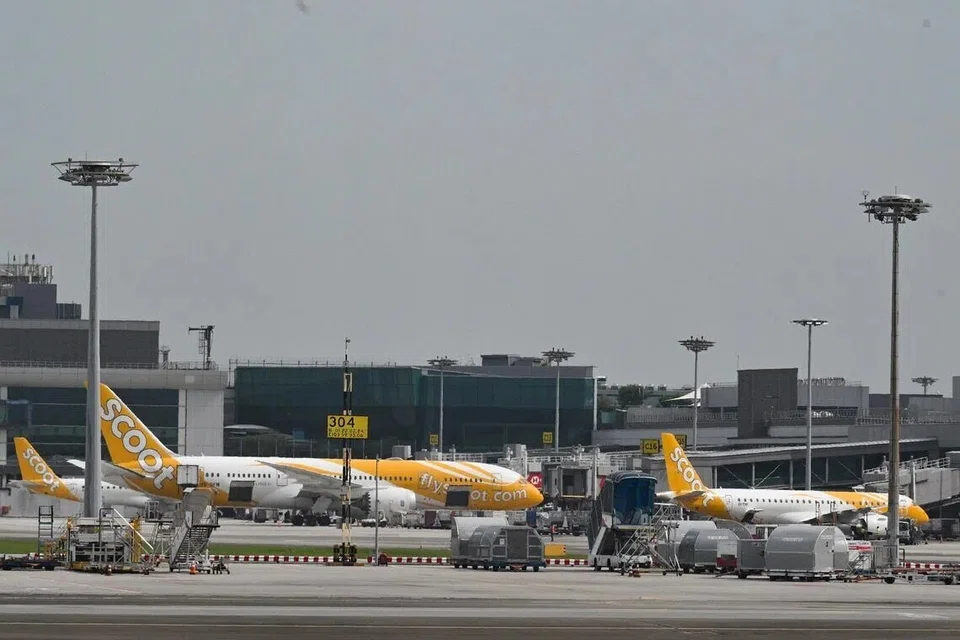
[SINGAPORE] A green jet fuel levy for air cargo will be deferred for a year and start from Oct 1, 2027, for flights leaving Singapore from Jan 1, 2028.
In a statement on Sept 3, the Civil Aviation Authority of Singapore (CAAS) said the air cargo levy is being pushed back because of the diverse nature of air cargo and the number of businesses and agencies involved, compared with passenger flights.
These include airlines, freight forwarders and shippers, with different commercial arrangements in place.
CAAS said: “Taking into account industry feedback, the one-year deferment will allow more time for CAAS to work with the industry to develop and implement a robust, sustainable aviation fuel levy collection mechanism for cargo shipments on departing flights.”
CAAS earlier said travellers booking flights out of Singapore will be required to pay a jet fuel green levy from Jan 1, 2027, if they buy tickets from Oct 1.
The levy will go towards the purchase of sustainable aviation fuel.
Passengers in economy or premium economy class will pay between S$1 and S$10.40, depending on their destination. Those who fly business or first class will pay between S$4 and S$41.60.
This is based on industry norms for calculating the carbon emissions of passengers in different cabin classes.
Industry players welcomed the move to defer the air cargo green fuel levy.

Gabriel Lam, chairman of SAAA@Singapore – formerly the Singapore Aircargo Agents Association – said trying to adopt a “one size fits all” approach for the industry when collecting levies could create inconsistencies.
By extending the runway for implementation, industry players can navigate the transition in a “more measured and sustainable manner”, he added.
The extra lead time, he said, can help companies to plan ahead and communicate with their customers and partners before the fee takes effect.
The green jet fuel levy was supposed to take effect for passengers flying out of Singapore in October with tickets bought from April 1.
However, it was pushed back to Jan 1, 2027, in response to the global energy crisis brought on by the Middle East war, which saw the closure of the Strait of Hormuz, where a fifth of the world’s global oil and energy supply flows.
As longer flights consume more fuel, travellers who fly to farther destinations will pay a higher levy.
The fee will be reflected as a distinct item in the fare breakdown.
To apply the levy, destinations worldwide have been grouped into four geographical bands, with the levy amount increasing with each successive band, based on the distance travelled.
The bands are South-east Asia (Band 1); North-east Asia, South Asia, Australia and Papua New Guinea (Band 2); Africa, Central and West Asia, Europe, the Middle East, the Pacific Islands and New Zealand (Band 3); and the Americas (Band 4).
For flights with multiple stops, the levy will be based on the immediate destination after departing from Singapore. THE STRAITS TIMES
Decoding Asia newsletter: your guide to navigating Asia in a new global order. Sign up here to get Decoding Asia newsletter. Delivered to your inbox. Free.
Share with us your feedback on BT's products and services