

Health, manufacturing sectors continue to lead Singapore’s gender pay gap
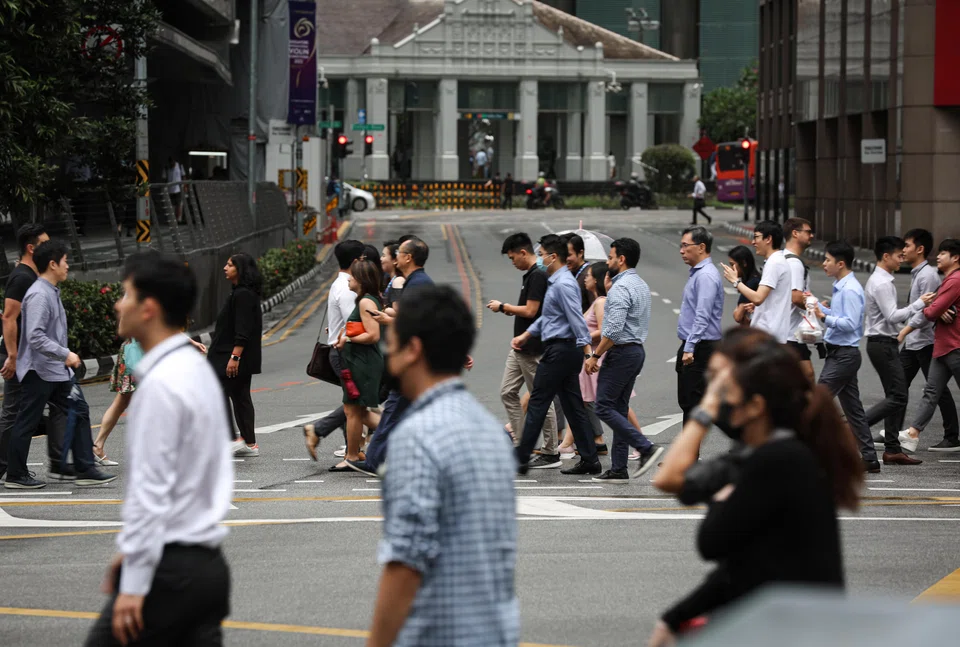
WHILE Singapore’s gender pay gap has narrowed, it is striking that the industries with the most significant disparity five years ago still remain the same.
The health and social services sectors again had the largest difference between median salaries of men and women, at 29 per cent in 2023 – though this was a sharp narrowing from 38 per cent in 2018.
In contrast, the overall gender pay gap was 14.3 per cent in 2023, down from 16.3 per cent in 2018. The figures are for full-time resident employees aged 25 to 54.
The Ministry of Manpower (MOM) could not provide comparable data by industry. Instead, to calculate pay gaps for each industry, The Business Times used MOM’s median gross monthly income data for full-time employed residents aged 15 and over.
The resulting gender pay gap is the difference between median incomes for each gender, expressed as a percentage of the median income of male employees.
Accommodation and food services tied with manufacturing for the second-widest gender pay gap in 2023, with both industries having a 27 per cent difference. In both cases, the gap has widened since 2018.
Different occupations
One major reason for a gender pay gap within an industry, whether in Singapore or elsewhere, is the different representation of men and women in various occupations.
Terence Ho, an associate professor at the Lee Kuan Yew School of Public Policy, said that in industries where men earn significantly more than women, the men are more likely to be in higher-earning designations.
This is likely the case in industries such as health and social services, he added. There, the median income was S$6,435 for full-time employed men but S$4,658 for women in 2023.
National University of Singapore senior lecturer of economics Kelvin Seah agreed that within industries, different occupational choices could cause a disparity in average pay.
“One reason men earn 29 per cent more in health and social services may be because of the tendency for women to select nursing,” he said.
He explained: “If the wages of nurses are on average lower than those of other occupations within the health and social services industry, such as doctors, then this may contribute to the gender pay gap in the health and social services industry.”
The converse is likely also true in industries where women earn more than men, he added. In 2023, the industry with the biggest reverse gap was transportation and storage. There, women earned 25 per cent more than men.
Said Dr Seah: “For instance, men may be selecting lower-paying jobs like delivery drivers, while women take on more managerial jobs within the industry.”
In a release earlier in March, MOM noted that occupational differences was the key driver of the gender gap in 2023, accounting for 6.1 points of the unadjusted gender pay gap.
What can be done
Sim Gim Guan, the executive director of the Singapore National Employers Federation (SNEF), said: “While employers cannot directly influence the career choice of any individual, they can put in more effort to recruit women, especially in sectors that are traditionally male-dominated.”
Employers can also showcase success stories of women who have done well in these jobs, to attract more women into such roles, he added.
In accommodation and food services, the median income in 2023 was S$3,276 for men but just S$2,405 for women. In manufacturing, it was S$6,105 for men but S$4,446 for women.
Singapore Manufacturing Federation (SMF) vice-president and honorary treasurer Audrey Yap said the federation “recognises the gender pay gap as a complex issue, deeply intertwined with societal norms and employment patterns that have historically seen men in higher-paying roles and women in supportive positions”.
One way to narrow the pay gap is to enhance science, technology, engineering and mathematics (Stem) education for women, she said, adding that SMF “advocates for upskilling women in digital technologies, challenging stereotypes and facilitating their rise to high-paying, innovative roles”.
SMF also champions women for roles in the emerging field of sustainability, opening “new high-value pathways for female leadership”, she said.
Same occupation, different pay?
Singapore Human Resources Institute (SHRI) executive director Alvin Goh noted that historically, the gender pay gap is often linked to differences in education levels and career choices. Yet these differences cannot fully explain the pay gap today.
After accounting for human capital and labour market factors such as education, Singapore’s adjusted gender pay gap was 6 per cent in 2023, improving from 6.7 per cent in 2018.
SNEF’s Sim said: “This means that a female worker who is in the same industry, same job, same age and same educational level as a male worker could on average earn 6 per cent less than the male worker.”
Across industries, the gender pay gap for professionals, managers, executives and technicians (PMETs) is 13 per cent, much wider than the 2 per cent gap for non-PMETs.
This might be because of the “wider income range for PMET positions”, said Prof Ho.
He added: “PMET occupations include managing director, chief executive and general manager roles that have significantly higher incomes, which men are more likely to be engaged in.”
He noted that Singapore’s adjusted gender pay gap of 6 per cent is comparable to that of countries such as the US and Canada.
Said SHRI’s Goh: “Today, women still find themselves trailing behind their male counterparts, primarily due to time taken away from work for caregiving responsibilities.”
Dr Seah agreed that another well-documented reason for gender pay gaps is that some women leave the workforce when they have children, which may affect their career progression.
“Of course, another possible reason for gender disparities in pay is due to gender discrimination in the labour market,” he added.
“Although there is much more effort now to support women and discourage gender discrimination in the labour market compared to before, there is still a lower tendency for women to take on senior leadership positions within companies in many cases, possibly due to gender discrimination.”
Prof Ho suggested that at a policy level, the focus should be on addressing the underlying causes of the gap.
“These include efforts to improve the occupational profile of women by addressing gender stereotypes about careers, encouraging more women to enter Stem fields and other higher earning occupations, and promoting a more equal sharing of caregiving responsibilities between men and women at home,” he said.
SNEF’s Sim added: “Employers can also implement employment practices and create a supportive environment that assist women to better cope with both work and personal responsibilities to minimise disruptions to their careers.”
TRENDING NOW

ComfortDelGro appoints two new independent directors

Once staunchly pro-China, Malaysian Chinese businesses are now distancing themselves from Beijing

NoonTalk needs continued financial support from CEO Dasmond Koh, auditors warn

DP Architects sets the benchmark for sustainability disclosure and design

