

How Allies of Skin went from startup capital of S$250,000 to S$26 million in annual revenue
Having raised S$20 million from a Los Angeles private equity firm, the skincare brand is eyeing a major expansion in the US

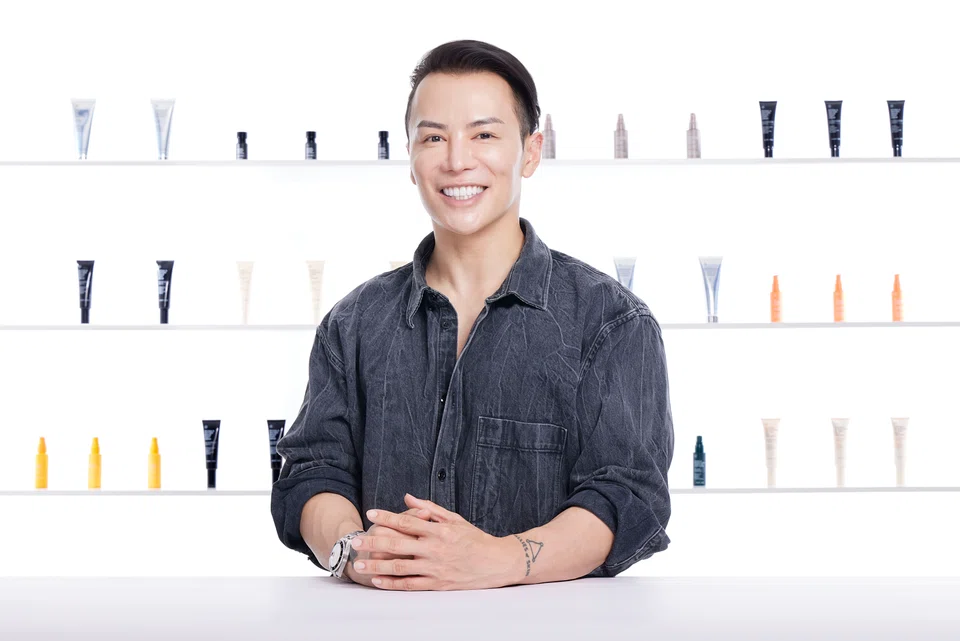
FRESH on the scene as a skincare company in Singapore eight years ago, Allies of Skin founder and chief executive officer Nicolas Travis thought the only way he could make it big was to go international from day one.
“As a local brand, we have to venture out overseas before we’re taken seriously; that’s just how it is,” he told The Business Times over a video call from Berlin, where the company is now headquartered.
“And the truth of the matter is also, Singapore is still – even though we are a very rich country – a really small market.”
Even so, the company managed to break even in its first year in Singapore, with revenue of S$700,000. It was set up with a startup capital of S$250,000 – mainly from Travis’ savings, a loan from his siblings and a S$50,000 government grant.
By the following year, Travis, then 29, made it to the Forbes 30 Under 30 Asia list.
Still, convincing overseas buyers and retailers to take a chance on the beauty startup was an uphill task, since Singapore was not known for its beauty products, unlike countries such as South Korea.
“They were like, ‘Oh, you’re from Singapore, I didn’t know you have beauty brands, I only know of your airline and your chicken rice’,” he recalled. “They would laugh, and they wouldn’t stock us.”
But he did not give up: “I was like, ‘okay, I just have to find one person that believes in me’.”
That turned out to be UK-headquartered online store Cult Beauty, which started stocking Allies of Skin products in 2017.
The brand was then stocked by now-defunct American chain Barneys, which gave the brand “some luxurious prestige association”, and online luxury fashion retailer Net-a-Porter.
Allies of Skin is now available in 36 countries in the Asia-Pacific, Europe and North America. Its expansion was aided partly by Enterprise Singapore’s Market Readiness Assistance scheme, which the company has been tapping since 2017.
Last year, retail sales reached S$26 million, up more than 50 per cent from the year before. This year, Travis expects sales to be “S$30-plus million”.
Going places
The Covid-19 pandemic was a key growth driver, as the world hunkered down – and shopped furiously online. Takings from the 2020 Black Friday sale, he recalled, were six times higher than the year before – to the extent that the company “had nothing left to sell”.
The products have large profit margins, too. Allies of Skin’s best-selling serum, which retails for S$183 for a 48 millilitre tube, yields a profit margin above 92 per cent from direct-to-consumer online sales, Travis said.
The company has over 20 different products ranging from S$62 to S$291 each, targeting a variety of concerns from dark spots to wrinkles.
With a background in biomedical and pharmaceutical science, Travis creates the formulations together with chemists from laboratories in the US, Switzerland, Paris and Korea.
One major goal is for Allies of Skin to make it to Sephora US, which operates over 500 physical stores across the Americas. Said Travis: “It’s my personal Mount Everest from a career perspective because when you can make it in Sephora US, you can make it anywhere.”
But through conversations with the LVMH-owned beauty giant, he soon realised it was only interested in brands that have raised institutional capital and have a US team.
“I think what happened was, during Covid, there was an explosion of K-beauty, and so they brought on a lot of international brands. But because these brands didn’t have a local team, they couldn’t execute properly, it wasn’t successful,” he said.
So Travis set out to meet those criteria. This April, he raised US$20 million from Los Angeles-based private equity firm Meaningful Partners with the goal of “going deep” into the US market.
This was the company’s first institutional investors, after having relied on family, friends and angel investors for the most part. Among the earliest investors was Hollywood actor of Crazy Rich Asians fame Henry Golding, who Travis said is a good friend.
Hiring the right talent
The bulk of the funds goes into hiring the right talent. “(Our) biggest cost is people, but I also think it’s the cost that’s most worth it because when you have a great team that actually knows what to do, you can really scale.”
Before he set up a team in LA this August, the US accounted for 55 per cent of the company’s direct-to-consumer sales; by September, this rose to 70 per cent.
Talent was also a key reason Allies of Skin shifted its headquarters to Berlin in 2020, a move Travis described as an “inflection point” for the business.
“One of the challenges that we faced was the fact that the beauty sector in Singapore is still really nascent, so there haven’t been a lot of local beauty brands that have honestly made it internationally.”
This made it difficult to find people with the relevant startup experience, he said. Most in the industry only had experience working for global beauty brands such as L’Oreal and Estee Lauder, which operate differently and have different considerations.
He chose Berlin for its location in the centre of Europe, its startup-friendly environment, as well as its favourable timezone – between Singapore and the US.
Most of the company’s staff are based in Berlin, while its influencer and global sales teams are in London. Bangkok is the “de facto Asia hub”, home to its tech and performance marketing teams. Only two social media and customer experience employees are left in Singapore.
“Because if you think about the cost of having an employee in Singapore versus Thailand, there’s no comparison – it’s like a third,” he said.
In spite of this, Allies of Skin will “always be a Singaporean brand”, said Travis, who now splits his time mostly between Berlin and Bangkok.
Yet he does expect to eventually make an exit.
“With every beauty entrepreneur, the goal is to one day create a brand that’s attractive enough for a L’Oreal or Shiseido to buy you out,” he said. “That’s always been the goal – but of course we’re very focused on what we have to do right now in order to scale, so we’re not even thinking of that.”
This is the second in a series on Singapore skincare small and medium-sized enterprises






