

If convicted, can Ong Beng Seng remain as Hotel Properties director?
Under Companies Act, property tycoon can be disqualified from serving as HPL director if convicted on fraud or dishonesty charges and imprisoned for three or more months

FORMER transport minister S Iswaran was sentenced on Thursday (Oct 3) to 12 months’ jail, having pleaded guilty on Sep 24 to five charges: two for obtaining hospitality suite tickets for the 2017 Singapore F1 race, as well as flights and a hotel stay in Doha from property tycoon Ong Beng Seng.
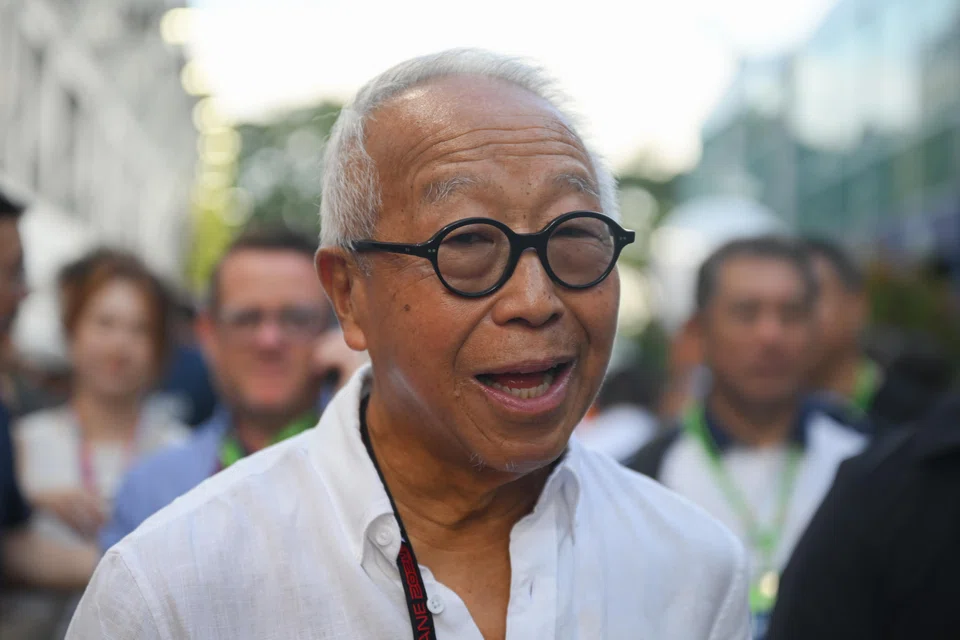
The 78-year-old Ong, popularly known as OBS, was charged on Friday (Oct 4) afternoon.
The managing director and controlling shareholder of Singapore-listed HPL was charged on one count under Section 165, for having allegedly abetted a public servant in obtaining gifts, and one count for obstruction of justice.
The charges, initially brought under the Prevention of Corruption Act, alleged that these gifts were intended as inducements to further his business interests in contracts with the Singapore Tourism Board for events such as the Singapore Grand Prix and the ABBA Voyage virtual concert. The prosecution later amended the charges to lesser offences under Section 165. The tycoon is out on bail of S$800,000.
Why did HPL request trading halt?
HPL requested a trading halt before the market opened on Friday, pending an announcement. This came amid concerns that a fine or jail sentence above a certain threshold could disqualify Ong from serving as a director or holding key appointments within the company.
On Friday evening, HPL requested that the trading halt be lifted. This came after it said in a filing that Ong “continues to be suitable to carry out his duties and responsibilities” in his role. HPL added that the board and nominating committee will continue to monitor the progress of the matter, and that the committee will continue to re-assess the suitability of Ong’s continued appointment.
The Malaysian founded HPL in 1980 to buy the Hilton Singapore hotel for S$72 million. This marked his foray into the property, hotel and retail sectors. The company swiftly went on to acquire more hotels and properties, notably those located in the prime Orchard Road belt.
Today, it is a conglomerate with interests in hotel ownership, management and operations, property development and investment holdings. The hotels in its portfolio are managed under well-known brands such as the Four Seasons Hotels and Resorts, Hard Rock Hotels and Marriott International.
What does the law say?
Lawyers told The Business Times that under Section 154(1) of the Companies Act, an individual can be disqualified from serving as a director of a company if convicted of any offence in any country that, firstly, involves fraud or dishonesty, and secondly, is punishable with imprisonment lasting three months or more.
This disqualification also applies to any offence related to market conduct and enforcement of a civil penalty under the Securities and Futures Act.
A court may further disqualify anyone convicted in the country of crimes related to the formation or management of a company, as well as offences under certain sections of the Companies Act or the Insolvency, Restructuring and Dissolution Act.
Lin Yuankai, a partner at RPC Premier Law, told BT that “aside from being unable to act as a director, the person is also prohibited from both direct and indirect participation in the management of the company”.
“This person is entitled to apply to the High Court for permission to act as director or to participate in the management of a company during the disqualification period, though it is possible that the Accounting and Corporate Regulatory Authority may object to this application,” he added.
The duration of disqualification depends on the circumstances of the conviction. If an individual is convicted but not sentenced to imprisonment, the disqualification lasts for five years, or for a shorter period as determined by the court. If imprisonment is involved, the disqualification extends for five years following the individual’s release.
Referring to Ong’s case, senior corporate lawyer Robson Lee told BT, however, that the charges do not involve fraud, and there was no hint of dishonesty. He emphasised that the case is not comparable to typical dishonest conduct seen from time to time, and so would not lead to automatic disqualification from directorships.
“The process has to take its due course. It is premature to speculate that this is going to be a consequence,” he added. He said the court has to make a disqualification order and there are several legal requirements to satisfy.
Lee, a partner at Kennedys Law and a director of Legal Solutions, said: “It might take some time before the outcome of his charges are known.”
He pointed out that it is uncertain whether Ong will plead guilty, and that the court must provide sufficient time for him to seek counsel. This means the entire process could take a few months, depending on whether he chooses to contest the charges.
Legislation for foreign nationals
Non-Singaporean directors who are convicted may be deported immediately. Lin said that the legal framework applicable to foreign nationals in this context is primarily the Immigration Act, which gives Singapore’s immigration authorities the right to control non-citizens’ clearance to enter or leave Singapore.
A foreign national who is convicted and jailed for any offence in or outside Singapore may, as a result, be deemed by the immigration authorities to be a “prohibited immigrant” and be refused entry into Singapore. If the foreign national is classified as such while in Singapore, this person may be deported and barred from future re-entry.
Lin added: “This may pose challenges to a foreign national who has deep roots in Singapore, whether personally or professionally.”
But Lee pointed out that such deportation orders lie at the discretion of the Immigration & Checkpoints Authority.
“It’s not automatic. The severity of the offence in question would be a factor for consideration,” he said.
In Ong’s case, his wife, Christina Fu, is a Singaporean. She runs Como Hotels and Resorts, retail empire Club 21 and London-listed handbag maker Mulberry. They have a son and a daughter. The couple were ranked 24th richest in Singapore by Forbes in 2022 and are estimated to have a net worth of US$1.7 billion. Ong is a Singapore permanent resident (PR) who has spent a lifetime here.
Stephanie Chew, associate director for litigation at TSMP Law Corporation, told BT: “Foreign passport holders who are Singapore PRs may have their PR status affected if they are convicted of a criminal offence. Unlike citizenship, being a PR is not a permanent status per se, and the authorities retain the discretion on whether to revoke an individual’s PR status. This is a complex and multifactorial exercise.”
Implications for Lum
Two of the five charges Iswaran admitted to are for obtaining, as a public servant, valuable items from David Lum, managing director of mainboard-listed construction company Lum Chang Holdings . The items included bottles of whisky, golf clubs and a Brompton bicycle, which he received while he was transport minister, despite knowing about Lum’s business connections to his ministerial role.
The Attorney-General’s Chambers said on Friday that it would not tender charges against Lum. Lee said it is “premature” to talk about Lum.
In March 2024, shares of Lum Chang fell more than 10 per cent after the company revealed that its managing director had “attended several interviews” with the Corrupt Practices Investigation Bureau to assist in the investigations against Iswaran. The company at that time maintained that it deemed Lum suitable to carry on as its managing director after having considered the charges against Iswaran and Lum’s alleged involvement.
One of Lum’s companies, Lum Chang Building Contractors, won a contract from the Land Transport Authority (LTA) in 2016 for works at Tanah Merah MRT station. At the time Iswaran was transport minister – from 2021 till January this year – Lum’s company had a contract with the LTA to undertake additions and alterations to the MRT station and its existing viaducts.
Commenting on the Iswaran case, Lee said Thursday’s sentencing “underscores the determination of the Singapore government to keep the system clean and sets a strong precedent that such conduct by high-level public servants will not be condoned”.
TRENDING NOW

One-third of Singapore-listed firms at risk in severe AI downturn: MAS

‘Not done’: Keppel CEO Loh Chin Hua transformed the group, but says there’s ‘still a lot to do’

He built the Vingroup empire. Now South-east Asia’s richest man is handing some key roles to his sons

‘We don’t want to stay as we are’: CEO Patrick Ng builds a more resilient Huationg

