Job vacancies ease for second straight quarter: MOM

Tessa Oh
Tessa Oh

Published Thu, Dec 15, 2022 · 11:11 AM
    • The ratio of job vacancies to unemployed persons decreases to 2.2.
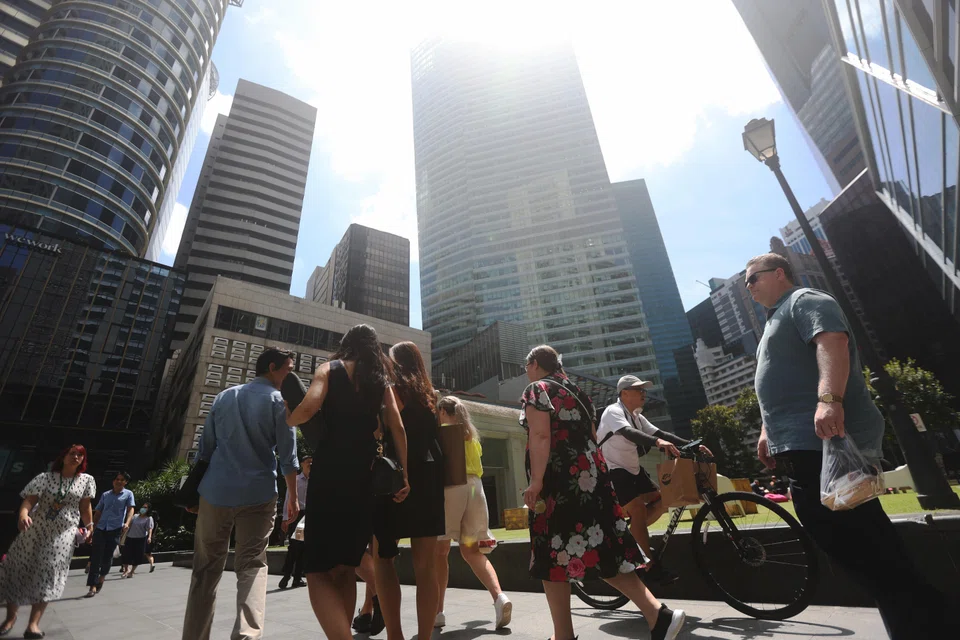
    • The ratio of job vacancies to unemployed persons decreases to 2.2. PHOTO: BT FILE

    LABOUR market tightness in Singapore eased in Q3, as the total number of job vacancies fell for the second straight quarter, according to the Ministry of Manpower’s (MOM) Labour Market Report on Thursday (Dec 15).

    While the number of job vacancies “declined noticeably” to 108,200 in September, it remained significantly higher than the pre-pandemic level of 52,900 in 2019, said MOM. Correspondingly, the ratio of job vacancies to unemployed persons also decreased to 2.2.

    Nevertheless, job vacancies were still seen in sectors such as manufacturing and construction, and services industries including information and communications, financial services, professional services, and health and social services.

    While the labour market continued to improve in the third quarter, there are “early indications of easing momentum”, said Manpower Minister Tan See Leng in a Facebook post.

    “Although labour demand remains robust, certain geopolitical conditions and higher global inflation will weigh on the labour market going forward,” he added.

    A deterioration in labour market conditions – such as through an uptick in unemployment rates – could show itself as soon as early next year, said RHB senior economist Barnabas Gan. “The slowdown has already been on the cusp in the second half of this year, and I think it’s high time for the softness to translate into the labour market into the early part of next year.”

    But there is no cause for alarm, said Gan. “I think the worst that could happen, at least at this juncture, will be a slowdown in hiring rather than an all-out retrenchment exercise in external-facing industries.”

    In contrast, the services sector may actually continue to improve on the reopening tailwinds, especially if China gradually loosens its Covid-19 restrictions next year, he added.

    MOM similarly noted in its report that unemployment growth in the next quarter could be uneven across industries, with tourism-related sectors stepping up hiring through the festive season, but outward-facing sectors – such as manufacturing – experiencing subdued growth due to the weakening economic climate.

    There were 1,120 retrenchments in Q3, up from the record low of 830 in the previous quarter. MOM said the uptick came mostly from layoffs in technology firms, which rose to 460, from 110 previously.

    Even so, vacancies in the sector remained high, suggesting that the retrenchments were due to restructuring efforts within the sector, noted the ministry. Similarly, retrenchments in other sectors stayed low and were mainly due to restructuring or reorganisation exercises.

    The share of retrenched residents who re-entered employment within six months fell to 64.8 per cent, down from 66 per cent in the previous quarter and the high of 71.5 per cent recorded in Q1.

    Total employment, excluding migrant domestic workers, grew by 75,900 in the third quarter of 2022, up from 66,500 in the previous quarter and 1.7 per cent above the pre-pandemic level in 2019.

    Non-resident employment grew by 71,100, expanding at a faster rate as it has yet to recover to its pre-Covid level. Employment growth among this group was concentrated in sectors with a higher share of non-resident workers, such as manufacturing and construction.

    Meanwhile, resident employment growth was led by outward-oriented sectors such as financial services, professional services, and information and communications. Accommodation also saw a seasonal rise in resident workers due to the F1 Singapore Grand Prix event, which drove up average occupancy rates in September, said MOM.

    Unemployment rates remained around their pre-pandemic averages, at 2 per cent overall; 2.8 per cent for residents; and 3 per cent for citizens. The resident long-term unemployment rate held steady over the quarter in September, after returning to pre-Covid levels in June.