Keppel wins centralised cooling system contract for 9 BTO Tengah projects
The 20-year contract will allow 10,000 households there to engage the firm for chilled water to cool their homes

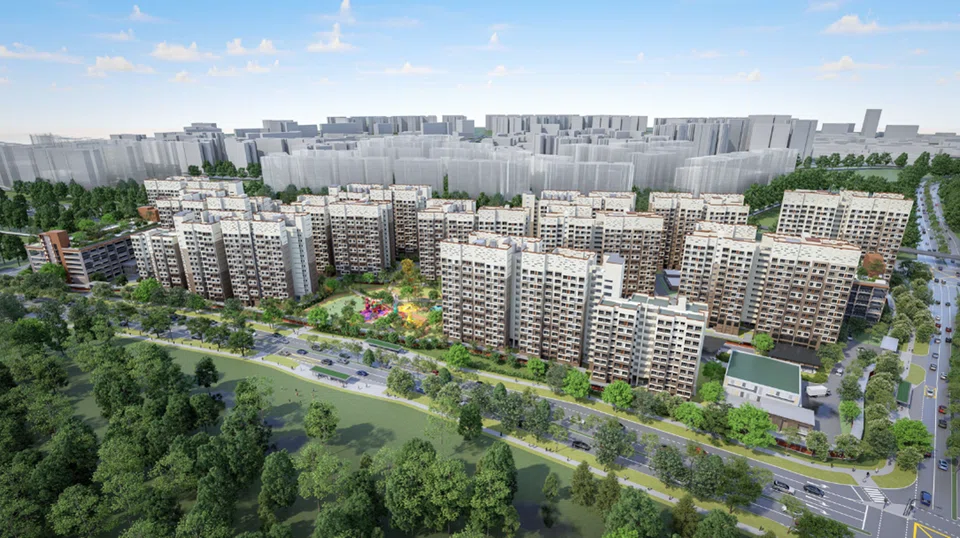
[SINGAPORE] The Housing & Development Board (HDB) said on Thursday (Apr 16) that it has awarded Keppel a contract to design, install and operate centralised cooling systems (CCS) – or residential cooling systems – at nine upcoming Build-To-Order (BTO) projects in Tengah.
The 20-year contract, awarded to Keppel’s infrastructure division, will allow some 10,000 households in Tengah’s Brickland, Park and Forest Hill districts to engage Keppel for chilled water to cool their homes.
The contract is Keppel’s second CCS contract for Tengah BTO projects. The first was awarded in September 2024 for three projects in the area – Brickland Weave, Plantation Edge I & II, and Plantation Verge – over a 20-year period.
HDB noted that the latest contract expands access to CCS provided by Keppel to a total of 14,000 households across 12 BTO projects in Tengah.
The move is in line with the vision for the area to be a smart and sustainable town.
The contract is not expected to have material impact on Keppel’s earnings per share and net tangible asset per share for the current financial year.
Providing an eco-friendly, energy-efficient cooling solution
HDB homebuyers in Tengah have the option to subscribe to CCS, which offers a more energy-efficient cooling solution than conventional air-conditioning systems as it uses up to 30 per cent less energy, said HDB.
Keppel’s executive director of energy-as-a-service Poh Tiong Keng said that homeowners who subscribe may also save money due to lower upfront equipment costs, reduced maintenance requirements and a predictable life-cycle performance.
Deployment within homes
When completed, the CCS at the 12 BTO projects will be connected to Keppel’s Operations Nerve Centre (ONC) for remote control and real-time performance monitoring, HDB said.

The ONC supports predictive maintenance, detection of anomalies, forecasting of cooling demand and optimisation of plant performance. It does so by analysing operational data through the use of artificial intelligence and machine learning. This enables more proactive system management, higher reliability and continuous efficiency improvements, HDB noted.
Decoding Asia newsletter: your guide to navigating Asia in a new global order. Sign up here to get Decoding Asia newsletter. Delivered to your inbox. Free.
Copyright SPH Media. All rights reserved.