KinderWorld prepares for Hong Kong IPO, even as it plans a homecoming in Singapore
Beyond its main market of Vietnam, the private school operator is also looking further in the region

[SINGAPORE] After having aborted its plans to list on the Singapore Exchange (SGX) in 2019 and 2020, private-school operator KinderWorld International Group is gearing up for another shot at going public – this time, in Hong Kong.
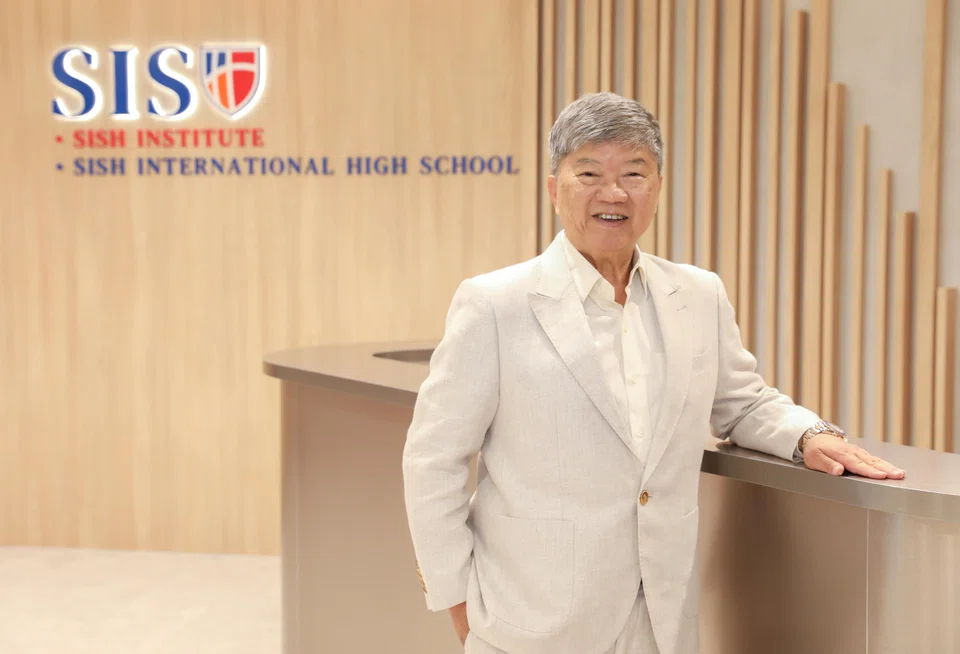
Education-related listings seem to have better prospects on Hong Kong’s bourse, said KinderWorld chairman and chief executive officer Ricky Tan.
But the listing in Hong Kong does not mean that that KinderWorld is leaving Singapore, he stressed. On the contrary, after more than two decades, KinderWorld is reviving operations in its home market.
Founded in 1986, the family-owned company closed its last school in Singapore in 2000, due to what Tan saw as limited opportunities and lack of demand – but it kept its business headquarters in the Republic.
The group’s C-suite executives have also remained. Tan said: “We are all preparing (for operations) to eventually return to Singapore.”
He intends to run five schools here, with a new campus in Paya Lebar in the works.
Private schools going public
After exiting Singapore, KinderWorld went to Vietnam and China. It withdrew from China in 2005 because of changes in the education policies there.
Since then, it has focused on Vietnam. Its brands there now include KinderWorld International Kindergarten, Singapore International School and Singapore Vietnam International School, Pegasus International College, and Outward Bound Vietnam.
In 2018, a local bank offered to help take the business public in Singapore, said Tan. Hoping that this would provide extra funds to reward its key staff, KinderWorld began the process and received the necessary approvals to list on the SGX the following year.
But the move fell through because of what Tan called a buyer-seller mismatch; its underwriter revised its suggested valuation.
Faced with the lower value, Tan’s response was: “Why should I sell?”
The group’s cash flow from its operations in Vietnam was “good enough”, and it could easily take loans from Vietnamese banks if needed.
An “entrepreneur at heart”, Tan tried to list on the SGX again in 2020. But that IPO attempt was halted because of a gap in valuation expectations, caused by uncertain market conditions.
Still, with a continued drive to expand the business, Tan is planning to take yet another swing at an IPO, this time on the Stock Exchange of Hong Kong. It has engaged PwC to develop a plan for its debut, potentially in the next three to four years.
Earlier plans to list on SGX were driven by “patriotism” and observations of some successful listings. But Tan has seen that education players perform poorly on the bourse, with declining market capitalisation. He also does not believe that the efforts to revitalise SGX will focus on education stocks.
In contrast, Hong Kong has a good track record for education listings, he said.
KinderWorld does not have schools in Hong Kong for now, but plans are in the works; the target is to have a school or two by the time KinderWorld launches its IPO.
Hong Kong has welcomed an influx of young people and families from mainland China, after protests in 2019 created an exodus of Hong Kongers, said Tan. He sees a business opportunity for KinderWorld, given that parents from China recognise the strength of Singapore’s world-class curriculum.
Indeed, by the time the IPO happens, KinderWorld hopes to live up to the “World” in its name through its global footprint.
Said Tan: “From day one, I said: ‘Let’s look to the world and expand our company’.”
Return to roots
Singapore is one of the markets where it is most keen to do this.
It had pulled out in 2000, feeling squeezed out of a pre-school market in which the state was also a player.
Back then, expatriates were favouring the international schools with their Western-centric education for their older children, and KinderWorld was at a disadvantage, Tan said.
But he sees a shift today, especially with China’s rising influence.
China’s government and Chinese parents are increasingly encouraging students to study abroad, and Singapore is a popular choice on the strength of its strong academic performance. Chinese nationals may want their children to join Singapore’s public school system, but entry barriers are high for non-citizens.
Tan is thus pitching KinderWorld as a private player that can deliver the same rigorous academic training, but at a more affordable price than other private schools.
Beyond China, Tan also expects increasing demand from Asean and other parts of Asia.
During Covid-19, when KinderWorld’s Vietnam operations were running smoothly on their own, the company realised it could focus elsewhere, and took its first step to return to Singapore in 2022.
Rather than start from scratch, KinderWorld shopped around for a school to acquire, to ease its return to the market. It set its sights on one with EduTrust Certification – a quality-assurance mark private education institutions need to be eligible to accept overseas students – and applied for the necessary land-use licences.
It landed on SDH Institute, a hospitality and aviation institute of higher education with a campus in Bukit Timah Road. KinderWorld acquired it and renamed it SISH Institute.
It did not stop there. It is expanding with a new campus in the North building of Paya Lebar Green, a Grade-A specification office development, by putting S$6 million into construction and another S$2 million in pre-operating costs, excluding its rental deposit.
The space is rented under a five-year lease, with an option to renew it for another five years. Singapore’s costs mean this is a more realistic option than owning the land, which it does in Vietnam, said Tan.
After the site is inspected this week and KinderWorld receives clearance, it will begin the process of moving students to the new premises.
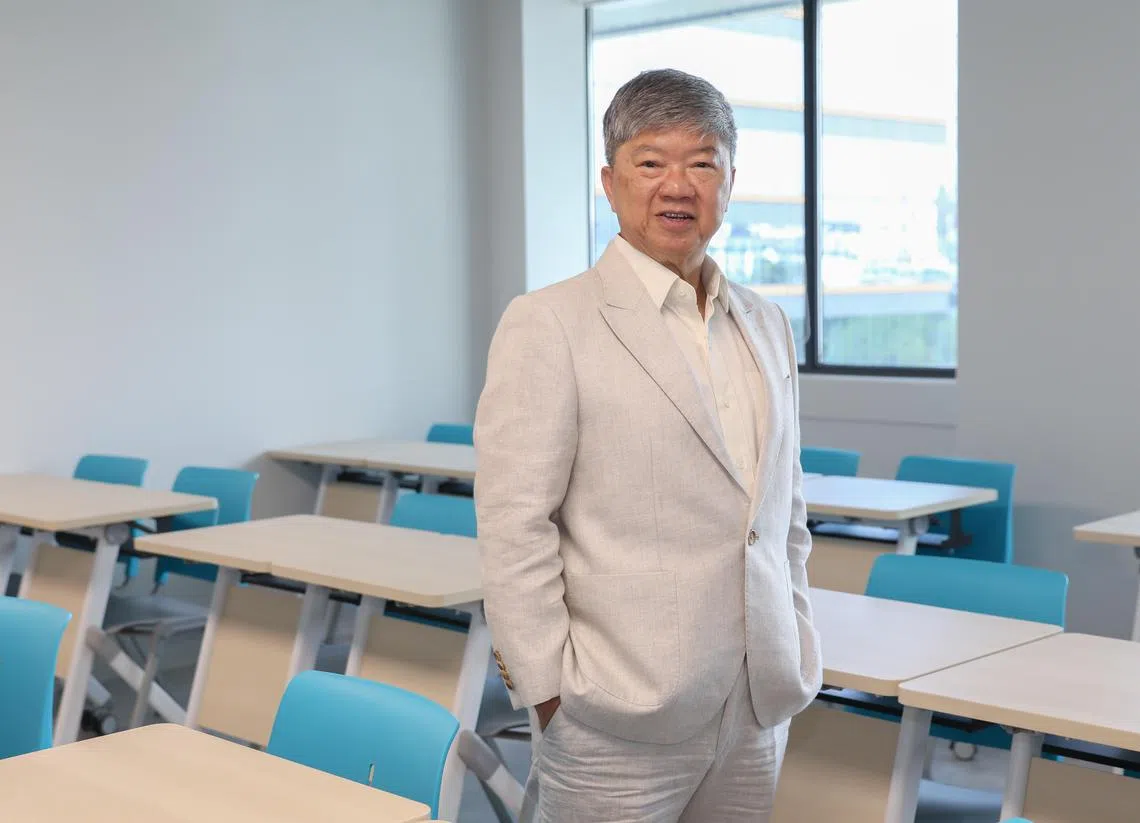
The new campus will be for KinderWorld’s new brand, SISH International High School. It will take in students on the Cambridge International programme for Years 7 to 12 – roughly the equivalent of upper primary to junior college – and those preparing for Singapore’s Admission Entrance for International Students exams, to enter public primary or secondary schools.
SISH International High School has 36,000 square feet of space across three floors, and can take in 600 students. The aim is to reach full capacity within three years; for the first year, Tan hopes to take in 200 students.
With spare capacity for now, the premises will also host existing higher-education students from SISH Institute.
Tan is already on the hunt for KinderWorld’s next location in Singapore – and even beyond.
One possibility is in Johor Bahru, Malaysia. KinderWorld is in talks with several developers, said Tan, noting that China nationals have taken an interest in the area.
Australia and New Zealand are also potential targets due to their large Asian populations. Parents will want their children to benefit from a wider worldview, with exposure to both Asian and Western cultures, he said.
Early explorations into some areas, such as Kazakhstan, have shown that expansion there may not be feasible. But asked what other places he might consider, Tan replied: “Wherever there’s a place that loves the Singapore education system.”