Liu Thai Ker – the architect who made Singapore better
The man behind the Republic’s HDB flats and oversaw its land-use plans died on Jan 18 at the age of 87
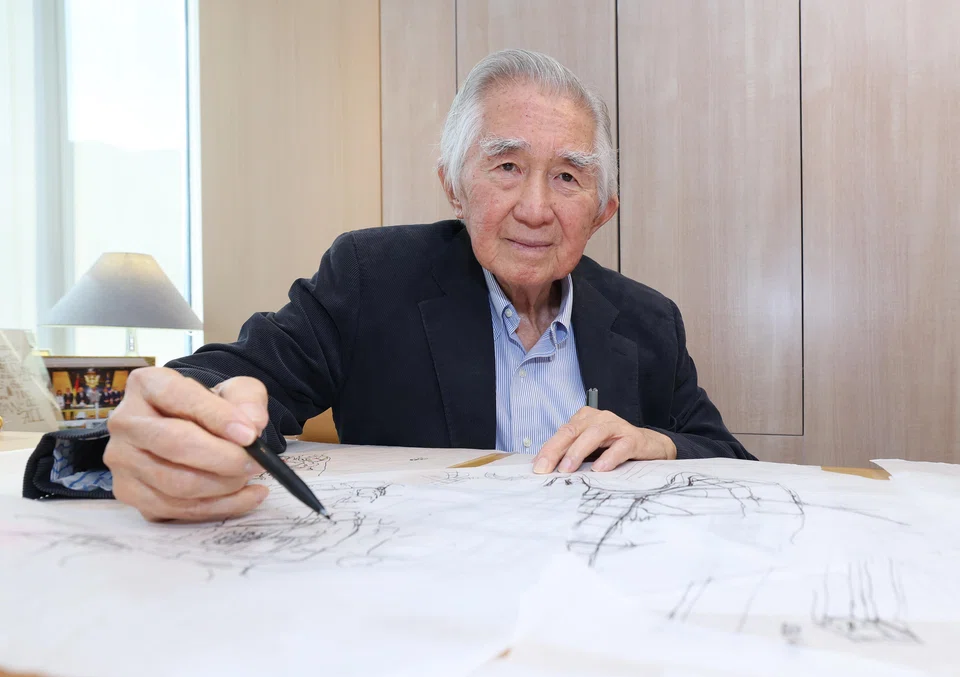
[SINGAPORE] Liu Thai Ker, the founding architect of modern Singapore, did not just design flats or make urban plans; he also built a discipline as he refused to settle for “good enough” – to the Republic’s benefit.
Beyond his contributions to the Republic, the late master planner also endeared himself to the people who knew him with his humility, passion for the trade, and by being unstinting in sharing his knowledge.
The man behind Singapore’s public housing flats and oversaw the development of the city-state’s land-use plans died on Jan 18 at the age of 87.
Prime Minister Lawrence Wong acknowledged Liu’s contributions to the Republic in a post on social media: “Singapore is better because of Thai Ker’s service.”
Noting that Liu had often said a good planner needs to have the heart of a humanist, brain of a scientist and eye of an artist, PM Wong added that these ideals of Liu ran through his life’s work.
“The buildings, homes and public spaces that Singaporeans use every day stand as a quiet testament to his dedication and vision.”
PM Wong said he valued his conversations with Liu when the political officeholder was a minister for national development.
Singapore’s President Tharman Shanmugaratnam said that he admired Liu for remaining active through his 70s and 80s, contributing to urban planning in more than 50 cities abroad, from Chengdu and Ningbo in China, to Al Qadimah in Saudi Arabia and Kazan in Russia.
“Till the end, he remained convinced that making the city better would raise the quality of life and people’s spirits. That will remain Dr Liu Thai Ker’s legacy,” he added.
Legacy
Minister for National Development Chee Hong Tat pointed out that Liu also initiated the Development Guide Plans (DGPs), which were detailed plans covering all 55 planning areas in Singapore. Together, these DGPs formed a forward-looking master plan that continues to guide the Republic’s development.
Chee, who last met Liu a fortnight ago, said the architect’s “legacy will live on in the beautiful neighbourhoods we call home, this dynamic garden city we are proud of, and the generations of people whom he has inspired over the years”.
RSP Architects Planners & Engineers, which Liu joined after leaving the public sector, said in a statement on Monday (Jan 19) that Liu’s stint marked a significant chapter in its history, as he translated his visionary master planning principles into the private sector.
It also cited a quote from Liu penned for a commemorative book for RSP’s 60th anniversary: “Urban development is comparable to cooking. Planning is writing the recipe. I wish that someday soon, we can be given the opportunity to cook that recipe... It is important that a good recipe be cooked well.”
Hwang Yu-Ning, National Parks Board’s chief executive officer, honoured Liu in a LinkedIn post. She described the former CEO and chief planner of the Urban Redevelopment Authority (URA) as a titan.
Hwang, herself a former deputy CEO and chief planner of URA, had not worked directly under Liu but had engaged with him.
She said that Liu was never shy about sharing his views or challenging assumptions to ensure the plans were robust. He was connected to his roots, regularly attending URA events and deeply engaging with the industry. At events, he did not just participate; he also ensured that the professional standards set were rigorous.
“He brought with him a sharp, dry wit and was generous with his time and always curious. It was a thrill for many in the industry to have a chance to meet him and hear his thoughts,” Hwang wrote.
She added that the urban planner credited for creating the Republic’s lauded approach to housing its citizens went beyond building flats and creating urban plans. “His conviction and his refusal to settle for ‘good enough’ are the reasons Singapore is built this way.”
Liu wore many hats, including being the chairman of the National Arts Council from 1996 to 2005. The statutory board said on Jan 18 that he was a visionary who brought a unique perspective that fundamentally reshaped Singapore’s cultural landscape.
It added in its tribute to the architect that he, as the son of pioneering artist Liu Kang, possessed an innate understanding of creativity’s power to transform communities. His artistic sensibility and his urban-planning expertise enabled him to envision Singapore as a thriving cultural hub.
Under Liu’s leadership, the council implemented the Renaissance City Report that provided a vision and plan for the promotion of arts and culture in the Republic. It also introduced funding schemes for arts companies and emerging talents, expanded outreach and arts education programmes, and enhanced international cultural relations.
A giant in his field
Liu was one of the defining figures of Singapore’s nation-building era.
He spent 24 years in Singapore’s public service. While leading the Housing & Development Board from 1979 to 1989, he oversaw the development of 20 new towns and more than half-a-million housing units.
While he was at the helm of the URA, the 1991 Concept Plan was developed, which went on to be a blueprint for the country’s future development in the decades after.
In 1992, Liu left the public service and joined RSP Architects Planners & Engineers. During his 25 years at the firm, he was involved in numerous projects, with his work influencing urban development across the region, notably in China.
He designed a slew of projects for the Chinese government. One of these was the Fuzhou Changle International Airport, at the invitation of then party secretary of Fuzhou, Xi Jinping, who later became the country’s president.
Liu was also involved in the China embassy project in Singapore and designed the China Cultural Centre in the city-state.
In 2017, at the age of 79, Liu set up urban planning and architecture consultancy Morrow Architects & Planners and was its founding chairman.
The firm has worked on projects spanning more than 20 cities in seven countries, including Singapore, China, Indonesia and Fiji.
Seema Sharma, permanent secretary for Fiji’s ministry of local government, paid tribute to Liu in a LinkedIn post, calling him “a visionary whose legacy extends far beyond borders”. Liu was deeply involved in the master plan for Viti Levu in the Oceania country.
“He believed strongly that while Fiji could learn from Singapore, it should never be Singapore. Our planning, he said, must reflect our own identity – our culture, our people, and the opportunity that comes with abundant space.
“Despite his extraordinary achievements, Liu was never arrogant. He was generous with his knowledge, passionate about teaching, and always eager to share his experience with others. I will always remember his warmth, kindness, and the friendship he extended to me,” the Fijian said.
Decoding Asia newsletter: your guide to navigating Asia in a new global order. Sign up here to get Decoding Asia newsletter. Delivered to your inbox. Free.
Copyright SPH Media. All rights reserved.