

Major housing policy moves unlikely so soon after rollout of new BTO classification, enhanced grants
More time is needed for new policies to take effect before considering new initiatives, observers say

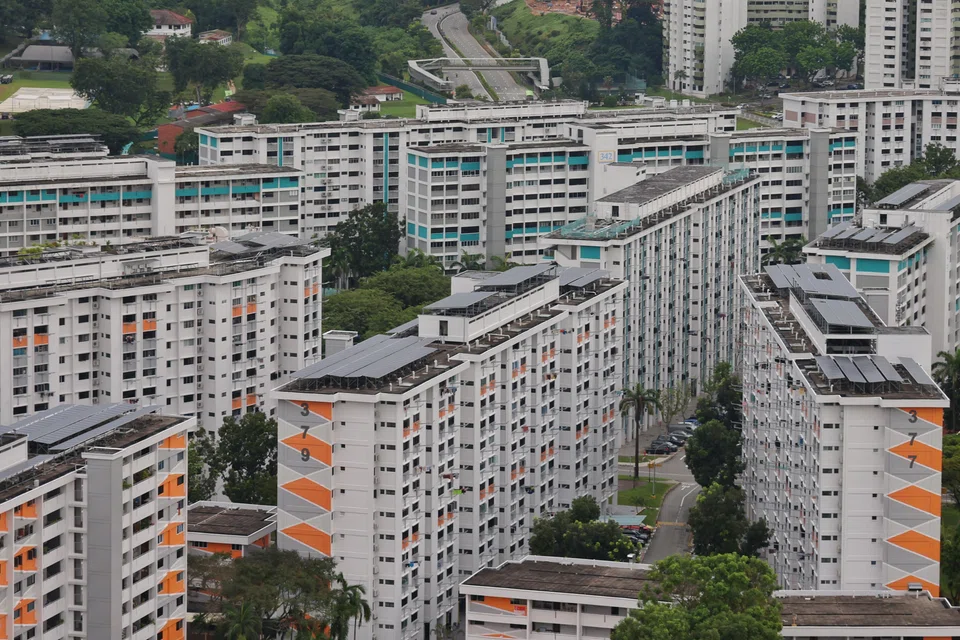
WHILE Prime Minister Lawrence Wong has said he is looking for ways to support families in Budget 2025, this is unlikely to take the form of further major housing policy changes, said observers.
This is because the government has already made several such changes in the last few years, to boost affordability and reduce wait times for first-time Build-to-Order (BTO) flat applicants.
These include the new BTO classification system in which public housing projects are either Standard, Plus or Prime, with tiered buying and selling restrictions and varying subsidies depending on the classification.
The new system took effect from the October 2024 sales launch. It was introduced to ensure affordability and to cap the rapidly rising resale prices of public housing.
The current suite of housing policy moves are comprehensive and cater to all segments of the population, from families to singles, said Professor Qian Wenlan from the National University of Singapore Business School.
OrangeTee chief researcher and strategist Christine Sun agreed that more measures are not currently needed, at least when it comes to cooling demand for BTO flats.
Existing measures, such as the one-year penalty for first-time applicants who do not select a BTO flat when invited, have been successful in discouraging less serious buyers from applying, she added.
More time is also needed to let new policies take effect, as some were introduced only in the second half of 2024, noted Cushman & Wakefield head of research Wong Xian Yang.
“It is prudent to allow some time to evaluate their impact and effectiveness before considering further adjustments or new initiatives,” he added.
Tweaking eligibility
While major housing moves are unlikely, current schemes could be tweaked to improve eligibility, said Wong.
To give bigger families more options, the income ceiling for executive condominiums can be raised, suggested Derrick Lim, real estate sector leader at Deloitte South-east Asia.
This is because the current BTO prices for executive condominiums are relatively high compared to the S$16,000 monthly household income ceiling for them, he noted.
OrangeTee’s Sun proposed that a larger share of BTO flats could be set aside for existing flat owners who are upgrading. “This may help existing families upgrade to a bigger unit, especially for expanding families and the lower-income groups who may find resale flats too pricey,” she added.
Targeted help
The government could also provide more targeted help in the form of vouchers or subsidies for needy families.
Said Sun: “We expect more help or subsidies to be given for low-income families, first-timers and young married couples with children, especially those buying in the secondary market as resale flat prices are still rising.”
Budget 2024 introduced a one-year voucher under the Parenthood Provisional Housing Scheme (PPHS) for eligible families to rent a Housing and Development Board flat in the open market.
As the backlog of BTO applicants has been cleared, there is no longer an urgent need for more such vouchers, said Sun.
Yet, since there is still strong demand for PPHS rental flats, Wong believed that there is room to raise the monthly income ceiling of S$7,000 so that more can qualify, or increase the quantum of the PPHS rental voucher.
For instance, open market rents for a two-room HDB flat start from S$2,300 a month, based on data from the third quarter of last year. This is a significant expense for a household with a combined monthly income of S$7,000, noted Wong.
Still, he cautioned that any adjustments would need to be carefully calibrated to avoid inadvertently driving rents up.
On the supply side, Sun noted that the number of BTO flats reaching the minimum occupancy period – meaning that they can be resold – will continue to fall this year, marking the third consecutive year that supply has fallen.
“More BTO flats may need to be released to help alleviate the shortfall in supply in the resale market,” she said. “This will also help to slow down the pace of price growth for resale flats.”
TRENDING NOW

Things to know about DBS’ incoming chairman Anthony Lim

DBS eyes prime brokerage business as Q3 profit falls 5% on weaker trading income

Royal Group and Sunset Hospitality abandon plans to open Casa Mett hotel off Orchard Road

George Yeo adds 100,000 Wilmar shares at S$2.97 apiece, taking stake to over 1 million shares

