

MAS, bank CEOs convene over AI cyberthreats; boards told to own risks, not leave to IT teams
Cyber Security Agency of Singapore also issues letter urging critical information infrastructure owners to commission a board-level review

[SINGAPORE] The Monetary Authority of Singapore (MAS) and the chief executives of major financial institutions have convened to discuss the threat posed by AI-enabled cyberattacks, as frontier artificial intelligence (AI) models capable of autonomously identifying and exploiting software vulnerabilities grow more sophisticated.
On Tuesday (May 5), several Members of Parliament had asked about Anthropic’s Mythos, whether the government has access to such models, what risks they posed to Singapore’s financial system and critical infrastructure, and whether AI-enabled cyber risks could constitute a new class of systemic financial risk.
The models are reported to be capable of autonomously identifying zero-day vulnerabilities and chaining these into working exploits.
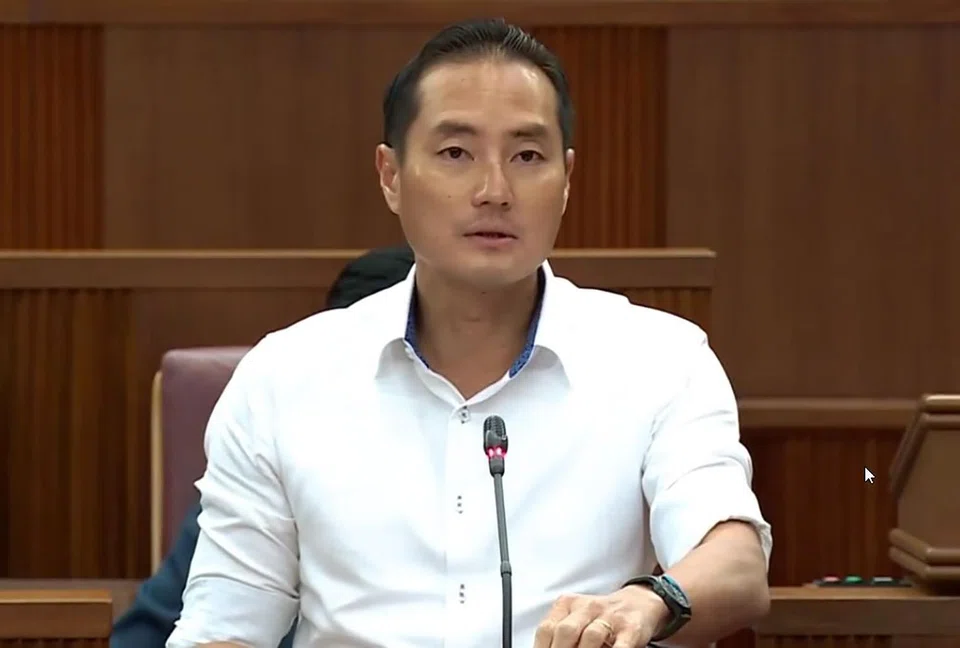
Speaking in Parliament, Senior Minister of State for Digital Development and Information Tan Kiat How said the government does not have access to Mythos, and is not aware of any local bank that has been granted access.
Anthropic has released the model only to a limited set of partners under a controlled preview.
More broadly, the government is working with partners who have access to Mythos to better understand its capabilities and implications, and maintains close working relationships with major AI labs and cybersecurity firms to track capability developments as they emerge.
Continuum, rather than step change
“We should understand the advances in capabilities enabled by Mythos to be part of a continuum rather than a step change,” said Tan, noting that models like OpenAI’s GPT-5.5 already show “comparable cybersecurity capabilities”, and are more widely available.
Open-source AI models are also rapidly improving and are likely to reach similar capabilities within months, he added.
The practical danger, Tan said, is one of speed. Vulnerabilities that once took expert teams weeks to detect can now be identified autonomously in hours or minutes, outpacing traditional patching cycles.



AI is also changing the nature of attacks themselves – from self-rewriting malware designed to evade detection in real time, to deepfake video calls used to defraud companies of millions of dollars. Similar attempts have been made against executives in Singapore.
“These attacks are faster, more scalable, and significantly more sophisticated,” said Tan.
“What we have not yet seen is fully autonomous AI agents running end-to-end campaigns. But this is a matter of time,” Tan warned.
Amplification of risk
The risks therefore do not stem from any single model like Mythos, Tan said. “The underlying shift is broader and the risks are real. We are treating them with the seriousness they deserve.”
“We view AI-enabled cyber risk as an amplification of an existing systemic risk, rather than a wholly-new category.”
Financial institutions are treating this with the seriousness it deserves and have been strengthening their cyber posture, Tan said.
Earlier on Tuesday, the Cyber Security Agency of Singapore (CSA) issued a letter to the boards and senior leadership of all critical information infrastructure owners, urging them to commission a board-level review of whether their cybersecurity risk posture remains adequate in light of frontier AI developments.
Tan stressed that this is not an issue that should be delegated to IT teams alone. “It demands leadership attention at the highest levels, including board members and chief executives,” he said.
This applies whether an organisation runs information technology (IT), operational technology (OT), or both types of systems.
“The priority is to get the fundamentals right, and do so quickly,” he said.
Five priorities
Against that backdrop, Tan outlined five areas where organisations must take immediate action.
First, organisations should update cybersecurity risk assessments for both IT and OT systems, paying particular attention to the narrowing window between the discovery of a vulnerability and its exploitation by attackers.
Second, they must maintain full visibility over their asset inventory, as most breaches originate from unmanaged assets such as forgotten Internet-facing systems, third-party dependencies, or shadow cloud accounts.
Third, organisations must shift from periodic audits to continuous monitoring, automated detection and tested incident response, as the time between vulnerability disclosure and exploitation continues to shrink.
Fourth, they must govern their own use of AI tools, which can introduce new vulnerabilities, particularly when connected to sensitive data, code, or critical systems.
The CSA’s Addendum on Securing Agentic AI, launched in October 2025, provides practical guidance on managing such risks across the AI lifecycle.
Fifth, organisations should deploy AI actively in their own defences. The government, for one, is investing in AI-powered tools for vulnerability and patch testing.
It is fast-tracking capability-building in this area through industry partnerships while simultaneously developing in-house capabilities to avoid dependence on any single external provider.
These tools are being piloted within the government and will be extended to more agencies and critical information infrastructure owners when ready.
Help for SMEs, individuals
Tan noted that many small and medium-sized enterprises (SMEs) lack dedicated security leadership or IT teams.
To that, CSA’s SG Cyber Safe programme offers accessible cyber-hygiene guidance, including the chief information security officers as a service (CISOaaS) programme and the Cyber Essentials and Cyber Trust Marks, which help organisations assess and improve their security posture.
The CSA letter, signed by Commissioner of Cybersecurity David Koh, makes clear that the expectations on critical information infrastructure owners go beyond technical fixes.
“Frontier AI is accelerating at a rate where current assumptions in cyber risk management, on which your controls, measures and incident response plans were designed, may no longer be valid,” Koh warned.
Boards are expected to commission a review of whether their cybersecurity posture remains adequate in light of frontier AI developments, in addition to following the immediate technical mitigations set out by the agency.
That review should cover five areas: whether AI-enabled threats are properly factored into current risk assessments; whether the organisation has full visibility over its critical systems and third-party dependencies; and whether vulnerability management and incident response are fast enough given that attackers are moving faster than ever.
Boards must also examine whether their organisation’s own use of AI tools is properly governed, and where AI can be deployed to strengthen their defences, including a review of code security.
Where gaps are found, management is expected to draw up clear remediation plans and, where necessary, direct more resources towards cybersecurity.
For individuals, Tan pointed to three priorities drawn from CSA’s Stop and Check campaign: using two-factor authentication and strong passphrases; updating software promptly; and using tools such as Scamshield and anti-virus software to protect devices and accounts.
“The government will continue to raise awareness, set standards, and support organisations in building robust cyber-defences,” said Tan.
“But resilience depends on everyone doing their part. We must act early and decisively, and stay ahead of the threat.”
Decoding Asia newsletter: your guide to navigating Asia in a new global order. Sign up here to get Decoding Asia newsletter. Delivered to your inbox. Free.
Copyright SPH Media. All rights reserved.
TRENDING NOW

LTA proposes combining car COE categories, adding rebate-surcharge system

StarHub to acquire MyRepublic’s mobile business amid ongoing telco consolidation

DBS, OCBC, UOB rout lops billions off STI as inflation, rate concerns spook investors

Grab CEO’s wife Chloe Tong on life with Anthony Tan and finding her purpose

